


 Francais
 Deutsch
 Italiano
Refine Your Search
Rouen Normandy France 1944 stock footage and images
- Showing 403 to 408 of 9958 results more
more Hide
Hide
B-25 bomb at Brest, Canadian troops advance, civilians buy goods and U.S. soldiers secure voting cards in France (WW2)
Normal life of civilians resume after German surrender in some parts of France during World War II. Aerial view of flak in sky. Close-up view of two U.S. Army Air Force B-25 Mitchell bomber aircraft in flight. (Narrator incorrectly states they are British Lancaster bomber aircraft.) View from bomb bay doors of bombs away shot as the B-25 bomber aircraft drop bombs on U-boat pens at Brest. Explosions and smoke rise. The aircraft drop bombs over ground installation over enemy area. Canadian soldier scenes: Troops advance through a burning coastal town in France. Buildings collapsing and gunfire in streets. Smoke rising. Ruins of destroyed French town are seen. Allied Army tanks advance and fire artillery. German prisoners of war from Wehrmacht 7th and 15th armies being marched under watch by Canadian forces. Among the German prisoners is a 13 year old Russian boy who was forced to work by the Nazis. German prisoners in a soup line and seen drinking from mugs. Some appear to be very young boy soldiers. U.S. Army soldiers in Le Mans: American soldiers are welcomed by civilians of France. Happy French civilians waving to U.S. forces including a happy young woman who runs forward and pats a U.S. Army tank with her hand. Men and women collaborationists who assisted the Germans are rounded up by French and marched away. U.S. Army soldiers seated at stools in a French bar drink as the bar maid pours more into their glasses. French civilians line up at shops and groceries to buy food and goods in Le Mans. Pictures of General De Gaulle for sale. American women in U.S. Army uniforms (possibly nurses or Womens Army Corps WAC members) look in shop windows at French fashions. Voting cards: U.S. Army troops read pamphlets that read "requirement of soldiers to vote" and "Soldiers Voting". The U.S. Army GI's receive and mail postcards to their homes requesting absentee voting ballots for the upcoming November 1944 election. The soldiers line up to secure their application cards for absentee ballots.
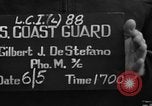
Convoy of landing craft leaving Weymouth England bound for Normandy, France, during World War II.
Views from Landing Craft Infantry LCI(L) 88 of convoy of Landing Craft departing Weymouth, England, for the invasion of France, in World War 2. The American flag in brisk breeze on stern of LCI(L) 88. Convoy proceeding in columns. At least one barrage balloon seen faintly in background. A British Battleship lays by, in the background, as the convoy passes.
French Fascist militia round up FFI members and German troops advance in France during World War II.
France under German occupation during World War II. Vichy French fascist militia (under Joseph Darnand) round up FFI (French Forces of the Interior) members. They march FFI members out of a building. German soldiers search French civilians. They stop and check civilians on bicycles and in cars. The bullet ridden windshield of a car used by FFI. A soldier with a revolver talks to a French farmer. Soldiers check an elderly farmer. A man gives a 5 Francs note. Close up view of the French currency bill. Smiling German soldiers march towards Normandy. They take cover from while under aerial attack by U.S. aircraft. Antiaircraft guns fired at the aircraft. Soldiers load and fire artillery. Aircraft drop bombs over target areas. A plane is hit, descends and crashes. Soldiers in camouflaged trucks and cars pass by cheering troops. German officers greet each other. Officers and soldiers keep watch through shrubs. Soldiers on guard with guns. German General Günther von Kluge discusses strategy, reviewing a map with his soldiers. A damaged sign post reads 'Caution. Enemy in Sight!'
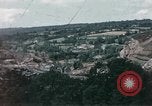
U.S. war correspondents touring France in the months after the Allied invasion near end of World War 2
U.S. war correspondents in France during the first few months after the Allied invasion to liberate France. Views of French countryside. Views in a village. People milling about on a street. Three young French children ride on the back of a mule as a boy pulls the mule. U.S. war correspondents pose with a French family. A woman with a child. A sign on a building reads 'Hotel and Restaurant Moderne' and a French flag flies out front. Small boats at a harbor of a coastal French town. U.S. Army jeeps on a street. Two French civilians walking with a bicycle and two U.S. soldiers together cross the wreckage of a partially destroyed bridge. A bicyclist on the street of a heavily bombed town with rubble and wrecked homes. Close and distant views of Mont Saint Michel, the small rocky island at the mouth of Couesnon River in Normandy. U.S. sailors aboard a vessel at sea.
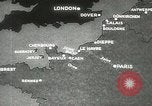
Allied aircraft bomb a French city and American prisoners being assaulted by civilians in Paris, France during World War II.
German newsreel opens with a map of France. French peasants drive their cattle to a safer place from Normandy after the Allied invasion of the area. German Mechanized Forces and German armor move forward to combat the Allied invasion as they pass amidst a herd of cattle. Allied airplanes bomb a French city as smoke rises due to bombing. People dig through debris and remove dead bodies. French civilians leave the city. Damaged buildings in the city. Women move away with their belongings. American prisoners march in Paris as French civilians kick and strike the U.S. soldier prisoners of war following the Allied bombings in France. Narrator explains the belief that it is clever film cutting propaganda and that this kind of reaction by the French was rare.
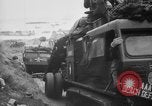
Allied paratroopers in gliders continue airborne assault in daytime, on D-day, after initial airborne troop drop the night before, in World War II
Allied invasion of Normandy, France during World War 2. Allied trucks and equipment move up from beachhead after D-Day. Half-tracks, armed with antiaircraft guns, move up from the beachhead. Back in England, gliders are readied for mission. A long line of Paratrooper medics wearing Red Cross Arm bands, board gliders. View from airplane flying over an airfield filled with C-47 tow planes, and gliders, all painted with invasion stripes. Closeup of Sergeant with British 6th Airborne Division showing Pegasus insignia on his sleeve. British paratroopers boarding a Hamilcar glider. U.S. paratroopers boarding gliders. View from above of Allied gliders being towed across the English Channel View from a ship in the invasion convoy, of tow planes and gliders overhead. View, from aircraft overhead, of invasion flotilla below. Distant view of Allied aircraft shot down by German antiaircraft fire, near the coast of Normandy and exploding in flames upon impact. View from the air of areas flooded by the Germans as a defense measure. Parachutes and gliders on the ground from earlier sorties. Gliders in this wave cut loose from tow planes and maneuver independently. Glimpses of Allied fighter planes moving fast and high above the scene. A glider splashing down in one of the flooded fields. Other fields, studded by the Germans, with poles 12-to 15 feet tall as defense against gliders. Gliders landing. Paratroopers leaving a Horsa glider, after landing.
CRITICALPAST.COM: About Us | Contact Us | FAQs - How to Order | License Agreement | My Account | My Lightboxes | Shopping Cart | Advanced Search | Featured Collections | Website Terms & Conditions | Privacy Policy ©2026 CriticalPast LLC.
License Agreement |
Terms & Conditions |
Privacy Policy
©2026 CriticalPast LLC.