


 Francais
 Deutsch
 Italiano
Refine Your Search
US-Gliders- stock footage and images
- Showing 1021 to 1026 of 21920 results more
more Hide
Hide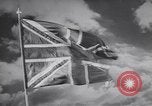
Scenes of World War II spanning several years, primarily from the European theater of operations, and operations of U.S. Army forces.
Montage of World War II scenes in rapid succession, including: British flag flying; British civilian men looking through debris and victims of Japanese bombing in China; a German armored car moving rapidly; Heavy artillery pieces firing; German SdKfz 251 half-track armored personnel carrier rushing past the camera; The German Nazi flag flying from the Eiffel Tower in Paris, France; German troops marching through the Arc de Triomphe (Arch of Triumph) as they occupy Paris; New York Times newspaper headline reading: "Nazis execute 50 French hostages in Bordeaux!" French Army prisoners of war; British Colonial troops in a labor gang; German Messerschmitt Bf 109 aircraft in flight; French refugees fleeing advancing German forces; Momentary closeup of ME- Bf-109 firing guns and then climbing away from roadway filled with refugees. Animated illustration showing shadows of German bombers flying towards Britain. Numerous dead civilians, victims of Axis military actions in various parts of the world. The White cliffs of Dover. Formation of German Heinkel HE-111 bombers coming over England. Aerial view from above of numerous German Ju 87 Stuka dive bombers in flight. British Royal Air Force airman ringing alarm bell and RAF pilots scramble; responding by running to their spitfire aircraft, taking off and climbing to intercept German bombers. Closeup of one pilot in his cockpit during dogfight. A formation of three German Ju 87s seen from below. Gun camera glimpse of one being shot down from behind. An aircraft shot down and crashing. German aircraft bombing England at night during Battle of Britain (1940). Point of view shots from inside German aircraft during blitz over Britain, with aerial views of explosions and fires on ground in England. Narrator mentions Coventry as a target. Smoking ruins from German blitzkrieg bombing. Aerial views of areas bombed by German aircraft. British civilians carrying coffins and lowering them into grave sites as they bury victims of Nazi German bombing. Closeup of the shoulder patch worn on uniforms of soldiers in the U.S. Service Forces. Views of war materiel in warehouses and being loaded aboard ships destined to the war zones. American soldiers on a Pacific island. United States Army soldiers engaged at communications centers and using radio and radar antennae. Military equipment and weapons being moved by railroad train. Military supplies being loaded on rail cars and railroad trains running on tracks. U.S. troops on a beachhead following an amphibious landing. A British soldier eating bread. Two American soldiers drinking from cups. Closeup of a military police "MP" armband. Large formation of marching U.S. soldiers. Closeups of soldiers in the field, using radio telephones, cutting through barbed wire, looking out of ship porthole windows, and some simply posing momentarily for the camera. A U.S. Army soldier showing the "V" for victory symbol with his hand.
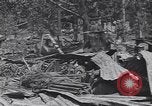
U.S. Army troops occupying Makin Island during World War II
A column of U.S. Army troops from elements of the 27th Infantry Division, make their way through destroyed Japanese structures on Makin Island, during World War 2. They patrol through jungles and engage in fire fights with Japanese defenders. One U.S. Army soldier carries a wounded soldier on his back. U.S. troops occupy an area of thatched roof huts. U.S. Army M3 Lee medium tanks moving across the sand. A wrecked Japanese ship in the surf. More views of U.S. M3 Lee tanks firing at the wrecked ship. U.S. aircraft bombing Japanese ships near the shore.
U.S. soldiers with civilians and surrendering German troops in Pilsen, Czechoslovakia, at end of World War II
American GI, with the U.S. 16th Armored Division, sits in the cab of a 2.5 ton 6X6 U.S. Army cargo truck (CCKW) and talks with a girl, in Pilsen Czechoslovakia, during World War 2. A Technical Sergeant and another soldier sit on the truck hood.A U.S. soldiers standing on the hood and another in the rear of a Willys MB U.S. Army Jeep, lead a column of surrendering German officers and soldiers, as they march through crowds on a Pilsen street. Several scenes of the marching German troops. They are halted at a town square. Sign on fence in center of area contains U.S. Army logo and words:"Ivanhoe PWE." An American soldier speaks briefly to lieutenant General Georg von Majewski, Commander of the surrendering German forces. View from above of U.S. Army trucks and jeeps gathered near the square. Next, civilians are seen gathered around American soldiers in parked jeeps and seated on an M24 Chafee light tank. The soldiers sign autographs for the Czech civilians.
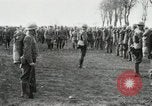
U.S. troops are inspected by General Joseph Joffre and General John Joseph Pershing in France.
U.S. 5th Marine Regiment in France during World War I. U.S. troops stand and French General Joseph Joffre and U.S. General John Joseph Pershing are escorted by the U.S. and the French officers. The troops stand in a squad for inspection. The soldiers march forward with a United States flag. General Joffre is escorted by the French officers. U.S. officers seated on horse backs. General Joffre and General Pershing talk.
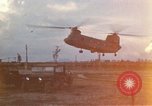
The MACV team and U.S. soldiers help Vietnamese refugees board CH-47 and UH-1D helicopters during evacuation in Kontum, Vietnam.
MACV (US Military Assistance Command, Vietnam) Advisory Team assists South Vietnamese soldiers in the evacuation of refugees from Kontum during the Nguyen Hue Campaign of the Vietnam War. A U.S. Army Boeing CH-47 Chinook helicopter takes off from a helipad in the area. South Vietnamese soldiers talk to Vietnamese refugees. Refugee men, women and children await evacuation. Women and children run towards a CH-47 and board the helicopter. The chopper takes off. Guns positioned on the other side of a barb wired fence. Refugees wait their turn for evacuation. U.S. officers and soldiers supervise and discuss the operation nearby. Refugees board a U.S. Army Bell UH-1D Iroquois helicopter. The MACV team and U.S. soldiers help them get strapped in. The pilot in the cockpit. The chopper takes off.
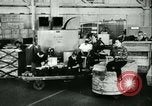
U.S. Army Signal Corps communication material and equipment is produced and distributed in World War II.
The role and contribution of the U.S. Army Signal Corps in combat and war, especially during World War 2. Workers organize and prepare signal communication material and equipment for transportation. Men transfer the items including wooden cartons, cables, signaling units in trolleys. Workers load the material into trucks. Shuttle ships in docks. Signal communication supplies for U.S. and Allied troops in the European Theater loaded onto the ships. The shuttle ships make their way under security in heavy seas. A Nazi U-boat wolf pack in the water during the early stages of World War II. torpedoes launched and U.S. ships are attacked bu the German submarines, smoke due to the explosions. U.S. sailors on board and jumping from burning ships into water.German wolfpack submarine fleet in a harbor. German Kriegsmarine sailors lower German Neger torpedo-carrying craft (sometimes called Human Torpedo) into the water. A U.S. B-25 bomber aircraft in flight locates a German submarine. The radio operator gives the exact location and the submarine is attacked. View from within cockpit as bomb sight is fixed on German submarine target. View of bomb doors open and bombs away from B-25 aircraft. Explosion in water is seen and the submarine is hit. Dramatized scene from inside of submarine as it is rocked by explosion and fills with water.
CRITICALPAST.COM: About Us | Contact Us | FAQs - How to Order | License Agreement | My Account | My Lightboxes | Shopping Cart | Advanced Search | Featured Collections | Website Terms & Conditions | Privacy Policy ©2026 CriticalPast LLC.
License Agreement |
Terms & Conditions |
Privacy Policy
©2026 CriticalPast LLC.