


 Francais
 Deutsch
 Italiano
Refine Your Search
US-Gliders- stock footage and images
- Showing 11329 to 11334 of 21913 results more
more Hide
Hide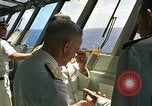
Admiral John S. McCain, Vice Admiral William I. Martin, and Rear Admiral Edward C. Outlaw, conversing on bridge of USS Independence
Occasion is the 20th anniversary of the U.S. 6th Fleet. U.S. Navy Admiral John S. McCain, Jr., Commander-in-Chief, U.S. Naval Forces, Europe (CINCUSNAVEUR) is seen with U.S. Navy Vice Admiral William I. Martin, Commander,U.S. Navy Sixth Fleet, and U.S. Navy Rear Admiral Edward C. Outlaw, Commander Fleet Air Mediterranean ( COMFLTAIRMED). They are conversing on the bridge of the USS Independence (CVA-62) in the Mediterranean Sea. Outlaw smokes a pipe. McCain is holding a cigar. Martin's back is to the camera early in the sequence. McCain and Martin are doing most of the talking as Outlaw listens. At TC:01:13, camera turns toward Admiral Martin, who soon puffs on a cigar he had been holding. Sequence ends with closeups of Admiral McCain speaking.
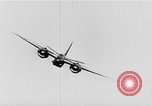
Instructional film on civilian precautions and first aid measures to be taken during a gas attack in the United States.
From a dramatized civilian protection film produced as a public service announcement or PSA by the Clorox Chemical company. Shows the precautions to be taken in case of a gas attack and the first aid measures to be used after gas exposure during World War 2. Aircraft in flight. Bomb wreckage during World War II including scenes from blitz firebombed areas in Europe or England, and scenes from China under attack by Japanese. Civilians fleeing in China as a Japanese attack begins. Back in the U.S., view of a new tank rolling into final assembly at a factory, and bullets being manufactured and poured into large containers in a munitions or ammunition factory. Narrator covers various precautions to be taken in case of a gas attack while at home, and actors depict: Closing the windows and other openings in the house. Woman seals kitchen exhaust fan. Man checks and closes fireplace flue in house. A man and woman move upstairs in the house to escape fumes. Air Warden sounds alert using a spinning handheld device, and asks people to stay indoors. Clothes affected by gas attack are left outside a house. Liquid gas removed from the skin by blotting with a tissue. Exposed skin cleaned and rinsed with bleaching solution. A baking soda solution containing water used to irrigate eyes. Man takes a shower and soaks himself up. Nose irrigated with baking soda solution. In case of unavailability of first aid one must take a bath. Woman takes a shower and rinses face and eyes. War scenes including a German Luftwaffe aircraft hit and diving toward ground. Wreckage of a German warplane. Views of a bottle of bleach, and baking soda solution, and a bar of soap used as cleaning tools in gas attack.
American pioneers conquer the west in the 1800s, compared to 1940s workers
The U.S. Capitol dome at night. Montage of U.S. Declaration of Independence with view of U.S. founding fathers at time of American Revolution. Reenacted depiction: 17th century immigrants or pilgrims arriving in the U.S. on large sailing ships. Group of men marching while carrying a "Don't Tread on Me" Gadsden flag. Depiction of Betsy Ross with U.S.A. flag. A covered wagon at sunset. 18th century men cutting down trees. 18th century men building a log cabin. Settlers arrive to the remains of their burned out cabin. A stage coach on the U.S. prairie. A covered wagon in the midwest. A stage coach traveling through grass lands. 18th century depiction of a western town in the United States. A white man and a Native American Indian man driving the last spike to complete a railroad as the steam locomotive starts. An 18th century steam locomotive passes by. Actual footage of external view of 1940s factory or production plant. Inside 1940s factory men are building engines. Wide shot of workers entering factory. New York City street scene. Los Angeles street scene. A rancher mends a barbed wire fence. Cowboys-ranchers on their horses. Fisherman pulling in nets on shore. Tobacco farming. Leather worker. Shirtless worker wielding a pick axe. Plant worker turning a large valve. A woman painter with a maritime village scene...perhaps Provincetown. A woman scientist in a laboratory. A 1940s family at the dinner table. Farm laborers harvesting melons. Man drives a tractor with woman riding behind him.
Shows the importance and application of camouflage techniques during combat in World War 2.
A film 'Camouflage in Combat' underlines the importance of tactical exploitation and counteraction of shadows and use of nets, underbrush and other camouflage during World War II. The film shows U.S. soldiers going into a theater in the United States and watching a movie 'Camouflage'. The movie shows a soldier in a forest. He is shot down. A soldier approaches him. He looks skywards. He applies mud on his face to camouflage himself. Soldiers paint each other's faces with GI paint. On 5th June 1944, fully camouflaged Airborne and pathfinder U.S. paratroopers preparing for D-Day invasion jump over Normandy, France. Soldiers with camouflaged helmets. A soldier camouflages his helmet with grass and twigs. A soldier on an island with his helmet camouflaged with grass and twigs found in the area which gives him a perfect blend. U.S. soldiers with camouflaged helmets in France. A camouflaged tank rolls. An officer inspects soldiers standing in a line. Their helmets are camouflaged. A U.S. soldier hiding in shadows in Casino, Italy fires his gun. His ring sparkles. A soldier in a prone position fires. A New Zealand soldier fires while in shadows.
Log book entries depict events that took place on USS Franklin as it was underway in the Pacific Ocean during World War II.
The film 'The Saga of the Franklin' to honor and remember the men who served in the U.S. Navy during during World War II. A board reads USS Franklin (CV-13). The log book of the ship. An entry from the log book. The ship leaves San Francisco, California in February 1945. A U.S. flag flutters on the ship. The ship in the western Pacific Ocean. A fleet of ships underway at sea. Aircraft take off from the deck for a mission on July 4th, 1944. The target is Iwo Jima, Japan. Other ships nearby. Guns are fired. A Japanese Kamikaze aircraft crashes on a ship. An aircraft in flight. Explosions on the ground below. A Kamikaze aircraft is hit by guns fired from USS Franklin by Air Group 13. Rocket equipped aircraft struck Japanese ships. Aerial view of burning ships in water. Kamikaze aircraft in flight. A Kamikaze aircraft which has been hit, falls downwards in a mass of fire. It crashes into water. A Kamikaze aircraft crashes into water near a ship. A ball of fire rises up. A Kamikaze aircraft crashes into USS Franklin on October 30, 1944. After being repaired, USS Franklin reaches Ford Island in Pearl Harbor, Hawaii. A band plays to welcome the ship. U.S. Navy WAVES ( Women Accepted for Volunteer Emergency Service) on the ship. A U.S. Navy Vice Admiral decorates sailors. Air Group 75 and 35 aboard the ship. Aircraft on the deck. An aircraft takes off from the deck of the carrier. An aircraft prepares for a take off. A white diamond painted on the tail of an aircraft in flight. An aircraft comes in for a landing. An LSO ( Landing Signal Officer ) signals using flags. He makes a signal for an aircraft to cut off its engine while landing. The aircraft makes an arrested landing. An aircraft lands on its nose. Men sunbathe in Hawaii. A party abroad USS Franklin. A cake to celebrate the 9000th landing on the carrier. Ensign A. W. Graf who had made the landing cuts the cake.
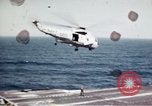
Several aircraft being launched from the flight deck of USS Ranger underway in the South China Sea.
USS Ranger underway in the South China Sea during the Vietnam War. A U.S. Navy SH-3D Sea King helicopter in flight off the side of USS Ranger. The helicopter lifts off. A U.S. Navy KA-3B Skywarrior aircraft being launched. A U.S. Navy A-7B Corsair II being launched from the angle deck and becomes airborne. An F-4J Phantom II aircraft taxis on the deck of USS Ranger, turning completely around. The A-7B seen airborne in the background after being launched from the angled deck. U.S. Navy A-6A Intruder aircraft taxiing on the deck. Two A-6As on the angle deck being prepared for a launch. One A-6A is launched. The second A-6A on launch. U.S. Navy C-1A Trader aircraft taxiing slowly on the deck. The F-4J aircraft in flight. The A- 7B in flight with its wheels down.
CRITICALPAST.COM: About Us | Contact Us | FAQs - How to Order | License Agreement | My Account | My Lightboxes | Shopping Cart | Advanced Search | Featured Collections | Website Terms & Conditions | Privacy Policy ©2026 CriticalPast LLC.
License Agreement |
Terms & Conditions |
Privacy Policy
©2026 CriticalPast LLC.