


 Francais
 Deutsch
 Italiano
Refine Your Search
US-Gliders- stock footage and images
- Showing 12169 to 12174 of 21917 results more
more Hide
Hide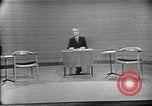
Richard M. Nixon and John F Kennedy give their summation speeches during a presidential election debate in Chicago, Illinois.
The First Kennedy-Nixon Presidential Debate in Chicago, Illinois. Moderator Howard K Smith asks the candidates to give their summation speeches. Republican candidate U.S. Vice President Richard M. Nixon starts his summation speech and compares the progress of the Soviet Union with that of the United States. And he states that in terms of the Gross National Product (GNP), the U.S. is far ahead of the Soviet Union. He compares his proposals with that of Kennedy and states that his own proposals would result in greater growth. He compares his health program which provides a choice of having either government insurance or private insurance with that of Kennedy's health program with compulsory government health insurance under Social Security. He talks about the spendings and inflation during Truman Administration. He concludes his speech and states that U.S. President's should work for every program that would mean growth. Democratic candidate Senator John F Kennedy comments on the statement given by Nixon regarding comparison of the Soviet Union and American economy. He speaks in favor of his proposed health program for aged which was an amendment to the Kerr bill and which provides assistance to all those who were not on Social Security. He thus contrasts Nixon's point on health program for the aged. He concludes his speech and speaks about the goals and responsibilities of the Americans. Moderator Smith thanks the candidates.
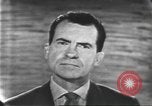
Presidential election debate in Washington DC. Richard Nixon, debating John F. Kennedy, speaks about the spread of Communism.
The second Kennedy-Nixon Presidential Debate in Washington DC, United States. Moderator Frank McGee introduces the candidates - Republican candidate U.S. Vice President Richard M. Nixon and Democratic candidate Senator John F Kennedy. The Moderator tells the rules to the candidates regarding questioning by the reporters. The reporters include Paul Niven, Edward P. Morgan, Alvin Spivak, and Harold R. Levy. Paul Niven asks Nixon to comment on whether Truman Administration was responsible for the loss of China to the Communists. Nixon answers and says that he disagrees with Senator Kennedy's statement that Cuba is lost and certainly China was lost because of Truman Administration. He talks about the decrease in the number of dictators in Southern and Central America in the past years. He speaks about Kennedy's book 'The Strategy for Peace' which prohibits the Americans from interfering in internal affairs of any other state. Kennedy presents his views and says that he never suggested that Cuba was lost. He criticized Nixon because in his press conference in Havana in 1955, he praised the competence and stability of the Batista dictatorship. He criticized the failure of the administration to use its great influence to persuade the Cuban government to hold free elections. He hopes that some day Cuba would rise if the U.S. changes its policies towards it.
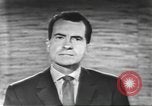
During a presidential election debate in Washington DC, Nixon and Kennedy mention measures to combat unemployment.
The second Kennedy-Nixon Presidential Debate in Washington DC. Harold R. Levy of Newsday asks Republican candidate U.S. Vice President Richard M. Nixon to mention the measures he would advocate to combat unemployment. Nixon states that to combat unemployment, the U.S. should concentrate on depressed areas and analyze sections of society where unemployment exists. He mentions a program for education, for equal job opportunities and for older citizens. He talks about full utilization of government resources and credit expansion in order to fight unemployment. He mentions measures like development of the private sector of the economy, tax reforms and tax cuts to stimulate more jobs. Democratic candidate Senator John F Kennedy talks about the area redevelopment bill passed by his party. He questions as to why Nixon opposes putting medical care for the aged under Social Security. He says that they should increase the use of surplus foods in backward areas and should not impose a high interest rate policy. He concludes and talks about development of educational aid and effective tax policies programs.
Kennedy and Nixon present their views about a summit conference during a presidential election debate in Washington DC.
The second Kennedy-Nixon Presidential Debate in Washington DC, United States. Alvin Spivak of United Press International asks Republican candidate U.S. Vice President Richard M Nixon about the possibility of occurrence of a summit conference after the presidential elections. Nixon states his willingness as the President to meet Soviet Premier Nikita Khrushchev or any other world leader if it would serve the cause of peace. He states that another summit conference will lead to negotiations at the diplomatic level and hamper peace. He concludes that he would hold another summit conference only after some preparation and assurance from Khrushchev that he wanted something meaningful from the conference. Democratic candidate Senator John F Kennedy states that before any summit conference the United States should build its military as well as economic strength. He talks about U.S. commitment to Berlin. He concludes and says that he agrees with Nixon statement in not meeting Mr. Khrushchev unless there were some agreements at the secondary level- foreign ministers and ambassadors - which would indicate that the meeting would have some hope of success, or a useful exchange of ideas.
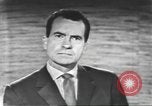
During a presidential election debate in Washington DC, Kennedy and Nixon give their views on the importance of party labels.
The second Kennedy-Nixon Presidential Debate in Washington DC, United States. Harold R Levy of Newsday asks Republican candidate U.S. Vice President Richard M Nixon to comment on the importance of party labels. Nixon answers and talks about Democratic and Republican Presidents. He says that the party label is not important, it is the belief and the leadership qualities of the presidential candidate that are important. He states that it is the people who determine and elect their presidents. He disagrees with Kennedy's statement that his party has not proposed programs. He mentions the programs proposed by his party in fields like education, housing and defense that would lead to the overall development of the nation. Democratic candidate Senator John F Kennedy presents his views and states that party labels are important as they tell about the programs and the candidate. He says that the Democratic party has stood for progress, people's welfare, strong foreign policy and national defense. He compares the approaches used by Democratic presidents with those used by the Republican presidents. He concludes that in the past years the Republicans have opposed housing, care for old age, federal aid to education and minimum wage. Moderator Frank McGee thanks the candidates and mentions future program details.
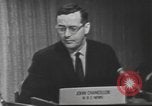
Vice President Nixon and Senator Kennedy debate in the United States over nuclear tests resumed by the Soviet Union.
The fourth presidential election debate held between Democratic nominee Senator John F. Kennedy and Republican nominee U.S. Vice President Richard Nixon in in New York, United States on 21st October 1960. NBC News correspondent John Chancellor asks a question to Senator Kennedy in relation with U.S. relations with the Soviet Union. Correspondent Chancellor asks if Russians have resumed testing of nuclear devices as per news from Atomic Energy Commission of Washington and if the U.S. would resume its own nuclear weapon testing in 1961. Senator Kennedy replies to the question and says that the next President of the United States should make one last effort to secure an agreement on the cessation of nuclear bomb tests. He mentions the Conference for the Reduction and Limitation of Armaments from 1932-1934 held in Geneva, Switzerland. Kennedy says that he believes the effort should be made once more by who so ever is elected the President of the United States. Senator Kennedy says that if they fail in making the effort, the responsibility will be clearly on the Russians and then they'll have to meet their responsibilities for the security of the United States, and they may have to test underground. He says that there may be testing in outer space. Senator Kennedy says that he is most concerned about the whole problem of the spread of atomic weapons. ABC News correspondent Quincy Howe asks the Vice President to comment. Vice President Nixon says that the Soviet Union is filibustering. He says further that the elected president should immediately make a time table to break Soviet filibustering.
CRITICALPAST.COM: About Us | Contact Us | FAQs - How to Order | License Agreement | My Account | My Lightboxes | Shopping Cart | Advanced Search | Featured Collections | Website Terms & Conditions | Privacy Policy ©2026 CriticalPast LLC.
License Agreement |
Terms & Conditions |
Privacy Policy
©2026 CriticalPast LLC.