


 Francais
 Deutsch
 Italiano
Refine Your Search
US-Gliders- stock footage and images
- Showing 1405 to 1410 of 21920 results more
more Hide
Hide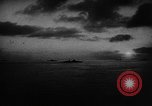
U.S. Navy ships bombarding Okinawa and fighting off attacks by Japanese Kamikaze aircraft in World War II
Conclusion of U.S. Navy film: "The Fleet That Came To Stay." Role of U.S. Navy Task Force 58 during the Battle of Okinawa in World War 2. Opening scene shows ships of U.S. Task Force 58 sitting quietly in waters off the coast of Okinawa, at dawn on May 9, 1945 (VE Day, when Germany surrendered in World War 2). Navy gunners silhouetted against the dawning sky, with twin Bofors anti-aircraft guns. Silhouettes of sailors on early watch. Sailor walks on deck of an aircraft carrier, past parked aircraft with it's vertical stabilizer and rudder riddled to pieces by battle damage. An escort aircraft carrier and other warships are moving slowly past the camera ship. A Douglas Dauntless dive bomber, with only a pilot aboard, takes off from a carrier. Brief glimpse of aircraft taking off from a carrier. It carries a bomb underneath and displays the number 559 on its engine cowling. Numerous American aircraft in formation above the ships. A U.S. cruiser in the distance. Closeups of capital ships bombarding Okinawa with heavy guns and firing anti-aircraft guns at attacking Kamikaze aircraft. Black flak clouds and tracer bullets tracking a Japanese aircraft. Superimposed slate tallies Japanese aircraft shot down: "May 12th: 164; June 3rd: 45; June 6th: 67; June 8th: 30." A kamikaze plane crashes into the sea. Gunners aboard a ship work rapidly to reload their anti-aircraft guns. View of an Essex class aircraft carrier with black flak clouds overhead. Two explosions occur next to her hull. Gunners track a Japanese airplane flying low and close to the water. It passes a carrier and crashes into the sea. More views of sailors working at speed to reload anti-aircraft guns. A sailor firing an Oerlikon 20 mm cannon from gun position atop a ship. A Kamikaze plane crashes at starboard side of an Escort aircraft carrier underway. View of long line of anti-aircraft guns firing simultaneously from beside the flight deck of an aircraft carrier. Smoke rising from the firing and driven by the wind. Remains of a Kamikaze plane spin down amid black flak clouds, after being hit by gunfire. Slate reads "4232 (Japanese planes shot down). The spinning pieces of the Kamikaze plane crash well clear of a nearby Cleveland class light cruiser. Against background of flak filled sky, a Washington Post Newspaper headline is shown reading: "Navy Okinawa Casualties near 10,000 and 2 more ships hit."
U.S. Marines launch the Battle of Tarawa, in the Pacific, during World War II.
U.S. marines engage Japanese during the Battle of Tarawa in World War II. Members of United States 2nd Marine Division walk up gangplanks, in full battle gear, and board ships. Convoy of ships underway in the Pacific Ocean, with weapons on deck visible. Fighter escort aircraft from U.S. aircraft carriers fly in formation over the convoy. A U.S. destroyer pulls alongside to deliver sealed orders on a line stretched between the two vessels. Officer briefs the Marines with a relief map on deck of ship. Marines load ammunition in belts for machine guns. They check and fire weapons. They exercise to relieve tension. Navy and coast guard assault boat coxwains receive last minute instructions from an officer. Chaplain conducts religious services for the Marines before the invasion day. Boats loaded with marines proceed toward the shore. Explosions occur. Aircraft in flight as they strafe and drop bombs on Japanese shore installations. American assault boats approach the beach. Heavy Japanese firing destroys several U.S. assault boats. Marines find some shelter behind a pier extending into the water. Marines are held down by heavy Japanese fire. They suffer heavy casualties and administer aid to wounded.
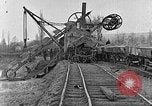
African American troops of the U.S. 501st Army Engineers, build port facilities at Brest, France, during World War I
Army Engineers of the American Expeditionary Forces (AEF) use a rail-mounted conveyer-type bucket dredge to deepen a channel for Allied ships on the Penfeld River at Brest, France, during World War 1. In the background, the Kerguillo mansion in the suburb Bohars, can be seen. The dreged spoils are being emptied into a string of open rail cars. Men work around the base of the dredge, loosening soil with long poles. Army engineers, including African American soldiers of the U.S. Army 501st Engineers work with French civilians to build wharfs on the Penfeld River. They stand with a rail car of concrete at the job site, and manually remove it when emptied. Construction supplies are piled up at the port, where 501st Engineer members are seen with other U.S. soldiers and French soldiers. View from rail car (not seen) moving along track, away from the port. A locomotive is seen with "USA" painted on its side,next to a newly constructed rail platform. A French workman carrying a large can walks next to the tracks. A railroad crane stands on a siding. Workmen build a station on the platform. (One raises his arms out wide for the camera.) An open rail car sits by the platform. A soldier from the 501st crosses the track near a rail car filled with wooden ties. View of U.S. troops running from work on a train of rail cars, as they respond to noon mess call. African American soldiers of the 501st Engineers getting lunch and eating at an outdoor mess. Four of them tap dance for the camera, as their comrades watch and clap.
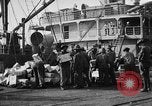
African American stevedores of U.S. Army Service Battalion handle war supply cargo at seaport in Bordeaux, France, during World War I.
African American stevedores of U.S. Army Service Battalion, World War 1, transfer military cargo from ships to railroad cars, at seaport, in Bordeaux, France, supplying Base Section Number 2. They move cartons, piled up on pier, to trolleys. U.S. Army officer steps forward to organize work, and another soldier starts to help, tossing cartons to stevedores. Freighter in the background. Stevedore rides past on motorized tractor. Others stand near stack of iron bars, as dock crane lowers cargo net filled with cartons. Stevedores release cargo cartons from crane sling. African American U.S. Army stevedores pose for the camera. Men haul wheel cart and trailer. Crane loads iron bar stack aboard railroad car, as U.S. Army supervisor personally shifts its direction, as it descends, to allow it to fit.
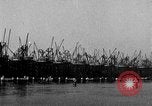
Ship building derricks and structures. Flag raising ceremony at the U.S. Shipping Board Building in Washington DC.
Mass of ship building derricks and structures, at waters edge, viewed from boat entering channel. Members of the U.S. Shipping Board and the Emergency Fleet Corporation preparing to implement orders to commandeer all U.S. shipyards and hulls, under construction therein, for the U.S. war effort. Shipping Board Chairman, Edward N. Hurley, is at corner leaning toward the man at head of table (Rear Admiral Washington L. Capps, General Manager of Emergency Fleet Corporation ?), U.S. Shipping Board flag is raised at a shipyard building, where it flutters in wind. A number of Army soldiers present in uniform. Official addresses gathering of shipyard workers and explains the takeover and has them pledge, with hands raised, to work for the success of the war effort. Other officials speak, as well. The shipyard workers wave their hats in sign of approval. Everyone leaves to get back to building ships.
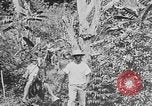
U.S. Marines advance through mountainous Haitian jungle terrain and march prisoners to prison in Haiti,West Indies.
U.S. Marines march prisoners in Haiti,West Indies. U.S. Marines on patrol in the Haitian jungle. Marines mounted on horseback. Marines cross stream and advance through mountainous jungle terrain. Haitian prisoners are marched on field by the U.S. Marines. Prisoners enter prison. U.S. Marines guard prison.
CRITICALPAST.COM: About Us | Contact Us | FAQs - How to Order | License Agreement | My Account | My Lightboxes | Shopping Cart | Advanced Search | Featured Collections | Website Terms & Conditions | Privacy Policy ©2026 CriticalPast LLC.
License Agreement |
Terms & Conditions |
Privacy Policy
©2026 CriticalPast LLC.