


 Francais
 Deutsch
 Italiano
Refine Your Search
US-Gliders- stock footage and images
- Showing 2155 to 2160 of 21924 results more
more Hide
Hide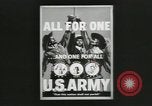
The three U.S. Army components are : the Army Reserves, the Regular Army and the Army National Guard.
Components of the U.S. Army. A poster in the United States reads 'All for One,One for all U.S. Army'. The three army components are : the Army Reserve, the Regular Army and the Army National Guard. A poster reads ' Serve in the Army Reserve'. Men of the Army Reserve join the Active Army during a summer training in field exercises. A large group of U.S. Army soldiers marching on a field. Soldier works on a typewriter. Other soldiers learn to load and fire artillery.
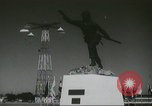
Sketches of U.S. Army Infantrymen fighting in every conflict from the Revolution to the Korean War.
Sketches of U.S. Army Infantry in the United States. 'Follow Me' statue at the U.S. Army Infantry School at Fort Benning, Georgia. The sketches depict infantrymen in various conflicts in American history, from Washington in the Revolution to combat in Korea. An infantryman holds the American flag. U.S. Army Infantry during the invasion of Africa. They fight in the Korea War.
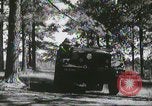
Paratroopers are trained to jump from aircraft and carry supplies at the U.S. Army Airborne School at Fort Benning in Georgia.
A training at the U.S. Army Airborne School at Fort Benning in Georgia, United States. Trucks loaded with infantry soldiers drive through a field. Paratroopers descend from airborne aircraft. The soldiers jump from a wall and somersault during their training. They jump from a tower using ropes and then using parachutes. They jump from aircraft in flight. They also learn to carry their supplies and equipment
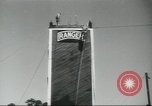
U.S. Army Rangers learn river crossing and mountaineering techniques during their training in the United States.
Training of U.S. Army Rangers in the United States. U.S. Army Rangers climb down a wall, run through a forest and perform exercises during their physical training. They climb up ropes and do wrestling. They perform a tug of war. They learn to use explosions for demolition work. They walk through a jungle during a patrolling mission. They cross a river by walking on a tight rope and they climb up a rope ladder during a confidence building course. They learn river crossing and mountaineering techniques. They study about reptiles.
U.S. Army Special Forces soldiers learn foreign languages and International Morse Codes in the United States.
U.S. Army Special Forces soldiers undergo a training in the United States. 'De oppresso liber' is the motto of the U.S. Army Special Forces. A sign board reads 'home of the U.S. Army Special Warfare Center'. Special Forces soldiers march on a field. They study foreign languages and are prepared to face brainwashing. They learn International Morse Codes and their transmission. They learn judo and karate. They study about medical and surgical instruments
U.S. Army Airborne soldiers learn pre jump procedures and parachute handling during their training in the United States.
U.S. Army Airborne soldiers undergo a training in the United States. A sign board reads 'Airborne Tower Training Area'. U.S. Army Airborne soldiers run during their physical training. They get haircuts. They try their uniforms and boots. They do mud wrestling and push ups during their exercise session. They learn to fall and be in a proper body position. They learn pre jump procedures and travel between towers swinging from ropes. The soldiers receive individual attention and constant instruction about safe jumping from an instructor. They learn to handle parachutes. They learn the methods of controlling the parachutes during descend and they jump off from a tower using parachutes.
CRITICALPAST.COM: About Us | Contact Us | FAQs - How to Order | License Agreement | My Account | My Lightboxes | Shopping Cart | Advanced Search | Featured Collections | Website Terms & Conditions | Privacy Policy ©2026 CriticalPast LLC.
License Agreement |
Terms & Conditions |
Privacy Policy
©2026 CriticalPast LLC.