


 Francais
 Deutsch
 Italiano
Refine Your Search
US-Gliders- stock footage and images
- Showing 2545 to 2550 of 21924 results more
more Hide
Hide
U.S. Army leadership inspects Adolf Hitler's Kehlsteinhaus located on Mount Watzmann in Bavaria, Germany, near Berchtesgaden (WW2)
Kehlsteinhaus, Adolf Hitler's Eagle's Nest retreat at Berchtesgaden (German municipality) located on Mount Watzmann in Bavaria, Germany after World War II. U.S. Army forces inspecting the retreat, including General Omar Bradley and Major General Maxwell D. Taylor. A board reads ' Hitler's Home'. U.S. troops look out at the Bavarian Alps.
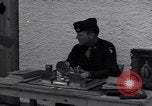
U.S. Captain Harry Anderson recording Hermann Goring's art collection in Berchtesgaden, Germany
U.S. Army Captain Harry Anderson sits at a desk in Berchtesgaden, Germany just after end of World War II in Europe. Walther Andreas Hofer, Art Director for Hermann Goering, brings in some papers found in a freight car. Anderson, who has been cataloging Nazi stolen art in Goering's collection, holds a receipt from Dr Galerie W A Luz. Goring's solid gold blotter and ink stand set on Anderson's desk. A painting in the background on the ground, leaning against a wall. Scene changes to town: Street sign: "Berchtesgaden Postamt" (Post office). German people wait in line outside a food shop. Sign reads "Off Limits - This building is not to be entered or used for any Military Purpose." German citizens wait in line at the food shop.
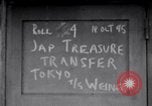
U.S. Army convoy passes by a road and Japanese treasure unloaded at a warehouse in Tokyo, Japan.
U.S. Army tank followed by a truck convoy passes by a road in Japan. Workers unload Japanese treasure (silver and gold bars) at a warehouse. U.S. Army soldier stands outside the warehouse and supervises the unloading operation. (World War II period).
Workers handle Japanese treasure under supervision of U.S. soldier at a warehouse in Tokyo, Japan.
Workers handle Japanese treasure at a warehouse in Tokyo, Japan. Workers and U.S. troops at the warehouse. U.S. troops supervise the operation. (World War II period).
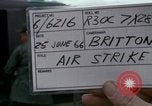
Standing by UH-1D helicopter, U.S. Army Major General John Norton speaks to success of air strike missions in Vietnam.
United States Army's Major General John Norton stands beside an army UH-1D helicopter at the An Khe Air Base in Vietnam. He speaks on the success off their air strikes missions and says that they have demonstrated a successful use of close air support by deployment of various aircraft in Vietnam. Another UH-1D on ground in the background with U.S. troops aboard it. (Vietnam War period).
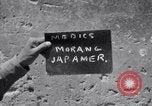
Wounded of the U.S. 442nd Regimental Combat Team treated during the Rome-Arno Campaign of World War II, in Italy
U.S. corpsmen at 3rd Battalion Aid station attend to a wounded soldier of the 34th Infantry Division's 442nd Regimental Combat Team (comprising U.S. soldiers of Japanese ancestry) in the Italian Rome-Arno Campaign during World War 2. They carry him from a jeep into a field hospital, where they check an information tag on his uniform. View of his bandaged left foot. Medics attend another wounded solder and bandage his wrist before moving him on his stretcher into the building. Two corpsmen lift a wounded soldier, in sitting position, into a field ambulance, which then drives away. (Note: the opening slate refers to Lt. Frank Morang, 196th Signal Photo Company, who reportedly received a field commission for his outstanding work in the North African, Sicilian and Italian Campaigns.)
CRITICALPAST.COM: About Us | Contact Us | FAQs - How to Order | License Agreement | My Account | My Lightboxes | Shopping Cart | Advanced Search | Featured Collections | Website Terms & Conditions | Privacy Policy ©2026 CriticalPast LLC.
License Agreement |
Terms & Conditions |
Privacy Policy
©2026 CriticalPast LLC.