


 Francais
 Deutsch
 Italiano
Refine Your Search
US-Gliders- stock footage and images
- Showing 379 to 384 of 21920 results more
more Hide
Hide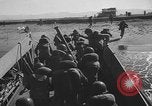
U.S. Marine Corps and U.S. Air Force raid Vietcong strongholds and aid South Vietnamese in fight against the Vietcong rebels.
United States expands help to South Vietnam in their fight with the Vietcong rebels, early in the Vietnam War. United States Marine Corps land on the Vietnam shore. Landing crafts and amphibious vehicles reach the shore. Marines advance inwards from the shore. Military vehicles offload from the landing craft vehicles. U.S. helicopters patrols in search of Vietcong. South Vietnamese soldiers in jungles. Aerial view of U.S. Navy F-4J Phantom II fighter from the USS Enterprise in formation, with USS Enterprise aircraft carrier (CVN-65) visible below. Aerial view as U.S. aircraft attack ground targets. Explosions on ground as targets are hit by fighter jets. Aerial view of two U.S. Air Force B-52 bombers in flight, with bomb bay doors open and bombs raining down on targets. View of explosions on ground as bombs hit target.

The U.S. Army IX Corps soldiers camouflages military trucks and aircrafts at a desert training center in the U.S.
U.S. Army IX Corps maneuvers at the desert training center in United States during World War II. A soldier weaves camouflage netting. A U.S. military truck camouflaged by the netting. A U.S. fighter aircraft also camouflaged by the netting. A U.S. tank camouflaged by canvas.
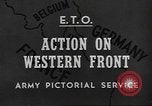
Reinforcements for U.S. 35th Infantry Division are briefed. U.S. troops occupy Houffalize, Belgium during World War 2
The United States Army on the Western Front during World War II. A map depicts Allied offensives at Malmedy, Houffalize and Bastogne. New reinforcements for the 134th Infantry Regiment of the U.S. 35th Infantry Division are briefed by an officer near Bastogne, Belgium, on January 10, 1945. Aerial view of tanks and infantry of the U.S. 6th Armored Division moving across a snow-covered barren landscape as they attack German troops in Belgium West of the Luxembourg border. Officers observe through binoculars. U.S. patrols of 1st and 3rd United States Armies meet on January 16 as they capture Houffalize. View of bombed out buildings in Houffalize on January 18.. U.S. troops occupy Houfflaize. A damaged German Pz.III tank on a street and an overturned Panther tank with a hole in its underside in a river. The troops walk along bombed out buildings in Houffalize.
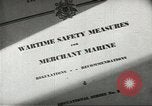
Two U.S. Merchant Marine seamen who survived in life rafts are interviewed by U.S. officials.
Wartime safety measures for United States Merchant seamen. A document reads 'Wartime Safety Measures for Merchant Marine'. Survivors of sinking ships are asked to give suggestions by U.S. officials to improve survival at sea. Two Merchant seamen are interviewed by officials. They share their experience of spending days on a raft after sinking of their ship. Both seamen are shown on a raft floating at sea. They wave to ships passing faraway but ships did not notice them on raft. Officer asks if they had any signaling device on raft. Seaman says they never had any device but they used a tin can as a reflector to signal the ships. An aircraft flies overhead and seaman uses tin can to signal the aircraft and a cutter is sent for rescue. A U.S. Navy officer holds a mirror which is made required equipment on life rafts.
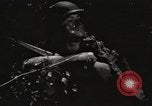
Methods of communications used by U.S. Marine Corps in jungle warfare in Pacific Theater during World War II.
Reconstruction about deployment of U.S. Marine Corps on islands of Pacific and methods of communication used by them at night in jungle warfare during World War II. A string system used by Marines to link a foxhole to another foxhole. Radio communication method being used as a radio operator sends code messages and receive message authenticator from answering operator. Radio operator turns the light off after he delivers the message.
U.S. airmen inspect U.S. Army Air Forces A-36 Invader dive bombers at an airfield in Sicily during World War 2
U.S. Army Air Forces A-36 Invader dive bombers of 86th Fighter Bomber Group in Sicily during World War II. A-36 in flight over Sicily. A-36 taxis at an airfield. Airmen inspect A-36. Crewmen drink and eat around U.S. army jeep parked at the airfield. Supply crates being unloaded by U.S. troops from U.S. Army Air Forces C-47 Skytrain transport aircraft parked on the airfield.
CRITICALPAST.COM: About Us | Contact Us | FAQs - How to Order | License Agreement | My Account | My Lightboxes | Shopping Cart | Advanced Search | Featured Collections | Website Terms & Conditions | Privacy Policy ©2026 CriticalPast LLC.
License Agreement |
Terms & Conditions |
Privacy Policy
©2026 CriticalPast LLC.