


 Francais
 Deutsch
 Italiano

Refine Your Search
United States 1982 stock footage and images
- Showing 907 to 912 of 34981 results more
 Hide
Color Sound
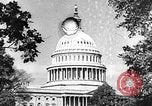
Thomas Woodrow Wilson works at desk and soldiers with John Joseph Pershing on ship in the United States
U.S. troops leave United States during World War I. Exteriors of the United States Capitol. President of the United States Thomas Woodrow Wilson looks out from a window. He works at desk. Close-up view of document that is U.S. declaration of war against Germany. U.S. Soldiers march on city streets, bound for war. American soldiers board ship. Soldiers crowded on deck of the transport ship heading for war in France. U.S. Army General John Joseph Pershing on ship. Sunset at sea.
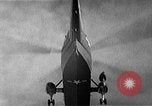
Events leading to Cuban Missile Crisis as United States military prepares for emergency in October 1962.
Events leading to the Cuban Missile Crisis of October 1962 when the United States and the Soviet Union confronted each other with nuclear destruction. A helicopter lands on the White House lawn in Washington DC. Scenes of Cuba and emergence of Castro in recent prior years. Beach views in Cuba. A military parade in an earlier time, with Cuban troops marching in front of the Monument to the Battleship Maine. Next scene shows desecration and destruction of the Battleship Maine Monument in Cuba.. A crowd of cheering Cuban people as Fidel Castro enters Havana, Cuba in 1959. Exterior view of United Nations building in New York City. Fidel Castro and Soviet Premier Nikita Khrushchev embrace during meeting in New York in September 1960. Deputy Premier of the Soviet Union Anastas Mikoyan deplanes and is greeted by Fidel Castro in Havana. A trade agreement between Russia and Cuba signed by Fidel Castro. Russian cargo ships en route to Havana. Cuban refugees in small boats. A map depicts proximity of Cuba to the U.S. U.S. surveillance aircraft heading for Cuba. A sign reads 'HQ. 4080 S W Intelligence Division'. Men examine reconnaissance photographs of Soviet nuclear missiles in Cuba. The photographs show transports and tents for fueling and maintenance. A sign reads 'Strategic Missile Facility GAM 77 Combined Systems'. U.S. missiles rolled out of hangar and readied for emergency. A U.S. Air Force B-52 bomber aircraft takes off from an airfield. U.S. Navy ships in the Atlantic Ocean. A U.S. submarine underway at sea.
U.S. President Richard Nixon works to solve several domestic and international problems during his tenure as the President.
From a pro-Nixon "documentary" called "The Nixon Years: Change Without Chaos" covering President Richard Nixon's first four years in office. Released during his 1972 reelection campaign. U.S. Police clash with demonstrators at an anti-Vietnam war protest. A U.S. soldier in Vietnam firing a machine gun into the jungle overgrowth. People burning Vietnam draft cards. Ground and aerial views of riots in Washington DC with burning buildings and smoke rising in neighborhoods beyond the U.S. Capitol. A middle aged American woman yells "What nerve! This is America?" Nixon speaking at a campaign rally of Richard Nixon during Presidential elections of 1968. Nixon with his family stands on a stage at a public meeting. He addresses and large crowd of spectators applaud. Nixon walks on the ramp of U.S. Air Force One aircraft (which he called The Spirit of 76) after being elected as the President. Nixon confers to settle the cold war situation aboard. U.S. soldiers march during an operation in Vietnam war. Nixon works in his office to bring down the cost of living and inflation. U.S. Secretary of State Dr. Kissinger and others meet at Paris Peace Conference to talk about the Vietnam war. While addressing the Congress Nixon proposes his initiatives for betterment of civilians. Nixon signs a bill in Congress. He visits the U.S. troops involved in Vietnam. A large number of troops withdrawn from Vietnam. Friends and relatives of American soldiers and sailors receive them with warmth as they return from Vietnam. Happy friends and family at a port kiss and hug soldiers returning from Vietnam.
General Henry (Hap) Arnold reports to the nation on status of U.S. Army Air Forces in World War II
General Henry H. Arnold, Commander of the U.S. Army Air Forces, seated in front of world map, reports that since start of World War 2, the U.S. Air Force has gone from number 7, to number 1, in the world. Defense plant workers are shown walking near their place of work. A college football game shown in progress. Individual young men who left civilian life to became pilots, bombardiers, radio technicians, and gunners, in the Air Forces. A commercial DC-3 aircraft taxing to park at an airport. Shown are people who make the Air Forces possible, including many men and women workers at factories and manufacturing plants making aircraft and parts for the World War 2 effort: Steel workers, a woman working on a plane fuselage, actor James Stewart (in uniform), a welder at work, a typist, a machinist using a caliper, and an older couple at home, who forgoe driving their private car, shown covered in their garage. The flaming wreckage of U.S. aircraft at Hickam Field, on December 7, 1941. Large formation of German Heinkel He-111 bombers in flight. Formation of Japanese Mitsubishi G3M (Nell) bombers. U.S. P-40 pursuit planes taxiing out from parking places. Assembly line in U.S. aircraft manufacturing plant. U.S. Army Air Forces B-17 Flying Fortress planes on assembly lines. Workmen work on engines and aircraft fuselages. At the Douglas plant U.S. Army Air Forces B-26 Marauder bombers being assembled. Workmen inserting machine guns into a wing.

United States soldier training and preparedness during Cold War
A sign board reads: 'Border Operations'. Sign board along the side of a road in Germany for an inner-Germany border at Ronshausen in the Rotenburg district. A U.S. Army jeep drives past on the street. Soldiers advance along supply lines to protect them. Soldiers in training during Cold War receive training in firing a Browning M1919A4 .30 caliber machine gun. Aerial view of snow covered arctic mountain region. A sign board reads: "Army Arctic Training Center, Big Delta, Alaska." U.S Army soldiers training in Alaska are seen on skis, firing rifles in prone position on the snow. Scene changes to a sign board that reads, "Organized Reserve Corps U.S. Army." An officer briefs U.S. Army Reserve soldiers (wearing civilian clothing) about ammunition and equipment in a briefing room. U.S. Army soldiers exercise for their physical fitness. They are seen doing synchronized callisthenic drills including pushups on a large field. Men in a radio room receiving a transmission. One of the men presses a button to ring an alarm bell. View of an alarm ringing. U.S. Army soldiers in a dining hall or mess hall hear the alarm and scramble and run to battle stations during a Cold War aerial attack drill. Soldiers running toward outdoor gun positions, past a rotating radar position. U.S. Army soldiers taking positions, with some entering communication vans and some that man an anti-aircraft gun. Soldier plotting positions on a clear, erasable wall board. Wide view of soldiers manning a 90-mm Anti-aircraft gun M1 on mount M1A1.

Chaplains give memorial address during the Memorial services for the USS Thresher at Portsmouth Naval Shipyard,United States.
Memorial services for the U.S. Navy nuclear fast attack submarine Thresher (SSN-593) at Portsmouth Naval Shipyard,United States. Enlisted personnel man the Memorial. Dependents of the deceased men of the U.S. Navy nuclear fast attack submarine Thresher (SSN-593) arrive for the ceremony. People take their seats. Vice Admiral Smedberg ,Chief of Bureau of Naval Personnel,Vice Admiral Elton Watters Grenfell,(COMSUBLANT)Commander Submarine Force U.S. Atlantic Fleet arrive. High ranking officers take their seats. Color guard aboard the memorial. Crowd stand during the National Anthem. Mr K E Belieu,Assistant Secretary of Navy (SECNAV) for Installation and Logistics speaks from podium on Memorial. United States Navy officer Rabbi Jacobson speaks and gives a prayer. Choral group perform on the memorial. Lieutenant Commander Keanley,United States Navy Chaplain give memorial address and then leave the podium. Chief of the United States Navy Chaplains,Rear Admiral J Floyd Dreith gives memorial address. Unidentified high ranking officer speaks from podium. Officers on the memorial at the salute. Dependents and public stand during the ceremony. Dependents leave their seats and disperse after the ceremony.
CRITICALPAST.COM: About Us | Contact Us | FAQs - How to Order | License Agreement | My Account | My Lightboxes | Shopping Cart | Advanced Search | Featured Collections | Website Terms & Conditions | Privacy Policy ©2026 CriticalPast LLC.
License Agreement |
Terms & Conditions |
Privacy Policy
©2026 CriticalPast LLC.