


 Francais
 Deutsch
 Italiano
Refine Your Search
V2 stock footage and images
- Showing 5269 to 5274 of 9941 results more
more Hide
Hide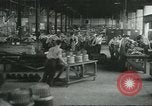
Workers returning to oil heater plants, rolling mills, Douglas Aircraft Plant, and Atlas brewing company in the United States
Renewed manufacturing activity throughout the nation recalls thousands of workers as the American industry forges onward and shows some signs of improvement during the great depression. Bloomington, Illinois: Workers manufacture oil heaters. They work on various machines and equipment. Middleton, Ohio: 2400 men at work in one of the big rolling mill companies. The workers arrive at the steel mill. Steel processing. Santa Monica, California: Men and women report for work at the Douglas Aircraft Plant. They work on a tight schedule for the new type Army torpedo and bombing planes. Men work on various parts of the aircraft. Chicago, Illinois: The Atlas Brewing Company, a huge brewery and bottling works where the production has been speeded to almost 30,000 bottles of beer an hour to meet a surge of demand following the passing of the Volstead Act allowing 3.2 beer (3.2% alchohol), near the end of prohibition in America. Beer Bottles move on conveyor belts. The bottles are filled, packed in crates and readied for transportation.
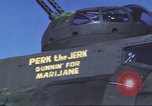
Names and artwork on 303rd Bomb Group B-17s seen at Dow Field, Bangor, Maine, on their way to England, during World War Two.
World War II. B-17s of the United States Army Air Force (USAAF) 303rd Bombardment Group (Heavy) 'Hell's Angels' staging at Dow Field, Bangor, Maine, on their way to their base at RAF Station Molesworth, in England. Airmen work on a parked Boeing B-17 Flying Fortress. Names and nose art on the B-17s: Art work on nose, body, and tail art reveal aircraft names like: 'Perk the Jerk', 'Gunnin for Marijane' under the dorsal turret, 'Duke of Paducah', 'Klee's Lounge', 'Kiler Kilgore', 'Hell Cat', 'The 8 Ball', 'The Duchess', 'One 'o' Clock Jump', 'The Devil Himself' under the aircraft nose, 'Bad Check', 'Delta Rebel No. 2', 'Knock-Out Dropper', 'Sky Club' and 'Continental' on propellers, 'Wild Bill' on a nose, 'Pepper Box' under a dorsal turret, 'Wee Willie Woo', 'Hornet's Nest', 'Lady Fairweather', 'Margaret - M' under a dorsal turret, 'Canuck' on a nose, 'Squirt' and 'Maggie' on propellers, 'Mimi' on a nose. A B-17 called 'The Green Hornet'. Two airmen stand under the aircraft. 'Yahoodi' with 'Si the Gonuf' made on an aircraft. Note: From Brian O’Neill’s “303rd Bombardment Group” here is the fate of the name ships in this film. “Hell Cat” 41-24580, pilot: T.O. O’Connor, fate: MIA 23 Jan 43 “The 8 Ball” 41-24581, pilot: W.R. Calhoun, fate: C/L UK 20 Dec 43 “The Duchess” 41-24561, pilot: H.L. Stouse, fate: ret USA, 7 Jul 44 “One O’Clock Jump” 41-24582, pilot: W.N. Frost, fate: MIA 12 Dec 42 “The Devil Himself” 41-24612, pilot: R.S. Hayes, fate: ret USA 20 Dec 44 “Bad Check” 41-24587, pilot: B.B. Southworth Jr., fate: MIA 11 Jan 44 “Knockout Dropper” 41-24605, pilot: J. Rolle, fate: ret USA 27 Mar 44 “Lady Fairweather” 41-24568, pilot: A.R. Redding, fate: MIA 23 Nov 42 “The Green Hornet” 41-24603, pilot: E.J. Sanderson, fate: MIA 23 Nov 42 “Yehudi” 41-24608, pilot: F.A. Saunders, fate MIA 3 Jan 43 (Also seen is a 91at Bomb Group B-17:“Delta Rebel No. 2” 42-5077, pilot: Lt Birdsong, fate: MIA 12 Aug 43. It is seen because the 91st BG was passing through Dow Field at the same time, during deployment to England.)
Supplies are being loaded onto ships in the United States and a U.S. convoy at sea; recruitment film for Merchant Marines
A World War II recruitment film bulletin 'Wanted: Men for Merchant Marine' asking men to join the United States Merchant Marines and go aboard Liberty Ships and other cargo ships supporting the United States war effort during World War 2. A World War II American ship convoy at sea. An official works in Ship Personnel Office aboard a ship. Merchant seamen board a ship. A group of engineers, seamen, radio telegraphers, cooks, bakers and mess men during a training. Supplies are loaded onto a ship. Tanks, bombs and locomotive are hoisted by a crane and loaded onto the ship. Seamen work aboard the ships. Narrator speaks of military materiel delivered by ships and a series of images of American military equipment in action in Europe during World War 2 is shown: Line of camouflage U.S. army tanks fire. U.S. Army Air Force bomber aircraft at an airfield including one with a damaged nose. U.S. Army tractor hauls a long artillery piece on war torn streets of a European city. U.S. Army tank moving by fast on a European paved roadway. A merchant ship at sea. A ship convoy at sea.
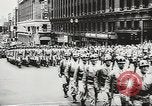
Work and achievements of Harry S. Truman during his first Presidential term in the United States
President Harry S. Truman marches with veteran soldiers of U.S. Army Company D (129th Field Artillery) with whom he served as an officer in World War 1. Wide view of men lined up on White House lawn. Disabled veteran soldiers of World War 2 greet the President. Narrator discusses problem of lack of housing for veterans and their families after World War 2. Aerial view of trailer homes or recreational vehicle (RV) camper units lined up in open space, serving as temporary housing for veterans. Truman sitting at desk while he signs the Veterans Emergency Housing Act of 1946. Views of long lines of new homes being built, and construction workers hammering to build frames of new houses in the United States. During a time of price inflation, scene shows grocer changing price signs on eggs, meats, cheeses to show increasing prices. Truman ata work in his office reviewing paperwork at his desk. Narrator mentions Taft Hartley Labor Act that Truman vetoed. View of car on road with sign on side that reads, "Veto Hartley Taft Slave Labor Bill." President Truman reading at his desk. Close up view of cover page of report entitled "To Secure These Rights. The Report of The President's Committee on Civil Rights. View of Episcopal church Bishop Henry Knox Sherrill seated at a desk. Bishop Sherrill is talking to another man. Narrator states that Truman acted on a civil rights program recommended by Bishop Sherrill, head of the Civil Rights Commission. Car pulling up to portico of White House and view of President Truman shaking hands with visiting President of Mexico, Miguel Alemán. President Truman being presented a sacred Torah by Israeli President Weizmann. Discusses foreign policy matters with Secretary of State George Marshall and comes up with Truman doctrine, Marshall plan and European recovery program. View of Truman signing Economic Cooperation Act of 1948 on April 3, 1948 (of which the Marshall Plan was a part).
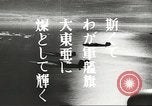
Montage of scenes showing Japanese Imperial Navy aircraft and warships
Japanese Imperial Navy operations and exercises in World War 2. Large formation of Japanese Mitsubishi G3M (Nell) bombers in flight, over a bay. Shadow of one in water below. A formation of Japanese Mitsubishi A6M (Zero/Zeke) Fighter airplanes. Aerial view of Japanese warships executing coordinated maneuvers below. Two Japanese aircraft carriers in calm waters. Aichi D3A2 (Val) dive bombers take off from carrier. A Japanese battleship making way in heavy seas and later in fog and rain. A column of Japanese warships, including a battleship, underway. Close view of Takao class heavy cruiser. Japanese sailor signalling with semaphore flags. Ise class battleship underway and firing guns. View of torpedo tubes on a ship. Japanese Battleships firing heavy guns and antiaircraft guns during gunnery practice. During this exercise, the Japanese battleship Hyuga, experiences an explosion in the left gun breach of her #5 turret. Smoke billows from the turret and flames are seen coming out of, and around the the gun barrels. Column of Japanese heavy cruisers turning to port.The Japanese rising sun Naval ensign in the breeze.
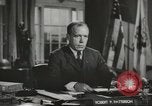
American Undersecretary of War speaks to difficulties facing Allies in confronting Germany and Japan in World War II
Undersecretary of War, Robert Porter Patterson, Sr. speaks about a report from the General staff outlining the needs for combating Germany and Japan in World War 2. He cites Operation Husky, the invasion of Sicily, as an example of what will be needed. He continues to narrate in the background as an animated map appears showing the buildup of supplies and Allied forces in North Africa; Allied air forces flying 60 thousand sorties over Sicily and, the direct amphibious assault using 3,200 vessels. Map also depicts opposing forces of 12 (“unwilling”) Italian Divisions and 3-1/2 German Divisions. View of Allied troops carrying some of their 31 thousand casualties on stretchers from field ambulances. Allied medics attending to the wounded. Some are seen lying on stretchers in a row on the ground near a wall. Interior of a field hospital where surgeons and other medical personnel treat the wounded. Animated map shifts to Europe with Germany at its center, showing , in contrast to Sicily that was only an “outpost,”, the heavily fortified perimeter of Axis controlled areas; the axis industrial might; and the disposition of 300 German Divisions (mostly on the Eastern front) defending the region. Next, the map illustrates Japan’s defended regions in the Pacific Image returns to Undersecretary Patterson i n his office, speaking of the Allied offensives planned for next year (1944), and emphasizing their challenge and difficulty. Scene shifts to General Jonathan Wainwright and his garrison at Corregidor, in the Philippines, surrendering to Japanese forces in 1941. Japanese military camera pans over the Americans being taken prisoner. Other Americans and Filipinos are seen being marched together under guard. Scene shifts to classic views of the Japanese attack on Pearl Harbor, Hawaii, on December 7, 1941. View of Japanese soldiers executing two Chinese civilians in 1937. Dangling bodies of persons hung by Nazis during Operation Barbarossa in Russia, in 1941 A Russian soldier comforts a little girl as he escorts her across a snowy landscape. Time bomb left by German forces retreating from Naples, Italy, in 1943, blows up a Post office building . Views of damage to building and bodies of victims. American Military Police assisting a victim. American soldiers carrying an injured civilian on a litter. Scene shifts to British Foreign Minister, Anthony Eden, Soviet Foreign Minister, Vyacheslav Molotov, and U.S. Secretary of State, Cordell Hull, entering a hall in the Spiridonovka Palace, during the 1943 Moscow Conference in Russia. Close-up of the American, Soviet, and British flags on a table. View of many delegates seated around the table. Close-up of Molotov, Eden, and Hull signing conference document.
CRITICALPAST.COM: About Us | Contact Us | FAQs - How to Order | License Agreement | My Account | My Lightboxes | Shopping Cart | Advanced Search | Featured Collections | Website Terms & Conditions | Privacy Policy ©2026 CriticalPast LLC.
License Agreement |
Terms & Conditions |
Privacy Policy
©2026 CriticalPast LLC.