


 Francais
 Deutsch
 Italiano
Refine Your Search
Vietnam Bien Hoa Air Base 1968 stock footage and images
- Showing 9625 to 9630 of 13286 results more
more Hide
Hide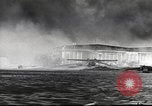
Salvage operations begin after the Japanese attack on Pearl Harbor, Hawaii, bringing the U.S. into World War II.
Views of Pearl Harbor and environs,immediately after the Japanese air raid on December 7, 1941, that forced the U.S. into World War 2 in the Pacific. Fire smoke and Wreckage, including a Navy Catalina flying boat, on Ford Island. Mechanics salvaging parts from the remaining front half (tail missing) of a U.S. Army Air Forces B-17 bomber on the tarmac at Hickam Field. Wings from a B-17 with fuselage missing, in a hangar. Pieces of Air Forces airplanes strewn in front of damaged hangar. Pieces of U.S. Navy aircraft litter the ramp in front of a Ford Island hangar. Workers in a dinghy moving in front of bomb-damaged U.S. battleships. Workers standing on the capsized hull of the USS Arizona. A diver in suit and helmet going below decks of a sunken ship. Debris floating in the water. Pumps discharging water from a damaged battleship.
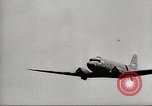
A Japanese Mitsubishi A6M3 Type 32 Zero fighter plane being tested at Wright Field, Ohio, during World War II
Army Air Forces records describe this as flight tests conducted at Wright Field on a Japanese Mitsubishi Type 0 MK2-SSF Hamp fighter plane, Army Air Forces (AAF) No. EB-201. (Recognized later, as a variant of the Zero, these Mitsubishi A6M3 Type 32 planes were renamed "Zeke 32.") Flight tests were made from January 9th to March 10th, 1944, to compare this aircraft with AAF fighters and to verify tests made in Australia by the Special Duties and Performance Flight of T.S.-7, Directorate of Technical Services, Melbourne. Test pilot in the cockpit with engine running. Closeup of pilot (possibly Captain Ralph C. Hoewing, who became first Commandant of the AAF Test Pilot School). He takes off from the airfield. and is seen in flight. Various aerial views of the Zero are seen including: flying overhead and from above as it flies over Ohio farmland. The pilot enters a shallow climb; and is seen from above and behind. He performs a slow descending roll. Finally, he buzzes the airfield at low altitude and high speed, and then brings the aircraft in for a smooth landing. (Note: This aircraft was rebuilt by the Allied Technical Air Intelligence Unit in Hangar 7 at Eagle Farm Airfield, Brisbane, Australia, from the wrecks of five Mitsubishi A6M3 Type 32 Zeke's captured at Buna, New Guinea, during the war.) [ Ref. WWW. hangar7.org.au ]
U.S. troops and their improvised movie theaters in combat zones during World War II
A U.S. Army Air Forces C-47 airplane carrying movies among its cargo bound from New Caledonia to troops stationed at Bougainville, Solomon Islands, during World War 2. Views inside the airplane cabin, where troops sit alongside the cargo. Glimpse from cockpit of aircraft on final approach to land on the airfield. Troops unloading canisters of movie films from the C-47. (Handing the movie reels out of the C-47 is Russ Laming of the 13th Troop Carrier Squadron, a.k.a the Thirsty 13th.) Army truck carrying mail bags and movie films driving away from the airfield. U.S. soldiers walk to their makeshift movie tent from foxholes and fortified positions. Sign on the tent reads: "Bougainville Roxy, Tonights feature." Movie projector seen inside the tent, as soldiers enter. Views of movie theaters made out of logs and other available materials at various locations in the Pacific theater of operations. They range from simple and rugged to more elaborate, at rear locations, away from the front lines. U.S. servicemen racing to get the best seats in a theater, as the doors open for a movie. Servicemen walking into an open air theater. They are called to attention as the unit commander arrives and takes his seat. View of wounded soldiers recuperating in a hospital,where a movie camera is being set up in the ward. They are tended by a French nurse wearing a "flying nun" hat (possibly North Africa). Servicemen and women being seated in an outdoor theater, and other places, waiting to watch movies. Allied troops join Americans to watch U.S. movies. A theater sign announcing the week's movie program at a Royal New Zealand Air Force post in the jungles. Courier carrying film canister from a jeep into a jungle theater. Soldier mounting the film on projector. U.S. troops watching a movie outdoors, during rain storm.
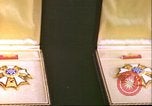
United States General Dwight D Eisenhower reviews British and American officers in Germany.
United States and British officers in Germany during World War II. United States and British soldiers march with the American and the British flag. U.S. aircraft parked in the background. Supreme Commander of the Allied forces in Europe General Dwight D Eisenhower along with staff walks on a runway at an airfield. Commander of Strategic Air Forces in Europe General Carl Andrew Spaatz and British Marshal of the Royal Air Force Arthur William Tedder walk towards General Eisenhower. The officers salute General Eisenhower. A U.S. soldier stands with a flag in hand. General Eisenhower shakes hands with officers and converses with them. United States Army Air Force General James Harold Doolittle stands with other British officers. An aircraft parked on the ground. A tent pitched on a field with soldiers in the foreground.
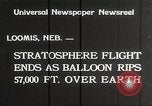
Flight and aftermath of crash of high altitude hydrogen balloon "Explorer I" in Rapid City, South Dakota.
View of the "Explorer I" Stratosphere Balloon with a Pressurized Capsule as it prepares for take off with three occupants near Rapid City, South Dakota. U.S. Army Air Corps personnel working with the National Geographic Explorers to prepare for launch. View of the balloon during its successful take off from the ground at the "Stratobowl" in the Black Hills of South Dakota. Aerial views from a nearby airplane of the Explorer I balloon in flight over wild natural terrain. Several views of a family in a living room gathered at console radio and other people gathered at radio to listen to reports about the balloon. View of radio announcers in studio during reporting. Next scenes show aftermath of crash. Men sort through wreckage of balloon and gondola. "Army Air Corps" written on part the wrecked pressurized Capsule. Wreckage of the balloon. Officials inspect the capsule and balloon fabric wreckage. (The crew parachuted safely to the ground shortly before the gondola crashed in Loomis, Nebraska.) View of crew members on the ground including Army Air Corps Captain Albert W. Stevens, Flight commander Major William Kepner, and Captain Orville A. Anderson, pilot.
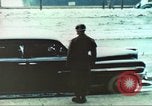
U.S. Naval Commanders direct their forces to support U.S. forces in Korean War
U.S. military officers make plans following encirclement of U.S. forces in Korea near Chosin Reservoir in November 1950. General Douglas Macarthur gets out of a car and is greeted by an officer. He walks inside a building in Tokyo, Japan. Scene changes to Pearl Harbor, Hawaii. A board reads 'Commander in Chief Pacific and United States Pacific Fleet'. The Commander in Chief of the United States Pacific Command, Admiral Arthur William Radford, sits at a desk in his office and signs a document with orders. Scene changes to Tokyo again, with exterior sign and awning that says "Commander Naval Forces, Far East." Vice Admiral Charles Turner Joy directs support for the imperiled forces in Korea. He places orders for commander of 7th Fleet, Commander Carrier Division 15, Commander of Fleet Marine Air Wing to move forward with maximum support. A board reads 'Far East Navy Forces'. Different boards read '315th Air Division Combat Cargo', '5th Bomber Command' and '5th Air Force'. U.S. Navy Rear Admiral Edward C. Ewen observes rough sea from a ship during a winter storm. A naval officer looks through binoculars. An officer transfers between ships via breeches buoy. Water splashes over the deck of U.S. Navy ship during heavy storm.
CRITICALPAST.COM: About Us | Contact Us | FAQs - How to Order | License Agreement | My Account | My Lightboxes | Shopping Cart | Advanced Search | Featured Collections | Website Terms & Conditions | Privacy Policy ©2026 CriticalPast LLC.
License Agreement |
Terms & Conditions |
Privacy Policy
©2026 CriticalPast LLC.