


 Francais
 Deutsch
 Italiano
Refine Your Search
Yokohama Japan 1945 stock footage and images
- Showing 769 to 774 of 7988 results more
more Hide
Hide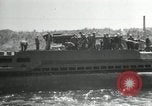
U.S. Military inspection of Japanese submarine aircraft carrier at Sasebo Bay, Japan during Operation "Road's End."
Operation "Roads End,"involving the post-war scuttling of the Japanese submarine fleet. U.S. sailors opening boxes of demolition charges on the deck of Japanese Sen Toku I-400-class submarine aircraft carrier, number I-402, moored in Sasebo Bay, Japan. (It was converted to a tanker sub, and completed only 3 weeks before the end of the war, and never placed in service. I-402 is one of only 3 such boats ever completed.) A U.S. Navy launch, approaches and ties up to the I-402. Close view of the submarine as the launch approaches. Vice Admiral Robert M. Griffin, commander of U.S. Naval Forces,Japan, a Rear Admiral, and a Captain, climb from the launch onto the submarine. Scene shifts to a smaller sub ,tied up next to the I-402, where an U.S. Army Colonel, and Navy Captain, are conferring with a Japanese officer. A utility boat is tied up in the background. The Army colonel goes into a hatch leading below decks followed by the Navy Captain. Next scene shows Admiral Griffin emerging from an open hatch on the deck of the I-402. He speaks to a navy Commander standing nearby. Empty explosives boxes, previously seen, are now stacked in a pile near the boat's conning tower. Camera shows a Japanese aircraft carrier moving past a Japanese submarine. View from deck of the I-402, showing the smaller sub to the right, and another Japanese sub, behind, with smoke rising from it. High hills overlooking the bay, in background. Admiral Griffin conversing with the Rear Admiral. Japanese crew lounging on the utility boat next to the I-402. Group of American officers conversing near the hangar door of the I-402. View downward from the conning tower, of the admirals and other officers. U.S. Army Colonel points out something on deck of nearby small submarine. An I-400 class submarine and a Japanese cruiser. Japanese sailor opens hangar door of I-402. Admiral Griffin and his aide, inspect inside. The two admirals and the Captain examining the hangar.All the American officers gathered on deck of the I-402.
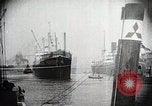
Canned crab tins displayed in Japan.
Steamers underway at sea in Japan. The flag of Japan at steamer. Logo of Three Diamond Brand on steamer. Various countries signs on map. The map explains the data of cases of USA, Hawaii, Canada, England, Australia, France, Germany, Denmark, Sweden and others countries for year of 1924-1927. Tins of 'Three Diamond, Fancy CrabMeat'. Tins of 'Icebond Brand, Selected CrabMeat' displayed. Three Diamond Brand of canned crab and logo of Three Diamond.
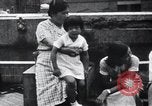
Tourists visit the Sensō-ji Temple in Asakusa, Tokyo, Japan
Tourists visit the Asakusa Sensō-ji Temple (2 Chome-3-1 Asakusa, Taito City, Tokyo 111-0032, Japan) in Tokyo, Japan. Various Japanese souvenirs are displayed on shops along the Nakamise Shopping Street leading to the Sensō-ji Temple. Tourists walking along the Nakamise Shopping Street. People with umbrellas pass by a pagoda on the grounds of Sensō-ji Temple. Pilgrims walk up and down the stone stairs of the Sensō-ji Temple. A child buys bird feed from a woman near the Buddhist temple. Two women watch the girl feed pigeons. Bananas for sale on display.
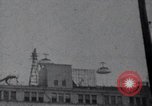
Western tourists visit Asakusa, Matsuya Department Store, and Dai-Nippon Beer Company in Japan.
Aerial view of buildings and tourist attractions in Asakusa District, Tokyo, Japan. Exterior of Matsuya Department Store Building (1-4-1 Hanakawado, Taito-ku, Tokyo 111-0033). Views over Asakusa and Honjo-Ward from the top of Matsuya Department Store, Sumida River and the vehicles on the Kototoi-Bridge over Sumida River of Asakusa Ave., the facilities of Dai-Nippon Beer Company along Sumida River in the background. to Sensō-ji temple (2 Chome-3-1 Asakusa, Taito City, Tokyo 111-0032, Japan) with the five-story pagoda are also seen. The Kototoi-Bridge over Sumida River, the tugboat going down Sumida River and the rope way on the top of Matsuya Department Store. Tourists taking a walk in the Sumida Park at the riverside and boating under the truss bridge of Tobu Railway in Sumida River.
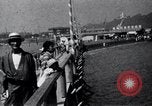
Western tourists visit Enoshima in Japan.
Tourists visit Enoshima Island, Kamakura County, Kanagawa Prefecture, Japan. Western tourists at bridge over Enoshima Seashore between Enoshima Beach and Enoshima Island and look at boats. Boats are moored at the jetty of Enoshima Island. Tourists walk down the bridge. View of Enoshima East Beach and hills in the background. Traditional wooden inns (called ryokan) at both sides of the narrow entrance path to Enoshima Shinto Shrine (2 Chome-3-8 Enoshima, Fujisawa, Kanagawa 251-0036, Japan) at the hilltop of Enoshima Island. A man fanning his daughter inside a ryokan inn.
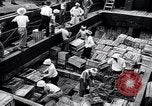
United States Army provides medical, food and material aid to Japan.
United States Army helps and provides aid to Japan in the years soon after end of World War 2. Workers unload the cargo of food from truck. Aerial view of flooded area. Ambulances of 'Army Medical Care' pass through muddy land. To care for the sick, doctors and nurses reach the flooded area of Japan in ambulance. Nurse gets down from ambulance. Army personnel lift the boxes of food and clothing. Sign of 'Toy Factory'. Interior of toy factory. Japanese work at machines in factory, where they process and recycle tin cans received from American military bases, and turn them into toy cars for children. Women work at machines in toy factory. Toys of small cars made and displayed.
CRITICALPAST.COM: About Us | Contact Us | FAQs - How to Order | License Agreement | My Account | My Lightboxes | Shopping Cart | Advanced Search | Featured Collections | Website Terms & Conditions | Privacy Policy ©2026 CriticalPast LLC.
License Agreement |
Terms & Conditions |
Privacy Policy
©2026 CriticalPast LLC.