


 Francais
 Deutsch
 Italiano
Refine Your Search
Yokohama Japan 1945 stock footage and images
- Showing 49 to 54 of 7988 results more
more Hide
Hide
Devastation from atomic bomb dropped on Hiroshima Japan in World War II
U.S. War Department film showing devastation from atomic bomb dropped on Hiroshima, Japan, during World War 2. Opening scene is darkness of predawn in Alamogordo, New Mexico, on 16, July, 1945, at 5:29:45 AM. Suddenly, a huge explosion lights up the sky. A fireball and mushroom shaped cloud form. Closer view of the explosion from another camera. Following the initial explosion, the ensuing sound is a continuous roar. Another view is shown, from a third camera location. It highlights the boiling fire and smoke of the explosion. These scenes document the first successful test of a nuclear weapon, code named "Trinity". Change of scene shows glimpse of the Manhattan Project B Reactor site at Hanford, Washington, as viewed from a car driving past. Closeup of the facility, from right up against a boundary fence. Glimpses of other Manhattan Project facilities in New Mexico, Oak Ridge, Tennessee, and another view of the Hanford, Washington facility. Next, a rough topographical map of Japan is shown. Closeup of elevated railroad train traveling in Hiroshima, Japan. Imperial Japanese Army motorized vehicles are shown on parade, including fully tracked open personnel carriers with soldiers aboard and Type 94 Tankettes being driven by individual soldiers. Japanese infantry marching in full field gear including shouldered rifles with fixed bayonets. Closeup of a Japanese Army officer. Glimpse of Japanese support troops, such as quartermaster elements, in black uniforms. Japanese technicians in white lab coats at a wartime facility. Japanese Navy Warships being launched from Hiroshima ship yards. A lone B-29 bomber seen in flight over clouds. Its tail number, 42-63735 is clearly seen. It displays a large "05" on it upper tail. (This is not the "Enola Gay" whose tail number was 44-86292.) Closeup of one of the aircraft's engines with propeller turning. Glimpse upward from interior of the aircraft. Scene shifts to aerial photograph of Hiroshima with overlay depicting the bomb strike zone. Animated map showing explosion and precise point ot detonation above the junction of the Motoyasu and Ota Rivers. A view at the ground of destruction from the atomic explosion. An American soldier stands in the midst of the destruction. Slabs of heavy concrete are destroyed. View looking East from ground zero, past a burned tree trunk in the foreground, where the shells of several stronger buildings still stand amidst a sea of rubble. To the South, hardly anything is left standing. Looking West, everything is essentially leveled.
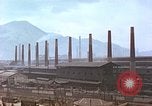
Burned out sections of Japan Iron and Steel Works at Kitakyushu, Kyushu, Japan
Iron and Steel Works at Yawata in Japan (Yawata Steel Works). A view at the end of the Japan Iron and Steel Works. Open hearth, rolling mills and coke ovens. Southern sections of the plant as seen from the roof of the Muwata Grade School. Burned out sections of Yawata as seen from the roof of the school. This area lies between a post office and the south end of the plant. It includes the areas Higaichi, Machi, Okadamachi and Hishimachi. This view shows the results of incendiary attack of August 8, 1945. The coke plant and by-products installations of Japan Iron and Steel Works. The southwest corner of the plant. Views of Tobata Power Plant. Aircraft revetments around the Japanese Naval Air Base in Omura. (World War II period).
Effects of the atomic bombing of Hiroshima, Japan, in World War II, and early international efforts to control atomic weapons
Film showing city of Hiroshima, Japan, before and after the August 6, 1945 dropping of the atomic bomb over the city in World War 2. Sequence opens on what the narrator says is August 5, 1945, the day before the event (but the footage is likely from before that date). Camera pans over the city of Hiroshima before the atomic bomb destroyed the city. Japanese air raid lookouts are seen on watch for allied bombers. View of atomic bomb detonation as seen from aircraft high overhead (this is actually a view of the Nagasaki blast, not the Hiroshima blast despite narrator's comments). Next, the complete destruction of the city of Hiroshima is seen from camera at low altitude showing the four and one half square miles of the city flattened and burned. A Japanese hospital still functioning, with red cross flag on it. Hospital workers retrieving wounded victims of the bombing. Ambulatory victims clustered in doorways and halls. Shadow image of a large industrial valve wheel burned onto wall behind it. Similar image of a ladder burned onto a wall. The decorative pattern on a woman's dress burned onto skin of her back. Japanese physicians treating victims of thermal and radiation burns. Views of various victims, including some children, and their respective injuries. Scene shifts forward one year, to August 6, 1946. Children are lined up outside a school building, and then seen inside their classroom. Disfiguration and wounds on children resulting from injuries are still evident on the children at their desks. Sequence shifts again, this time to an early United Nations meeting with delegates grappling with the issue of controlling nuclear power and atomic weapons. Closeup view of American delegates, including James F. Byrnes (Secretary of State)and James B. Conant, President of Harvard University in the assembly. Closeups of representatives from South Asian nations. Closeup of USSR delegation, headed by Foreign Minister, Vyacheslav Molotov. Signs identifying delegates from Colombia, Egypt, Iraq, Bolivia, China. Final sequence shows several U.S. atomic scientists in their respective laboratories, including Enrico Fermi and Vannevar Bush. United States representative to the UN, Warren Austin, speaking about the so-called Baruch Plan, for international control of atomic weapons. (Principal author, Bernard Baruch, is standing behind speaker's left shoulder.) USSR delegation, headed by permanent representative, Andrei Gromyko, who is seen presenting the Soviet plan. View of explosion and mushroom cloud during U.S. Operation Crossroads atomic bomb test in the Pacific.
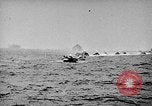
Japan Kamikazes attack U.S. Navy Task Force 58, in battle of Okinawa in World War II
Role of U.S. Navy Task Force 58 in Okinawa, Japan during the Battle of Okinawa in World War 2. Film begins showing amphibious assault by U.S. forces of Navy Task Force 58, against Okinawa, on Easter Sunday, April 1, 1945. Higgins Boats from U.S. transport ships race through the water and discharge troops on the land, with no signs of Japanese resistance. Some of the boats' markings show they came from the U.S transport ship USS Barnett (APA-5). Sailor aboard a transport ship uses ax to cut a line and release a power boat from its davits. The boat drops into the water with a huge splash. View of lines of U.S soldiers and marines wading through shallow water toward mud flats on the land. Closeups of Troops with landing craft behind them. advance overland with no signs of Japanese resistance. Troops sitting on a landing vehicle tracked (LVT) parked in sand. U.S. infantry begin moving inland accompanied by armor and military trucks and other vehicles. The area is very quiet, with no sign of enemy activity. Views of Army and Marine Corps infantry walking beside an M4 Sherman tank. Views of soldiers using binoculars in effort to detect any signs of the enemy. Crews in combat gear, at battle stations aboard Navy ships waiting patiently for enemy action. It came suddenly in the form of Kamikaze attacks on April 6, 1945, when the Navy's radar picket ships were attacked followed by general attacks against U.S. Capital ships. A kamikaze is seen striking an Essex-class aircraft carrier amidst ship, setting off explosions on the ship. Anti-aircraft gunners on various ships are seen firing at the Japanese planes. Another ship is struck by a Kamikaze. Douglas Dauntless and F4F aircraft being launched from carriers. The Battleship, USS Maryland (BB-46), is struck by a kamikaze that knocks out some of her gun emplacements, but she continues her mission in spite of the damage. A kamikaze aircraft is seen attacking the USS Yorktown (CV-10). It is hit by anti-aircraft fire and just misses the ship, splashing into the water nearby. Air is filled by black smoke puffs, from anti-aircraft fire as Japanese aircraft maneuver overhead. One is struck and falls burning to crash in the water, just off the flight deck of a carrier. Gun camera clip showing a multi-engine Japanese aircraft being shot down from behind, by a U.S. aircraft. Closeup of a Japanese Kawasaki Ki-61 aircraft in flight, peeling off to attack. More gun camera footage of a Japanese multi-engine aircraft being shot down from behind. A Kamikaze airplane diving down under anti-aircraft fire and crashing into the sea. Gunners firing Bofors anti-aircraft guns from gun emplacements beside the flight deck of an aircraft carrier. Skies filled with black flak clouds. On 11 April, a low-flying kamikaze Zero, although fired upon, is seen crashing on the battleship, USS Missouri USS (BB-63). It strikes her starboard side, just below her main deck level. The starboard wing of the plane was thrown far forward, starting a gasoline fire at 5 in (127 mm) Gun Mount No. 3. At the same time, another kamikaze crashes into the sea in the foreground. An aircraft carrier's gunners fire anti-aircraft Bofors guns at a Kamikaze plane that swoops over her flight deck and crashes, exploding, into the sea just off the flight deck. A low flying Kamikaze aircraft crashes into the sea off the bow of an escort carrier, underway. Heavy black smoke rises from the airplane blowing up. A huge explosion with a white cloud of smoke is seen above the battleship USS Missouri.
Operation of United States Coast Guard in Okinawa and Iwo Jima, Pacific Theater during World War II
Overseas activities of United States Coast Guard in World War 2. February 19, 1945, U.S. Marines invade Iwo Jima in Pacific Theater. Naval guns and aircraft bombard Iwo Jima. Mountain in the background. Aircraft in flight. Marines and Coast Guardsmen aboard landing craft. Marines landing on Iwo Jima under heavy Japanese fire. Destroyed landing ships litter water's edge. Marines hunkered down and treating wounded, under fire. LSTs and other ships at established beachhead. Vehicles drive onto beach. April 1, 1945, Marines attack Okinawa. Navy warships bombard Okinawa with heavy guns and continuous rocket fire. Beachhead is established against light resistance. Japanese kamikaze aircraft attack American invasion ships. Several ships are hit and sunk. Surviving sailors are helped aboard rescue boats. Antiaircraft fire from American ships fills sky with smoke and flak. A kamikaze aircraft crashes in the sea. Sky filled with American bombers. Aerial view of Atomic bomb explosion over Nagasaki Japan on August 9, 1945. Raising American Flag on Japan homeland.
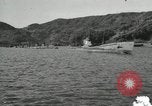
Operation "Road's End" and preparations for destruction of the Japanese submarine fleet moored in Sasebo Bay, Japan
Views from U.S. boat moving among Japanese submarines in Sasebo Bay, Japan, during Operation Road's End, involving the scuttling of the Japanese submarine fleet. Seen are submarines: I-47; I-162; I-156l;n-203;I-158;I-103;107;I-58. An American launch pulls up to I-58 (the sub that sank the USs Indianapolis on July 31, 1945, in the Philippine Sea).Vice-Admiral Robert M. Griffin, Commander of U.S. Naval Forces, Japan, climbs aboard the sub, followed by other members of his party. Admiral Griffin walks the deck of the submarine, followed by a Rear Admiral, who points out some features of the boat to Admiral Griffith. View of the group standing on the deck of the I-58.
CRITICALPAST.COM: About Us | Contact Us | FAQs - How to Order | License Agreement | My Account | My Lightboxes | Shopping Cart | Advanced Search | Featured Collections | Website Terms & Conditions | Privacy Policy ©2026 CriticalPast LLC.
License Agreement |
Terms & Conditions |
Privacy Policy
©2026 CriticalPast LLC.