


 Francais
 Deutsch
 Italiano
Refine Your Search
Japanese-martial-arts stock footage and images
- Showing 739 to 744 of 4336 results more
more Hide
Hide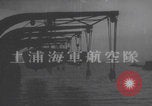
Imperial Japanese Navy cadets wake up and perform early morning exercise at the Tsuchiura Navy Air Corps
View of the training center at the Tsuchiura Navy Air Corps, Ibaraki Prefecture, Japan. Buildings in the Imperial Japanese Navy Flying Department Practice Club. Exterior of Japanese cadet barracks at early morning. Japanese Naval Air cadets sleeping in long lines of arranged hammocks. Loudspeaker sounding to wake cadets. A man makes an announcement through the siren. Navy cadets rise from their hammocks at reveille. Cadets rolling and tying their hammocks. They put their rolled hammocks back into place. Japanese naval cadets jogging on the grounds of the Tsuchiura Navy Air Corps. Japanese cadets in formation at morning quarters. Japanese officer on platform giving commands thru microphone. Japanese cadets in formation singing the national anthem, Kimigayo. Japanese calligraphy inscription. Cadets in formation; open formation for exercises. Hundreds or thousands of cadets doing early morning exercises (taisou). Japanese sailor ringing bell near barracks.
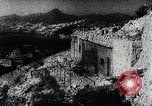
Japanese troops occupy Hong Kong after British forces surrender on Christmas day 1941 (WWII)
The Japanese occupation of Hong Kong following British surrender on Christmas day, 1941 (World War II). Japanese propaganda newsreel, narrated in accented English: Japan occupies the entirety of Hong Kong and British surrender on December 25, 1941. Destroyed British island defenses including bunkers and pill boxes. Wrecked buildings and oil storage tanks in Hong Kong. Japanese troops pose as a group and shout “Banzai” for the camera. Destroyed British tanks and artillery. British military prisoners gathered in a courtyard. Japanese officer inspects captured artillery. Japanese troops pile up shells from surrendered British forces. Captured British soldiers and sailors crowd British officers exit the "New Oriental Building" (Formerly 2 Connaught Road, Central, Hong Kong) after surrender discussions with Japanese forces. White flag hoisted on top of the New Oriental Building. Aerial view of Hong Kong area. Japanese aircraft in formation over the city making their formal occupation entry. Japanese troops parade through the streets with commanding officers on horseback.
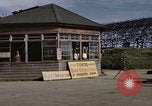
Activities of Japanese soldiers at control tower of Atsugi Airdrome in Japan.
Japanese soldiers at control tower of Atsugi Airdrome in Japan, shortly after end of World War 2. Sign board of "Atsugi Tokyo Airdrome Base Operations 3rd Airdrome Squadron". Control building. Japanese in control tower look outside from window. Japanese soldiers around. Japanese officers talk. Japanese soldiers march. Japanese civilian talk to Japanese officer. Japanese writing on a shirt.
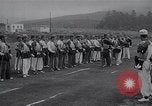
Japanese Self Defense Force training. Combined Arms School at Camp Fuji.
Japanese ground self defense force under training provided by United States and Japanese government jointly in Japan.Combined Arms School at Camp Fuji. Bayonet drill practice using wooden rifles. Firing recoiless rifles. Firing 155mm howitzers. Firing guns on Sherman tanks. Japanese mechanics repairing and maintaining 155mm howitzers. Japanese drills with semaphore flags. Japanese play volleyball at Camp Fuji. American military advisors work with general staff of Japanese self defense force in "paper war," including Command, Control and Communications exercises in the field, where. Japanese operate military communications facilities. Japanese Defense Forces in chow line and dining hall tent, during field exercises.
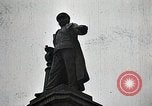
Japanese forces engaged against Chinese forces in the January 28 Incident (Shanghai Incident) of 1932
Film opens showing a Japanese monument commemorating officers in the Russo-Japanese War between Russia and Japan. Commander of a small contingent of Japanese troops offers saki to his soldiers, before they march off into combat. They rush into trenches and begin firing at Chinese forces. Next, Japanese infantry are seen moving across vast barren lands, as some take up defensive positions behind those advancing, who also begin digging holes and setting up defenses after their advance. Chinese artillery shells explode close ahead of them. Soldiers in the Japanese front lines throw smoke canisters and dense white smoke is carried by the wind to the left and side of their positions. As the smoke dissipates, shells burst again, right in front of the Japanese lines. Immediately, after, the Japanese troops leave their defensive positions and charge forward. View of a small battlefield cemetery with posts marking the graves of Japanese soldiers.
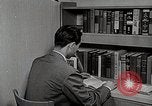
Japanese student meets a university professor at Indiana University in Bloomington, Indiana
A Japanese graduate student studies American literature at Indiana University (INDIANA UNIVERSITY BLOOMINGTON 107 S. Indiana Avenue Bloomington, IN 47405-7000). The Japanese student reads in his dormitory room. English literature books from writers such as Walt Whitman and Mark Twain are stacked in front on his desk. Three American students engage in an informal discussion. Japanese student tried to join conversation. American student shrugs. Japanese student sits outdoors to think. Japanese student meets his faculty advisor, an American university professor. The two men talk while walking. The American professor invites the student for dinner at his home. The professor, his family, and the Japanese student talk while they have dinner and coffee 1951. The professor’s young granddaughter eating ice cream. The professor and the Japanese student sit together for coffee. Young girl hugs the Japanese student.
CRITICALPAST.COM: About Us | Contact Us | FAQs - How to Order | License Agreement | My Account | My Lightboxes | Shopping Cart | Advanced Search | Featured Collections | Website Terms & Conditions | Privacy Policy ©2026 CriticalPast LLC.
License Agreement |
Terms & Conditions |
Privacy Policy
©2026 CriticalPast LLC.