


 Francais
 Deutsch
 Italiano
Refine Your Search
Japanese-martial-arts stock footage and images
- Showing 745 to 750 of 4336 results more
more Hide
Hide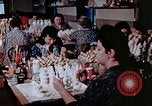
Various Japanese men and women do various works after training in Chicago by WRA offices in California, United States (WW2)
United States Relocation Program by War Relocation Authority (WRA) in World War II. Japanese women work in a doll making workshop. Two Japanese women paint and enjoy in California. A Japanese man sits and feeds chickens. A Japanese boy carries eggs in a basket. Three men work in a farm. A Japanese woman works on a machine in California. A Japanese man works on a machine in potato crop. Japanese men and woman work in egg dehydrating plant. They remove egg yolk from white on a machine. Put yolk into other machine. Men work in a Candy making factory. A Japanese woman sews United States flag by a sewing machine. A boy carries trolley of packets to a truck. Boy seals packet for shipment.
Japanese military forces occupy International Settlement in Shanghai, right after Pearl Harbor attack in World War II
Japanese occupation of Shanghai International Settlement following attack on Pearl harbor, in World War 2. Civilians are seen gathered in the Bund area Of Shanghai. Across the street are seen buildings of the International Settlement, including the British consulate and adjacent headquarters of the Hongkong and Shanghai Banking Corporation (HSBC). Several Japanese marines drive past the camera, in vehicles, including two Type 92 Chiyoda Armored Cars. They lead a column of open trucks filled with Imperial Marines, who wave at spectators on the sidewalks. Camera zooms in on the HSBC building entrance, where Japanese soldiers and marines climb down from a truck and deploy to the building entrance and down the street, on foot. Next, marines are seen guarding and patrolling a now empty street. Camera focuses on a large Japanese rising sun flag displayed on the now occupied HSBC building. Marines guard the entrance of the building, where a paper sign is posted announcing the occupation in Japanese. Next, another Chiyoda Armored Car is seen leading a parade of Japanese marines. View from within the marching marines as they proceed along the street. They pass a group of rickshaws and drivers at one point. Camera zooms in momentarily on the rising sun flag carried by a color guard at head of the marchers. Scene shifts to boats in the Shanghai harbor. Most are ferry boats on one kind or another. But one is the American river gunboat, USS Wake (PR-3), which was captured while docked, and now displays the Japanese flag. At end of film, Japanese narrator mentions this, and also that the British gunboat, HMS Peterel (unseen) was sunk.
U.S. campaigns against Japanese in Marshal Islands, New Britain, and Rabaul, in the Pacific during World War II
U.S. offensives against Japan in the Pacific Theater during World War 2. A United States Carrier Task Force in the Pacific Ocean. Fighter planes and dive bombers on the deck of the Task Force. Sailors push trolleys containing bombs. A map shows Marshall Islands. Douglas Dauntless dive bombers take off to strike against the enemy. U.S. Navy fighter planes engage defending Japanese aircraft and down many of them, as seen in gun camera footage. The first wave of Douglas Dauntless dive bombers returns to its carrier for refueling, rearming, and debriefing. Sailors on the aircraft carrier man anti-aircraft guns to defend against attacking Japanese aircraft. Black flak fills the sky and a number of Japanese aircraft are destroyed by the anti-aircraft fire. A Japanese bomb explodes near the flight deck of a carrier. (Narrator notes that 85 Japanese aircraft were destroyed in this one operation.)An animated map shows New Britain Island. U.S. Major General William Henry Rupertus, Commander of U.S. Marines on a ship. He looks through a pair of binoculars as a U.S. planes (B-24 Liberators) drop bombs on Rabaul. U.S. warships launch an attack at the enemy positions. Fire and explosions. The Marines load into landing craft and move towards the shore. They land behind an intense naval bombardment. Marines head ashore from beached LCI-1 Class Landing Craft Infantry (Large), number 343. M 16 tanks, equipment, and artillery roll ashore from Landing Ships Tank (LSTs). . The tanks lead the way through the jungle terrain and the marines advance behind them. Marines fire mortars as they advance. They flush out Japanese from trenches and bunkers. A damaged Japanese Mitsubishi fighter plane and wreckage of others. Some dead Japanese soldiers. The Marines wade through deep water as they push on to Rabaul. Others advance through deep mud. More views of them slogging through mud.
Surrender of Japan, ending World War II; imprisoned Japanese officials; German concentration camp scenes
View of first atomic explosion (Trinity) on July 16, 1945, at New Mexico, United States. View of the battleship, USS Missouri, in Tokyo Bay, Japan, with entire ship's company on deck in dress whites, Japanese military high command and several formally dressed Japanese diplomats standing on the ship's deck. Brief closeup of General Douglas MacArthur. Japanese foreign minister, Mamoru Shigemitsu, bending to sign the instrument of surrender ending World War 2, on September 2, 1945. Supreme Commander, General Douglas MacArthur, seated, signing the document. Lieutenant General Jonathan M. Wainwright and British Lieutenant-General Arthur Ernest Percival stand behind MacArthur. General Hsu Yung-chang signs for China. View of sailors observing the historic moment from every possible place aboard the ship. Large numbers of aircraft flying over the ship. Scene shifts in flashback to Manila, Philippines, where dead bodies of civilians litter the streets in silent witness of Japanese wartime atrocities. Some have hands tied behind their backs. Views of destitute Filipino mothers and children wandering through the rubble. A sign identifies the 98th Evacuation Hospital. Inside, a doctor and a nurse stand over the bed of Japanese Prime Minister, Hideki Tōjō, who attempted suicide by pistol, when apprehended, but was taken for treatment and is seen resting in his bed. View of Japanese Adrmiral Shigetarō Shimada, Minister of the Navy, behind bars in prison. Also seen in prison are Japanese general of the Japanese Imperial Army and Governor-General of the Philippines, Shigenori Kuroda;. General Masaharu Homma; and militarist Colonel Kingoro Hashimoto. Scene shifts to bodies of numerous victims of German death camps. American Army medics attend to some survivors rescued from the camps.

The Philippines gains independence from the United States on July 4, 1946; also scenes from 1941 Japanese invasion WW2
The Philippines are established as an independent nation. Crowds of Filipinos gathered at Rizal Park (Luneta Park) in Manila on the July 4, 1946. View of Independence Grandstand (a temporary structure built in front of the Rizal Monument) with American flag and Philippine flags on tall flag poles.. View looking down on General Douglas MacArthur at a podium, speaking into microphones. Camera pans over various segments of the audience. A map shows the Philippine Islands in context of its neighbors in the Pacific Ocean. Camera pans closeup across faces of many Filipinos gathered at the independence event. View of the Jones Bridge over the Pasig River in downtown Manila. Heacock’s Department Store on the Escolta. The Legislative Building. (later the National Museum of the Philippines). Ocean going ships in a harbor. Cargo being offloaded from a ship onto smaller boat. An industrial complex with eight tall smoke stacks emitting smoke. Steel and petroleum plants. Filipino workers in an assembly plant. The Legislative building with people coming and going. Air raid sirens sounding and people running in streets of Manila at onset of Japanese invasion of the Philippines in December, 1941, at start of World War 2, in the Pacific. People running across the Jones Bridge, seeking shelter. Others boarding a bus. Smoke rising from Japanese bombing. Glimpse of Japanese tanks entering Manila during attack and invasion. Japanese infantry climbing a hill. Bodies of persons killed during the Japanese invasion. Glimpse of Japanese troops occupying Corregidor. U.S. General Wainwright negotiating the surrender of Corregidor with Japanese General Homma. View of an American warship firing during the U.S. campaign to defeat the Japanese on islands in the Pacific. An American landing ship carrying U.S. troops who storm ashore. General Douglas MacArthur striding ashore with a retinue of officers, at Leyte, Philippines, on October 20, 1944. as he keeps his promise to return to the Philippines. Views, back again, to MacArthur speaking at the Independence Day ceremony in Manila on July 4, 1946. Also seen at the ceremony are: U.S. Senator Millard Tydings, (co-sponsor of the 1934 Tydings–McDuffie Act, which provided independence to the Philippines after a 10-year transition under a limited autonomy), and Paul V. McNutt, U.S. High Commissioner of the Philippines, who read President Truman's proclamation of Philippine Independence to the assembly. Camera pans over the gathering which includes many U.S. Service personnel in uniform. The oath of office is administered to the elected President of the Philippines, Manuel Roxas. At the conclusion, the American flag is lowered by Paul McNutt, as President Roxas raises that of the Republic of the Philippines. A celebratory parade in Manila includes a float with signs reading: "Let's Produce and Rebuild," among other things. Other floats represent "Mountain Province," and "The City of Manila," "The University of the Philippines," and "The Division of City Schools." One float, sponsored by the Chamber of Commerce, contains a huge replica machine gear, and models of an aircraft and a ship. It's message is about turning the gear that helps make the nation great. American and Filipino soldiers march, carrying their respective national flags. A white-helmeted military band plays for the marchers. Final scene shows large loose formation of military aircraft in flight very high above the Independence Grandstand, at Rizal Park.

The Battle of Changsha at the end of the Second Sino-Japanese war (WW2)
Japanese infantry, accompanied by several Type 95 Ha-Go tanks, wade across shallow rivers East of Dongting Lake in Hunan Province, China, during World War II. Closeups of soldiers with their field packs and rifles. They reach a bluff where they encounter heavy resistance from Chinese defenders.View of Japanese soldiers spread out in defensive positions overlooking the top of the bluff. The sound of machine gun fire is heard continuously. The Japanese forces fire type 3 heavy machine guns from positions in woods and marshes. Some fire mortars. A flight of three aircraft is seen briefly overhead. A bomb bursts in the midst of the Japanese forces. Infantry are seen through barbed wire as they move single file across a grassy field in the distance. Closer view of Japanese soldiers in a field of tall grass bounded by some trees. in Closeup of Japanese soldiers under heavy Chinese fire. A bomb or artillery shell bursts close to them. Closeup of Japanese gunners firing a Type 91 10-cm-howitzer,with wooden spoked wheels. Next view shows the same gun firing with a group of Japanese soldiers behind it, some using binoculars to observe the shells striking. The final scene shows numerous shells striking in a line with white smoke rising from each in the distance.