


 Francais
 Deutsch
 Italiano
Refine Your Search
Japanese-martial-arts stock footage and images
- Showing 781 to 786 of 4336 results more
more Hide
Hide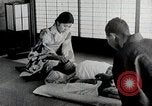
Japanese woman performs rituals and pray for her sick child in Japan.
A Japanese woman visits a Shinto shrine to pray for her sick child. A Japanese man and his wife attend to a sick child lying on a futon bed. A Japanese woman visits a Shinto shrine to pray for her child’s recovery from illness. Japanese woman approaches the haiden, or the sanctuary dedicated to a Shinto Kami spirit. Japanese woman prays with her offering. Japanese woman walking on the shrine grounds. Japanese woman holding her offering.

Imperial Japanese Army (IJA) soldiers commit war atrocities and murder during World War II
Atrocities committed by Imperial Japanese Army (IJA) soldiers in China and other parts of Asia during World War II. War workers in offices, factories, and mills shift their attention to the narrator. Smoke rises from factory smokestacks and chimneys. American workers manufacture war materiel in factories. Factory workers shovel coal to the furnace. Japanese soldiers abuse elderly Chinese women. A Japanese soldier toss an infant before striking with a bayonet midair. A Chinese woman watches with shock. IJA troops drag and bury Chinese civilians alive. IJA troops burn cities and shoot victims at close range. Soldiers place the remains of dead Chinese men, women, and children in truck. Japanese soldiers torture and kill Chinese civilians and are depicted killing American Prisoners of War (POW). Aerial views of San Francisco, Chicago, Pittsburgh, and New York. A dead Japanese soldier with flies covering his face. A newly built M4 Sherman tank moves inside a factory. Body of a Japanese soldier wearing round glasses. Dead Japanese soldiers seen with repeating American wartime propaganda message that every piece of wartime production "kills a Jap." Tanks, trucks, planes, shells, guns, and artillery are manufactured in United States factories and plants during World War II. Americans urged to take war jobs to help win World War 2.
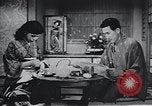
Progress of women in Japanese society
Discusses progress of women in Japanese society. View of Japanese parliament in session. Japanese woman works at home. Young women study in Japanese university. Women work in factories. Japanese woman raises an issue in a council meeting. Japanese women work in farms and company offices. A young Japanese couple.1950.
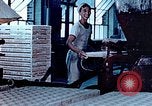
Japanese civilians get relocation employment by War Relocation Authority offices in United States in different industries (WW2)
United States Relocation Program by War Relocation Authority (WRA) in World War II. Japanese boy makes marshmallows in a plant and put plate on platform. Japanese men work on crop crasher machine. Man put dried crops into crasher. A Japanese man works with book binding machine. Help wanted board hung on various shops. Japanese farmers work in western deserts of United States. Japanese Chemists, medicine men, Laboratory workers, Mechanics Engineers work in their respective areas. A Japanese couple stands in queue against a counter in company employment offices. The couple takes a form and gives it to a selection officer. He further instructs the couple. Japanese couple stands on a counter and the cashier gives money to them.
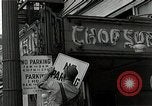
Police patrol in front of Japanese banks and businesses in Little Tokyo regions of Los Angeles in WW2.
Japanese bank in "Little Tokyo" and people in Los Angeles, California, in World War 2 during time of Japanese businesses being closed and citizens of Japanese descent being moved to internment and relocation centers. A worker puts up a sign about parking times on a shop. Scene of fishing boats and and docks in port area. Man erects American flag in front of Japanese American Citizens League offices. A Japanese-American woman smiles with the American flag behind her. Police officers patrol in front of Yokohama Specie bank, Los Angeles Branch office, in Little Tokyo at 120 South San Pedro Street. Notice posted on the bank that the bank business license has been revoked temporarily. Men walk in front of Yokohama Specie Bank Ltd. Another view of Japanese-American man and woman placing the United States flag in front of the Japanese American Citizens League offices, which also has a "soldiers headquarters" sign in window, at 109 S. South Pedro Street, Los Angeles, California. (This office also served as a "Anti-Axis Committee Headquarters during World War 2.)

Highlights of the Allied New Guinea campaign and other Pacific battles against the Japanese in World War II
The Allied campaign across New Guinea and onward to the Philippines during World War 2. U.S. warships firing their guns at night. Flashes illuminate the blackness. Bombs dropping from an aircraft bomb bay. Bombs exploding on stretch of jungle near water. A U.S. Army Air Forces B-26 bomber in flight View rearward from very low flying USAAF bomber as it bombs it drops explode behind. U.S. troops making amphibious assault on New Guinea. Map showing path of Allied attacks from Australia, across New Guinea from Port Moresby to Buna and on to the Admiralty Islands, cutting off Japanese-held Rabaul, New Britain. Map shows Allied forces moving towards Japanese strongholds at Wewak and along the North shore of New Guinea and bypassing Wewak to strike at Hollandia. General Douglas MacArthur is seen aboard a U.S. warship conferring with American and Philippine officers. Annimated map shows Allied assaults on Japanese positions along the coast from Hollandia, to Warde, Biak, and beyond, stepping along towards the Philippines. Views of numerous fallen Japanese soldiers numbering more than 150 thousand dead. Crosses in battlefield cemetery at graves of some of the more than 13 thousand Allied military who lost their lives during the campaign. A soldier paying respects at one of the gravesites. Admiral Chester Nimitz with members of his staff at his headquarters in Hawaii. U.S. Navy F4F aircraft launching from an American aircraft carrier. American aircraft bombing Japanese positions on an atoll. U.S. warships bombarding Japanese positions with their heavy guns. Admiral Nimitz standing with Admiral William Halsey. More Navy gunfire and amphibious assault scenes. Map showing places where Allied forces had to battle the Japanese, including, Tarawa in the Gilbert Islands, Kwajalein, in the Marshals, Saipan, and Guam in the Marianas, and Palau to complete the "bridging" of the Pacific to the doorstep of the Philippines.
CRITICALPAST.COM: About Us | Contact Us | FAQs - How to Order | License Agreement | My Account | My Lightboxes | Shopping Cart | Advanced Search | Featured Collections | Website Terms & Conditions | Privacy Policy ©2026 CriticalPast LLC.
License Agreement |
Terms & Conditions |
Privacy Policy
©2026 CriticalPast LLC.