


 Francais
 Deutsch
 Italiano
Refine Your Search
Japanese-martial-arts stock footage and images
- Showing 1219 to 1224 of 4336 results more
more Hide
Hide
Snippets from various Japanese movies circa 1937
Snippets from various Japanese movies circa 1937. View of a Japanese coastal town . A Japanese man in western attire talks to his wife at home. The wife, wearing a kimono, looks away from her husband sadly. Cars driving on hilly road. A Japanese woman chatting as she sits between two men in the back of a convertible car in the countryside. A woman talks to a man smoking on a dock. She walks towards a docked cargo ship. Men and children fishing in the countryside. Cars and trains are seen moving on a bridge in the background. A man and a child walk past boats on the beach. The child avoids the waves as they walk.
Japanese Animated maps of the Pacific Ocean and Hawaii before Pearl Harbor attack (WW2)
Japanese perspective of Japanese bombing attack on Pearl Harbor, Hawaii, United States during World War II. Animated map showing Japan, neighboring Asian countries, the West Coast of the United States, and the Pacific Ocean. The map measures the distance of Hawaii between Japan and the United States. A Japanese fighter plane squadron in flight. United States Navy battleships in column underway at sea. A sailor operating a signal lamp. A captain steering the ship while other crew members work. Side view of a convoy of American destroyers and cruisers in the Pacific Ocean. An animated map of Oahu showing the location of Honolulu, Moloka’I, and Pearl Harbor. A detailed map of Oahu in Japanese.
U.S. Navy defeats the Japanese Fleet in the Philippines during World War II.
United States Naval victory in Philippines in World War 2. The U.S. carriers including USS Lexington, USS Wasp and USS Hornet underway. The U.S. Navy planes on the carriers. Crew loads bombs onto the planes. A U.S. pilot wearing a helmet in the cockpit. Plane taxis and takes off. F6F Hellcats, TBF Avengers and SB2C Helldivers in flight. A map shows U.S. position at Leyte. Views of Japanese enemy aircraft attacking U.S. ships as U.S. ships fire guns at Japanese aircraft. A Japanese airplane is hit and spirals out of control into the sea. USS Princeton is bombed. Soldier watches through binoculars. The ship USS Princeton damaged and smoking. Damaged U.S. Curtiss SB2C Helldiver aircraft make spectacular landings on a carrier. The map shows advance of the U.S. Naval fleet. An animated cartoon caricature of Hideki Tojo being punched by a U.S. Navy sailor.
U.S. Naval Task Force 58, including USS Yorktown attacked by a Japanese Kawanishi H8K flying boat in the Pacific.
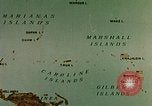
USS Yorktown CV-10 in the Pacific Theater during World War II. Early 1944: Animated map shows the Caroline Islands, Mariana Islands, Gilbert Islands and the Marshall Islands in the Pacific. The U.S. Naval fleet advances from Truk Islands towards an advanced naval base in the Marshall Islands, taken from the Japanese. U.S. ships underway around the fleet anchorage. U.S. Navy Aircraft Carriers, battleships, cruisers, fleet auxiliaries and support ships. Crew and aircraft on the flight deck of the 'Fighting Lady' CV-10. The crew members relax and enjoy themselves in the water. They dive and jump off a makeshift platforms and diving boards into the ocean, and then swim and play around large floating rafts. Sailors sort letters in the ship's post office. Some write letters back home. The crew assembled on the ship deck. Commander of the ship Rear Admiral Joseph James 'Jacko' Clark briefs the crew about their mission, designation to Task Force 58, and advance towards Tokyo. The USS Yorktown and other carriers of the Task Force underway. Sign boards for various Ready Rooms on the ship. Air Group Commanders and pilots ready on call. Rear seat gunners and radio men on call in another Ready Room nearby. They talk, relax, drink Coca-Cola and have ice cream. Flags on board. Commander of the TF 58 Admiral Marc Andrew 'Pete' Mitscher and Skipper Clark on the flight deck. A poster for the ship board movie 'Home in Indiana'. Sailors watch the movie. Planes in flight through clouds, the Task Force underway seeking the Imperial Japanese Naval fleet. New cruisers, Coast Guard cutters and Navy Transports in the Task Force. The patrol spots a Imperial Japanese Navy search plane, a Kawanishi H8K flying boat called 'Emily' by the Allies. The plane fires at the Task Force ships before being hit and sinking in the water. U.S. officers and sailors in a discussion. An animated map depicts the objective to move towards and free the Mariana Islands.
U.S. Navy Assault Force advances while U.S. aircraft bomb Japanese air bases and shore installations on Tinian Island.
USS Yorktown CV-10 in the Pacific Theater during the Battle of the Philippine Sea. The carrier advances towards the Mariana Islands. On the eve of battle, soldiers scrub up to lessen the danger of infection in case they're wounded. Sailors clean up, bathe and rest. Priests conduct services aboard the ship. Sailors take communion and pray. Crewmen read and sleep on their bunks. The carrier underway at dusk. Cooks and bakers prepare a hearty meal of stakes and eggs. Officers take their meal at a table. The alarm goes off to warn of an enemy attack. Sailors rush to their battle stations. Bombardment by Japanese torpedo bomber planes. Fire due to explosions around the ships. Black smoke rises up into the air. Anti aircraft fire from the U.S. ships, planes are hit and descend towards the water. The alarm sounds, pilots rush and board planes and take off. The Radio Plotting Room in charge Smokey and other operators tracks down enemy planes. A map depicts Japanese air bases and military installations in the Mariana Islands, including the Japanese fortified Guam. Radio operators at work. U.S. planes in flight. They swoop down upon Tinian Island and bomb enemy installations. Explosions due to bombardment. Shore installations and air bases bombed. Craters on the island. The U.S. Assault Force battleships including USS Colorado, USS Tennessee and USS Pennsylvania advance. Explosions due to enemy fire. (World War II period).
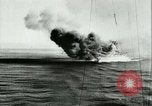
Pacific campaigns in World War 2; U.S. ships under kamikaze attack by Japanese aircraft during the Battle of Midway.
Pictures taken by military and news cameramen during World War II. The Battle of Midway, June 1942: A fleet of U.S. warships underway off the Midway Island. U.S. aircraft bomb the Island. A Japanese ship is hit. The ship on fire. Black smoke rises from the wreckage. U.S. soldiers fire deck guns at Japanese aircraft. Pacific Theater: U.S. Army Air Force C-47 Skytrains or Dakotas in flight over the battlefield. Allied parachute troops and supplies dropped from the aircraft in New Guinea. Parachute troops descend towards the ground. Allied aircraft carriers underway. U.S. aircraft on a carrier deck. Airmen prepare the aircraft for take off. The aircraft taxi and take off. U.S. B-24 Liberators drop bombs. Explosions as deck guns are fired. Explosions near a ship in the water. A U.S. carrier under kamikaze attack by a Japanese aircraft. The hit aircraft descends towards the ship and into the water.