


 Francais
 Deutsch
 Italiano
Refine Your Search
Japanese-martial-arts stock footage and images
- Showing 43 to 48 of 4336 results more
more Hide
Hide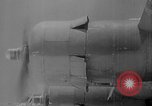
B-24s of U.S. 5th Bombardment Group operating from Munda Point airfield, New Georgia Island, in World War II.
A B-24 Liberator bomber with nose art painted name "Laden Maiden,"of the USAAF 5th Bombardment Group, sits with engines running,on Munda Point airfield, New Georgia Island, preparing to take off to bomb Japanese shipping near Truk, during World War 2. Broader view shows two squadrons of B-24s preparing for the mission as a rain storm sweeps the island. The aircraft begin taxiing for takeoff. One with nose art name "Tim-ber," shows 25 bombs, for missions, painted on its fuselage. One departing B-24 is seen to use a long takeoff run. Narrator describes difficulties encountered by one B-24 that had to ditch during the mission. Sequence shifts to post-mission scenes the day after the planes returned to Munda.Injured crew members from the ditched B-24, who had been rescued by a Navy PBY, are being transferred to a C-47 aircraft for evacuation to a medical facility. A B-24 is seen taking off on a new mission to bomb Japanese Naval base at Rabaul. View of control tower with several B-24s in formation overhead.
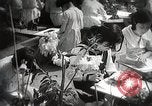
Students learn making ceramic products and music in arts class of school, Japan.
Japanese films show school activities to explain the school system and its deficiencies. The films emphasize the role of schools in developing nationalism, Japan. Students make drawings with colors and brushes in art class. Students seated around the teacher. Teacher teaches students to make natural scenery. Chart of objects displayed. Ceramic products have great importance in Japan and teachers impart their knowledge to students: Students make clay bodies. Clay objects displayed. A man takes clay product out from kiln. Students learn the national flag song in music class. Female teacher plays the musical instrument and teaches songs to children about nationalism and soldiers of country. (World War II period).
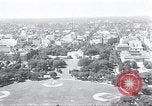
"Fuji Art Shoppe" in Washington D C
View of Washington D C city. Proprietor of "Fuji art shoppe" in Washington DC, is interviewed by a Japanese man. Proprietor shows around the shop. Articles like plates,vase and other China crockery can be seen. Small gift houses and other gift items made by wood can also be seen. Movies like Gates of Hell,The Magnificent Seven,Ugetsu, Samurai, Rasho-Mon can be viewed in the cinema hall.1964-65
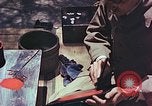
A Japanese artist displays various lacquer products on a table in Kyoto, Japan.
The art and crafts of Kyoto, Japan. A Japanese artist polishes an object with charcoal and coats it with red lacquer. The artist gives the final touch. The final polishing with Tonoko Clay. Lacquer products displayed are red coffee pots, wine cups, cigarette sets, trays with gold dusted base and fan design and a stationary box.
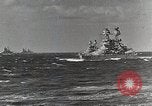
Montage of scenes related to the China-India-Burma theater during World War II
Two U.S. Pennsylvania class battleships underway at sea, with other warships in background, during World War 2. One fires to starboard with her 14-inch guns from the forward triple turrets. U.S. Army Air Forces B-24 Liberator bombers flying in formation over mountains. Glimpse of General Douglas MacArthur with General Joseph (Vinegar Joe) Stilwell in gunner's station of a bomber. Montage of brief glimpses showing U.S. forces engaging Japanese forces in: amphibious assaults; firing weapons in New Guinea and other Pacific islands. U.S. warship firing naval guns. U.S. ship firing at attacking Japanese aircraft, with sky full of black flak clouds. Admiral William (Bull) Halsey. Mitsubishi A6M Zero kamikaze aircraft blown up close to flight deck of U.S. aircraft carrier. It misses the ship and crashes in flames, exploding in the water, astern. U.S. General Joseph Stilwell, Madame Chiang Kai-Shek, British Allied commander Lord Louis Mountbatten, and Chinese Generalissimo Chiang Kai-Shek, photographed together in India. Chinese Generalissimo Chiang Kai-Shek seated for a picture with U.S. President Franklin D. Roosevelt. Camera moves back revealing British Prime Minister Winston Churchill, and Madame Chiang Kai-Shek, also seated. Behind them stand key allied military leaders, including (from the right) Field Marshal Archibald Percival Wavell, Commander-in-chief in India; Admiral Louis Mountbatten, Supreme Allied Commander of South-East Asia forces; George Giffard — commander of Eleventh Army Group; U.S. General Daniel Isom Sultan, deputy to General Stilwell; General Joseph Stilwell, Commander China-Burma-India (CBI) Command; and General Albert Coady Wedemeyer, Chiang Kai-Shek's Chief of Staff. General Joseph Stillwell is seen stepping from a military cargo plane, and being greeted by another officer. Stilwell is wearing a campaign hat. He has the CBI patch on his jacket shouder. A B-24 Liberator bomber takes off from a Chinese base at Liuchow, or possibly, Luiliang, China. (ostensibly carrying Chinese soldiers to India for training). U.S. marked P-40 aircraft are parked beside the runway. They display the shark teeth nose art of the Flying Tiger All volunteer Group of Claire Chennault. But this is 1944 and the aircraft are from the U.S. 23rd Fighter Group. Chinese soldiers are seen being armed and trained in India, with modern small arms. They are also seen fording a river with military supplies and moving in jeeps through jungle-like settings. Various views of Ledo Road construction in Burma. bulldozers, trucks, caterpillar tractors, explosives and men are shown in construction work. A jeep rides along a muddy section of the new road while U.S. and Chinese soldiers patrol on either side to protect it. Allied soldiers firing a small field piece. A C-47 aircraft airdrops supplies to the road builders. General Stilwell, standing with a Chinese officer, looks skyward at the aircraft. A C-46 Commando plane taking off from a field in India carrying supplies. Men loading a jeep aboard a C-46, plus ammunition and other supplies. Rare sight of supplies being loaded into nose cargo compartment of the one-of-a-kind XC-108A transport plane (modified B-17 bomber, tail number 41-2593). A formation of USAAF C-45 transport aircraft flying "over the Hump." Chinese P-36 Hawk aircraft in formation demonstrate firepower. Newly trained Chinese pilots marching and walking on flightline where solid-nose B-25s and P-40s are parked. Chinese and American pilots wave to each other from their P-40 aircraft. A B-25 takes off flanked by two P-40s. Bombs being dropped by Chinese B-25s. Japanese ship being strafed by Chinese fighter plane. Chinese laborers at work building an airfield without machinery. A large group pull a paving roller by hand. Chinese troops in combat with Japanese forces. One firing a Czech ZB vz. 26 light machine gun. Madame Chiang Kai-Shek addressing the U.S. Congress, 18 February, 1943.
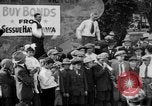
Hollywood movie stars Sessue Hayakawa and Mary Pickford promote Liberty bonds in Hollywood, California, on October 5 and September 29, 1918.
Clip includes scenes from two different events, one week apart. First scenes are from October 5, 1918. Large crowd gathered in Los Angeles California a stage with a mock tank in Central Park, during the Fourth Liberty Loan Drive in World War I. A banner reads "Buy bonds from Sessue Hayakawa" on a podium. Two little girls dressed in traditional Japanese attire kimono, seen on the podium. Japanese American movie star Sessue Hayakawa speaks through a megaphone to sell Liberty bonds during World War I. The next scene, from one week earlier on September 29, 1918, shows Hollywood actress Mary Pickford working the crowd and selling war bonds as she addresses the large gathering through a megaphone during the Fourth Liberty Loan campaign opening event in Los Angeles. Next Mary Pickford is seen seated on the stage. Shots of the crowd are seen. Next scene returns to the event on October 5, 1918. Sessue Hayakawa is speaking to the crowd, and the two Japanese girls on the stage are joined by another little girl, Hollywood child actor Mary Jane Irving. A man asks Mary Jane Irving to speak to the crowd, and she does. Sessue Hayakawa speaks again. Hollywood star Louise Fazenda stands in front a sales report board with a note pad writing down pledges. (Additional information from the Los Angeles Times, October 6, 1918: "Yesterday afternoon a big crowd turned out to greet Sessue Hayakawa and members of his company, including two bright little Japanese girls who shouted through megaphones, "Please buy a bond." Mary Jane Irving, an American sister in art, was on deck with the same message, which appealed mightily to the folks on the ground. Hayakawa made a stirring appeal for the sale of bonds. He said that although his color is different, and his features not the same as ours, he was 100 per cent American and then to prove it he bought $10,000 worth of bonds.")