


 Francais
 Deutsch
 Italiano
Refine Your Search
Japanese-martial-arts stock footage and images
- Showing 457 to 462 of 4336 results more
more Hide
Hide
U.S. wartime propaganda film - Japanese people toil in industry and at warfare unified to help Japan win World War II.
United States anti-Japanese propaganda war film about Japan and its people, and its intentions in World War 2. A White actor narrator impersonates a Japanese man, enforcing negative stereotypes and mocking Americans. “You’ve learned that the Japanese do not show their feelings, nor do I have big teeth and thick glasses- how sad to disillusion you” the narrator mocked. Japanese people work to help Japan win war. Japanese people work on a farm. People row in boats on a lake facing Mount Fuji. Snow-capped Mount Fuji. Volcanic explosion. Japanese soldiers seize the United States flag. Japanese flag flying. Sacred fishes in a pool. Soldiers hold Japanese flags as they cheer Banzai in a victory celebration after battle. Modern buildings in a Japanese city. High altitude view of buildings in an area. Bombardment in a city. Destroyed houses, buildings, and rubble on the ground of Japanese cities. United States warplane aircraft fly in formation. Aerial view of a Japanese city. People walk on the street. Vehicles pass on street. Ship 'Argentina Maru' docked at a Japanese harbor. People sow rice seeds on the farm. Narrator (actor impersonating a Japanese person) mocks Americans as being soft. View in an American town of cars parked along the sides of a main street. American 1940's cars. Jockey's Ball banner. People queue at theater box office and in train stations. United States nightclubs, bars, and casinos. United States people at beach. Japanese industry and munitions factories. Ships underway at sea. United States Marines carry a dead soldier on stretcher. United States Marines coming ashore and Japanese soldiers fighting in Pacific islands such as Guadalcanal and Tarawa. Forces of both sides fire guns and artillery. Smoke from bombardment. Ragged Japanese forces surrendering to United States forces. Japan's best forces shown marching in formation and review. Young Japanese soldiers in training. Japanese children study in a school. Burning Japanese city following attack. Japanese citizen refugees flee, a woman crawls across a railroad track. Japanese girls and boys exercise simultaneously outdoors. Japanese soldiers execute two men (possibly in China?). Prisoners held by Japan in forced labor; others executed. Japanese soldier puts his hat on a little girl, other children playing. Remains of a newborn infant wrapped in cloth lying on the street. Forced laborers from Japanese-occupied countries are made to farm rice. Remains of victims of Japanese forces. Heads of decapitated victims lying on the field. United States prisoners emaciated and injured in the Philippines. A United States soldier wipes his tears after losing an arm. Remains of United States troops, Japanese soldiers, and Asia civilians. Japanese soldiers deploy for war at train station. Map showing Japan, China, Manchuria, and Mongolia. A Type 3 Chi-Nu tank rolling up a fortress in China. Soldiers marching on rice fields and climbing rocky cliffs. Japanese soldiers assume prone position, firing rifles.
2nd Sino-Japanese war, precursor to World War II in the Pacific. Pearl Harbor attack. Early phase of Pacific conflict between Japan and the U.S.
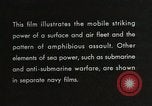
The film 'Sea power in the Pacific' showing Japanese dominance in China and at start of World War 2. Then it chronicles U.S. efforts to build Navy and fight back on sea and in the air. Opening scene shows Japanese Mitsubishi G3M (Type 96) bombers high overhead, and then closeup in formation. View from bomber of bomb bays open with bombs falling and view from ground of explosions and destruction. Overlay on film says: "China---1931." (This is not correct. The G3M bomber was not yet in service.) This film depicts Japanese attacks during second Sino-Japanese War, commencing 1937, Chinese civilians running to escape Japanese bombing of Singapore. Buildings destroyed and on fire. Next, Japanese troops, carrying the Rising Sun flag, are seen establishing a beachhead in an Amphibious assault. More scenes of Japanese infantry advancing through Singapore, ad it is being destroyed and burned. Soldiers charging along an alleyway, with pagoda in background. Next, Japanese soldiers are seen attacking Nanking, and committing atrocities and killing Chinese during the so-called "Rape of Nanking," in December, 1937. Chinese civilians being summarily shot and dumped into a large open grave after execution. Two Chinese prisoners with hands bound, being executed by rifle fire. Jubilant Japanese troops celebrating their victory. Map shows areas of China occupied during second Sino-Japanese war and the East Indies to the South. View of oil tanks; an open pit tin mine; a native cutting rubber tree bark to collect latex. Flags on map show regions of English, French, and Dutch colonial interest. It also shows Islands to the East, fortified by the Japanese. Cartoon shows Japanese soldier opposed by and American sailor (representing U.S. Sea Power). Next, famous images of the Japanese attack on Pearl Harbor, Hawaii, December 7, 1941, are shown, including the USS Arizona burning and sinking. Hawaii, Midway, Wake, and the Philippines Islands, are highlighted on a map and Japanese control of the Pacific is illustrated. Japanese soldiers are seen displaying a captured American flag. U.S. Lieutenant General Jonathan M. Wainwright is seen surrendering the garrison at Corregidor, on May 6, 1942. View of Japanese General Masahara Homma discussing surrender terms with Wainright. Map shows interlocking web of Japanese fortified bases in Pacific and need for seapower to oppose it. View of American shipyard with hundreds of workers, employed to build ships for the war effort, in World War 2. Views welding, metal fabrication, and other shipbuilding activity. A new ship going down the ways and a woman christening a new ship with splash from bottle of champagne. A new "Liberty Ship," the Richard Bassett, going down the ways at Bethlehem-Fairfield Shipyard Inc. Baltimore, Maryland. Closeup view as the stern of another ship enters the water upon launching. View of it from a distance. Shipyard workers knock supports from under what may be a landing craft, as it is launched. Japanese warships underway in the Pacific and firing their naval guns. Explosions on a shoreline from naval bombardment. Japanese infantry wading ashore during an amphibious assault. Map shows where Japanese forces attempt an amphibious assault on Southern New Guinea, thwarted by the U.S. Navy in the battle of the Coral Sea of May, 1942. In June, 1942, a Japanese attempt against Midway Island, was again checked by the U.S. Navy in the Battle of Midway. View of USS Wasp (CV-7) carrier deck filled with airplanes, including Grumman F4F Wildcats. A Douglas SBD Dauntless dive bomber being cleared for takeoff from the Wasp. Gun camera film showing Japanese airplanes being shot down by pursuing U.S. aircraft.
Modern Japanese women and their professions in the years after World War 2
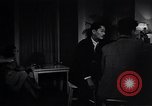
Postwar Japanese women working in various professions in the early 1950s. Japanese women wear Western outfits, go to bars and restaurants for a drink and a smoke. The woman approach men inside a bar. Japanese women smoking with men. A Japanese woman opens sliding door and joins her family for dinner. She begins to talk about her day. Her father nods with disapproval while her younger sister, wearing a High School sailor-style Seifuku uniform, looks on. Men reading a newspaper. A Japanese couple walks in the park. They find a boy fishing on the lake. Japanese women in parliament. Japanese women working as scientists, as nurses and as doctors in hospitals and surgical operating rooms. Japanese woman heads a corporate company meeting. Japanese women work as corporate secretaries. Woman works with farmers. NHK radio station featuring a Japanese woman, who is seated in a broadcast booth. A Japanese woman at a newspaper operation inspects newspapers coming off a printing press. Japanese women as musicians and western ballet dancers. Japanese woman playing a violin with an orchestra. Japanese woman playing the piano. A Japanese woman painting while wearing a kimono. Japanese woman lecturer comes out of a college building. Japanese men gather and talk outside a building. A Japanese woman casts her vote in a ballot box. Japanese civilians in voting poll. The National Diet is filled with parliamentarians.

A U.S. Government background study film about the culture and behavior of Japanese society
Opening slate recounts that the First American Consul to Japan was received on December 7th 1857, and Japanese forces attacked Pearl Harbor on December 7th, 1941 during World War 2. After the slate, Japanese are seen depicted in prints by famous 18th and 19th century artists: Katsushika Hokusai; Utagawa Kunimasu; and Ando Hiroshige. Next are various views of Japanese Type 97 Chi-Ha tanks. An industrial site with numerous smoke stacks spewing clouds of effluents. Momentary glimpse of a Japanese Torii Gate. Crucible of molten steel being emptied. Machine shop powered by driving belts. Closeups of various machine tools in operation. Closeups of Japanese industrial workers. A line of Type 95, 75 mm Japanese field guns produced in Japanese factories. Japanese women engaged in home industries making parts for factories. A Japanese artisans working in pottery, porcelain and metal. Various views of densely populated Japanese city with trolley cars; automobiles; and pedestrians (most in Western style clothing, but some women in kimonos). City buildings of modern design. Men leaving their shoes at the doorway as they enter a house. A woman helps a man don a lounging gown upon arriving home from work. Japanese children in the courtyard of their urban school, performing exercises and calisthenics. Three children walking home from school. A family in traditional Japanese attire, having dinner at home. A steam locomotive pulls a train through rural area of Japan. View from above, of farmers working in terraced area. Closeup of farmer guiding a plow being pulled by oxen. Women sowing seed in a rice paddy. Farmers planting seedlings, and hoeing, threshing, and harvesting crops by hand. Harvested crop being placed on outdoor rack to dry. Exterior of farmhouse with thatched roof. View of family inside, preparing dinner and later sitting around a covered charcoal brazier, to keep warm. The woman of the house turns on a single electric light and the man turns on a radio having an external speaker horn. Two Japanese sumo wrestlers in a ring at an arena. Views of Sumo wrestler going through preliminary movements, followed by two wrestlers battling in the ring. Japanese Jujitsu master demonstrates skill by throwing assistants in a demonstration. Two Japanese men demonstrate kendo dueling before an audience of students in a training facility. (They do not wear protective attire.) A horse race taking place at a large track with many spectators in the viewing stands. A Japanese golfer hitting a ball out of a sand trap. Glimpse of tennis players. Japanese baseball teams march into a stadium and play the game before a crowd of spectators. Japanese office displaying poster for the Marx Brothers movie "Duck Soup." Several Japanese at a home party party with saxophonist playing 1928 American song, "Sweet Sue, Just You." The group joins in singing the song. Patrons in Western style attire dancing in a night club to music of a modern orchestra. Customer smoking cigarette and sampling an American cocktail and a small cup of saki as jazz is being played in the background. A woman dressed as a Geisha plays a shamisen.
Japanese leaders Prince Higashikuni and Prince Kaya Tsunenori visit Hankow. Triumphant celebration after invasion of China.
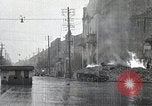
Japanese occupation of Wuhan and Hankou or Hankow region during the Second Sino-Japanese War. Street level views of burning buildings in Wuhan region and Japanese forces taking over the city. Elevated wide view of Japanese ships at anchor in the Yangtze River. View of French captives under Japanese Guard, and view of British soldiers saluting Japanese soldiers and relinquishing control of a building guarded by the British (possibly Embassy). Japanese leader Prince Naruhiko Higashikuni disembarks from plane. Troops stand on the sides of road to salute Japanese leaders. During a victory celebration, Japanese aircraft fly over the city and Japanese officers on ships at harbor salute and celebrate. Aboard a Japanese ship, Japanese officers gather on the deck at a series of tables and toast victory with sake. Celebrants include Prince Kaya Tsunenori. Scene changes to mainland Japan, with celebrations underway in many cities. Children march waving Japanese flags. In Tokyo, a group celebrates with the Imperial Palace seen in the distance along with Emperor Shōwa (Emperor Hirohito) on his favorite white horse Shirayuki. Back in China, Chinese citizens are indoctrinated to the "ways of the Empire". Japanese soldiers are seen teaching Chinese crowds and having them wave Japanese flags. Chinese citizens seen in the cities receiving rice and other food under supervision from Japanese forces. Chinese citizens cooking and preparing food and eating the food. Farmers in China irrigating fields and tilling farm fields. An elderly Chinese woman is seen sewing a flag of Japan. Japanese troops on horseback and driving capture Chinese tanks advance, along with artillery.
Beginnings of the Second Sino-Japanese war
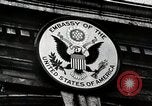
Sign over American Embassy in China. Colonel William Mayer, former military attache in that embassy relates events precipitating Second Sino-Japanese war. Scenes of the Marco Polo bridge near Peking, on night of July 7, 1937, as Japanese artillery bombards the area. Animated map shows movement of Japanese forces out of Manchuria to occupy Peiping and Tientsin. Victorious Japanese troops stand atop a building, raising their flags and shouting cries of victory. Japanese army officers sit around a table smiling and contended and others walk in a group. Chinese artillery crews are seen retaliating as they fire field pieces at Japanese positions in Shanghai. Shells explode in background, and Chinese infantry advance through damaged buildings and rubble. Animated map shows Shanghai and other cities, and film transitions to view of the bustling city of Shanghai on the Yangtze River. In the seaport, large ocean liners and freighters, as well as tug boats and Junks, are seen. What looks like a Japanese Tachikawa Ki.54 Type 1 transport plane takes off over a Chinese pagoda. Double-decker buses travel through the streets. Rickshaws are also seen. Map outlines the foreign residential areas of the French Concession and the International Settlement. American, British and Japanese flags are shown in the International Settlement. Detachments of troops from Japan, Britain, France, and United States Marines are seen. A U.S. Marine is posted as a sentry at the Shanghai Power Company. Coolies carry heavy bucket on a long pole. British, French and Japanese troops also performed sentry duties. Japanese troops and armored cars are seen. A scuffle breaks out in August, 1937, and Japanese soldiers start moving in trucks, take up firing positions, and begin firing guns from their armored cars. Map shows Chinese counterattack pushing the Japanese contingent toward the Khangpoo River. Next it shows Japanese warships and reinforcements in the Yangtze River and their advance toward Woosung and Shanghai. Views of Japanese warships bombarding the shore and large explosions from their striking shells. Beachhead is shown South of Shanghai, where two divisions of Japanese infantry are seen arriving in landing craft. They advance across the fields toward Shanghai. Map shows Chinese withdrawals to West and South, toward Nanking and Hangchow. Chinese medics along with infantry march in retreat. Japanese pilots are seen being briefed. Next, Japanese Mitsubishi G3M bombers are seen in flight, and bombardiers and other crew in them. Bombs falling on the city. Civilians running for cover as bombs explode. Aichi D3A1 aircraft dropping bombs. The Shanghai waterfront being bombed and civilians running.