


 Francais
 Deutsch
 Italiano
Refine Your Search
Japanese-martial-arts stock footage and images
- Showing 463 to 468 of 4336 results more
more Hide
Hide
China builds Burma Road to carry war materiel and supplies and creates flood of Yellow River to thwart Westward expansion of Japanese occupied territory
Japanese officials meeting in strategy session. Japanese infantry on mission to cut Chinese supply lines during 2nd Sino-Japanese war. Black smoke rises as they move along a river bank. Chinese prisoner-workers are forced to rebuild railroads destroyed by the Chinese people during their great Westward trek. Japanese soldier closely guards workers. A Japanese army armored train underway on the rebuilt railroad, as Japanese soldiers cheer. Animated map shows China's supply lines by sea, to Tsingtao, Hangchow, and Amoy, cut off by Japanese naval blockade. Japanese Navy launch with officers and crew moving near commercial ships as they take over Chinese river ports. War materiel and other supplies destined for China, including trucks, sit idle, unable to be transported to their destinations. Large oil tanks and drums of gasoline are shown, as well as gun barrels and a flightline filled with parked Curtiss P-36 Hawk aircraft. The Imperial Japanese Navy destroyer Asakaze (DD-3) and another, next to it, in a Chinese river port. A Japanese freighter with anchored weighed, secured by long lines to a wharf. Small boats flying Japanese Naval ensigns are next to it. View of map showing china, Burma, Indo-China, and Chungking, with Japanese blockading fleet stationed in the South China Sea. It traces path of narrow gauge rail line from Indo-china to Kumming,China, where it connected to an overland road to Chungking. Next it traced the old Camel Caravan route, across China, from Russia. Narrator notes these were to small to be useful and too close to Japanese-occupied territory. Next, the map traces a railroad that from the port of Rangoon to Lashio, Burma. It is separated from the road to Chungking, by mountains and gorges. Views of the actual mountainous terrain. Animal pack trains moving through the area. Construction engineers in a large drafting room designing a road to transit the area. View of modern road-building caterpillar tractor equipment of the type needed to accomplish this. View of Chinese laborers using manpower instead. They push large rollers and employ pickaxes and other hand-held tools to carve away and dig road beds. Masses of Chinese laborers at work, carving a road along the edge of a mountain. Two-men teams using manual tampers to pound down the roadbed. Children are employed along with adults. A woman with a baby on her back, pounding large rocks into gravel, surrounded by other children doing the same. View from above of the "Burma Road," the product of their labors, winding its way through the mountains and gorges. Many scenes of trucks moving along portions of the Burma Road. P-40 airplanes flying past white cumulus clouds, overhead. Animated map shows continued expansion of Japanese occupied areas to encompass two thirds of the rail lines in China with goal of controlling the remainder, starting at Chengchow, in Summer, 1938. View of Chengchow region, on banks of the Yellow River. Map illustrates flow pattern of the Yellow River. View from past of the Yellow River's Spring floods toward the Sea, with Chinese people throwing rocks onto dikes that keep the river flowing in a more Northerly direction than its former course. Illustration shows how with Japanese encrouching on Chengchow, the Chinese decided to destroy those dikes and allow the river to flood over its former more Southerly course. Japanese soldiers being inundated by the flooding river. Japanese infantry and tanks regrouping on their occupied side of the new (old) path of the Yellow River. Local Chinese residents of Chengchow, wade with belongings as they leave their flooded homes.
Depicts Korean suffering under Japanese occupation from 1910 through end of World War II
Korean propaganda film depicting suffering of the Korean people under Japanese occupation prior to and through World War 2. Korean citizens answering questions of Japanese civilian officials during period of Japanese occupation before World War 2. Japanese warship carrying Nakajima E4N bi-wing scout plane. Steel truss bridge being bombed. Koreans being forcibly recruited to fight for Japan. Koreans being tortured and imprisoned at hands of Japanese. Aircraft dropping bombs on ground targets. Slate announces August 9, 1945, marking the Soviet invasion of Japanese occupied areas, including North Korea, in World War II. Destroyers dropping depth charges. Battleships firing heavy guns. Soviet infantry rushing from a ship to engage Japanese forces. Soviet soldier offloading an M1910 Maxim Sokolov Machine gun onto a pier. Amphibious assault by Soviet forces. Artillery barrages. Explosions and smoke. Soviet infantry attacking industrial facilities and planting the Red flag on a hilltop in a rural area. Japanese troops surrendering to Soviet soldiers. Fallen Japanese gunner in gun position with shell in his hands. Numerous other fallen Japanese soldiers. Captured Japanese weapons and war materiel, including many swords. Japanese prisoners of war seated in an open area. Various destroyed Korean buildings and temples. Denuded trees in war zone. August 15th, 1945, shows Japanese citizens listening to a loudspeaker broadcast by Emperor Hirohito, announcing the surrender of Japan, and end of World War II. Shackles are removed from Korean prisoners. Koreans celebrate in the streets. The Korean flag flies from houses in a village. Korean people march, sing, and cheer everywhere in the country. A seated band of musicians plays. Scene shifts to the deck of the battleship USS Missouri, where Japanese Foreign Minister Mamoru Shigemitsu in formal attire sits to sign documents of surrender. General Douglas MacArthur, and other senior allied officers, stand nearby as Soviet Lieutenant General Kuzma Nikolaevish Derevyanko sits to sign for the USSR. Japanese civilians living in Korea, during the Japanese occupation, are seen moving with their belongings, to be relocated back in Japan.
Japanese soldiers advance with tanks and ammunition towards Mandalay in Burma (WW2)
Activities of Japanese soldiers in Southeast Asia during World War II. A relief map of India, China and Indochina shows the locations of Rangoon and Mandalay in Burma (Myanmar). Japanese soldiers march along a dirt road. Trucks parked along the side of a road. Japanese troops march. Burmese civilians standing on the side of a road wave flags. A Burmese civilian fill vessels with water for Japanese horses to drink. Burmese man give Japanese soldiers water to drink. The troops march in the background. Two Japanese soldiers drink water from canteens. Japanese soldiers and U.S. prisoners of war seated on the ground. A Japanese officer points to a piece of paper and discusses. The soldiers marching on a street move past a sign which reads: 'Mandalay 82 Mi-Rangoon 348 Mi'. A Japanese soldier pushes a dump truck up a steep grade on a road. Japanese officers and a car in the background. A photographer and a medium tank in the background. A Japanese soldier drives steel wedges into the ground behind a piece of field artillery. The Japanese fire the field artillery. A column of smoke rises. Japanese tanks drive down a dirt road. The field artillery being pulled by Japanese soldiers. The soldiers march carrying Japanese flags. Demolished buildings in the foreground. Freight cars on a siding, bomb crates near railroad tracks. Japanese medium tanks advance over the railroad tracks.
Japanese occupation of Philippines; infantry soldiers and armor advance (WW2)
Japanese occupation of Philippines during World War II. Film opens showing a formation of Japanese Nakajima Ki-67 (Army Type 4 Heavy Bombers, named "Peggy", by Allies) in flight. Japanese infantry soldiers are seen next, marching into the Philippines. Views of barbed wire fences and of stacks of artillery shells. View from rear of a column of infantry marching beside a road. Glimpse of abandoned sand-bagged defensive positions. A Japanese camp in the open with field artillery set up. Brief view of a Japanese Nakajima Ki-27 Type 97 Fighter (called "Nate" by Allies). Japanese infantry struggling through jungles. Brief view of a Japanese Aichi D3A Type 99 Carrier Bomber (Allied reporting name "Val") in flight. Scene shifts to Japanese infantry continuing past palm trees. A Japanese tank running over a slender tree. A Japanese open personnel carrier. Infantry carrying loads suspended from poles. Another view of a Nakajima Ki-67 heavy bomber in flight. A camouflaged Japanese type 97 tank moving forward. Japanese infantry moving single file across a bridge. Two Japanese soldiers riding atop a type 97 tank heading across the bridge heading toward the camera. Map showing the mountains of Bataan peninsula in Japanese. More views of infantry marching along the road. Horses are employed to move artillery pieces. More Nakajima Ki-67 bombers in flight. Japanese artillery firing. Japanese troops gathered and shouting "Banzai" on top of Mount Orion, Bataan.
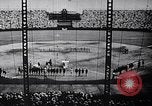
US baseball players visit Japan in 1931; also anti-Japanese propaganda circa 1941-1942 during World War 2.
Huge crowd attends baseball game between visiting American players and Japanese team in Tokyo, 1931. Lou Gehrig, Al Simmons and Lefty Grove mentioned by announcer but not seen. American representatives walk out to pitcher's mound to greet pitcher. Shots of Babe Ruth hitting. Shots of Japanese player rounding third, sliding safely into home. Film suddenly morphs into anti-Japanese propaganda circa 1941-1942; shows Japanese newspaper publisher who was murdered. Scenes of sumo wresting and judo and kendo seen and compared to alleged acts of Japanese diplomatic and military treachery and spying. Shots of fishermen, tourists, barbers and others said to be spies and soldiers for Tokyo. Closeup of a Japanese man gardening. Japanese men on small fishing boats, raising boat sails, and pulling in heavy loads of tuna fish in nets. Japanese tourists supposedly taking photographs of American ships in Hawaii. Female Japanese barbers giving haircuts. Japanese military officials in Japan organizing papers, films, and incoming information. Japanese industrialist figure emerging from car. Scenes of Japanese industry supporting war preparations: Exterior views of Japanese factories in Osaka, textile mill operations in Tokyo, chemical plant operations in Nagoya, steel mills, and a large newly completed ship being launched in Nagasaki. Overhead view of steel mill operations. View of a slum town area in Japan and simple living arrangements of Japanese citizens. Japanese laborers at work in small home factories for textiles, pottery, and other goods, said to be in "semi-slavery." Workers include men, women, and child labor. Shows production of goods said to be produced in other countries that are pirated, mislabeled by Japan, and dumped at low prices abroad to undercut competitors. Products shown include factories and production lines for spark plugs, scotch whiskey, matches, silk, cotton, bottled beer, toothbrushes, hair brushes, hair combs, and American flags produced in Japan and offered for sale at lowest prices in the United States. Shipping dock areas in Japan showing large ships at docks, cranes in use, and importing of oil, rubber, scrap iron, tin for war materiel.
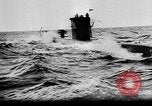
Period before U.S. formal entry into World War II. German submarines torpedo American ships and Japanese attack Pearl Harbor
Preface to U.S. in World War 2. German U-boat on surface. Crew climbing down into submarine and at duty stations while submerged. Torpedo trails bubbles underwater. Ship hit and explodes. Newspaper headlines report torpedoing of American ships: SS Robin Moor, SS Lehigh, SS Sessa, SS Steelfarer, and SS Montana, by German U-boats. Secretary of War, Henry L. Stimson calls on U.S. Navy to secure sea lanes. Wendell Wilkie agrees. U.S. Congress repeals Neutrality Act, November 17, 1941. Deck guns being placed on U.S. Merchantmen. Japanese warships docked and troops entering Indochina, as local people watch.Japanese troops by Dong Dang, near Chinese border. Situation described by animated illustrations.Japanese Special Envoy, Saburo Kurusu, is dispatched to Washington. Pan American Boeing 314 flying boat taking off. Japanese Naval Task Force of warships underway. Kurusu arriving in San Francisco, on November 14, 1941. He steps from the aircraft and makes statement to reporters. Japanese Ambassador, Kichisaburo Nomura, and Special Envoy Kurusu escorted into the White House by Secretary of State Cordell Hull, on November 17, 1941. Japanese troops in China bombarding Chinese city with artillery. November 26, 1941, View of Executive Office Building with statue of Victory atop U.S. Army First Division Monument. Secretary Hull announcing proposal to Japan.The Japanese representatives leaving the White House. Japanese aircraft carriers steaming toward Pearl Harbor. Japanese flight crews getting briefed on December 7,1941. Nakajima B5N (Kate) torpedo bombers taking off and in formation. Secretary Hull at his desk. The aloha tower and aerial view of Honolulu. Sailors at outdoor Sunday service, and relaxing at Pearl Harbor. Vehicle entering Hickam Field. Japanese airplanes bombing Pearl Harbor. Explosions on U.S. warships. USS Arizona (BB-39) suffers direct hit and explosion, as filmed from the deck of U.S. Navy Hospital Ship, USS Solace (AH-5). Shots of pilots and point of view from pilots inside Japanese bomber and attack aircraft, through a mix of dramatized segments from Japanese propaganda films about the Pearl Harbor attack, and real footage from the Pearl Harbor attack. View from Japanese planes bombing and strafing Ford Island. U.S. sailors firing antiaircraft and machine guns down Japanese planes. Secretary Hull describes memorandum from Japanese.