


 Francais
 Deutsch
 Italiano
Refine Your Search
+"Japan" +1941 stock footage and images
- Showing 19 to 24 of 84 results more
more Hide
Hide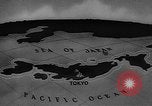
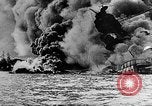
The salvage crew team works on ships after the attack on Pearl Harbor in Hawaii.
Aftermath of attack on Pearl Harbor, Hawaii, during World War 2. An animated map shows Japan in the Pacific Ocean. Nagasaki, Kobe and Otaru in Japan. U.S. propaganda scenes with caricature voice of a fictional "Mr. Tojo" of Japan declaring various U.S. Navy ships destroyed after the Pearl Harbor attack. Scenes of various capsized and damaged ships in Pearl Harbor following the Japanese attack. United States naval personnel and civilian personnel work on salvage and repair. Engineers and personnel recruited. Navy divers get into scuba diving suits and helmets and go under water to collect salvage and make repairs. Destroyed USS Nevada, USS West Virginia, USS California. Salvage crew work aboard these ships. Refloated and refitted U.S. Navy ships departing Pearl Harbor in the war effort. View of the Aloha Clock Tower. Sailors stand with Lurline ship in background. View of people enjoying Waikiki Beach in 1940 or 1941 before the attack. Later scene of the same beach with two young boys playing in the sand, but barbed wire between the beach and the ocean, following America's entry into World War 2. Empty streets of Honolulu at dusk as blackout time hours begin. Narrator speaks out against Japan and states that all they that take the sword shall perish the sword, and text "This is not the End" appears at the end of the film, following by text, "This is but the Beginning!"
Japan expands its military presence and influence in the Pacific before World War II. U.S. employs air power early in the war.
Opening scene shows Emperor Hirohito of Japan dressed in military uniform, astride a white horse, riding along a path, followed by military officers. (Narrator cites Japanese declaration of war against the U.S. and Britain on December 7, 1941.) Japanese soldiers in two groups engage in local war games against each other. Animated map shows Japan and the expansion of her influence and military presence throughout the Pacific. Aerial view through scattered clouds, of Japanese fleet of warships. Aerial view of American warplanes in formation through scattered clouds. Closeup from cockpit of a U.S. A-20 Havoc aircraft, showing its left engine and prop and a second A-20 flying to its left in close formation. Swerving wake of a Japanese warship engaged in evasive maneuvers on surface of the sea, below. Several scenes of U.S. aircraft strafing Japanese warships. Aerial view from a U.S. B-25, flying above Japanese ships, of another B-25, with its bomb bay doors open as it launches a torpedo. Japanese ship is struck, explodes, and sinks stern first. Glimpse of more Japanese ships in a convoy.
Japan extends its empire into Manchuria, Mongolia, and China in 1931 and 1932
Brief opening scenes show ships being engulfed in flames and smoke from Japanese attack on Pearl Harbor, December 7, 1941 in World War 2. Focus is primarily on the USS Arizona. Scene shifts to Japanese troops assembling on a pier and boarding troop transport ships bound for Manchuria and China, following the Mukden Incident of September, 1931. Japanese troops are then seen marching into Manchuria on September 18, 1931. A formation of Japanese soldiers presents arms. In another formation, they shoulder swords. Closeup of a Japanese soldier in a steel helmet with chin strap in place. A steam locomotive pulls a train into the Chin Hsien station on the South Manchurian Railway. A Japanese train on that line had been dynamited, triggering a Japanese push into Mukden. View from behind a train leaving Chin Hsien on the South Manchurian Railway. Japanese battalions place bundles of straw across a stream to facilitate troop crossing. A column of Japanese troops is seen crossing the water on the makeshift straw crossing. Japanese troops advancing along with supplies carried by pack animals. Troops traverse a sandy berm past an abandoned two-wheel cart. A formation of 12 Japanese G3M bombers flies overhead in a "V" formation en route to bomb Mukden. View of Chinese population running for shelter from the bombing. Chinese walk past some civilian casualties lying in a street. The League of Nations headquarters in Palais Wilson, Geneva, Switzerland. A memorial to Woodrow Wilson at the Palais Wilson reads: "A La Memoire De Woodrow Wilson President des Etats-Vnis,Fondatevr DL La Societe Des Nations, La Ville de Geneve." A car driving away from the entrance of the League Headquarters. Closeup of doorway with sign identifying it as the entrance for delegates and members of the Press. League delegates are seen inside its meeting hall. Japanese warships are seen next, attacking 15 miles from Shanghai with naval gunfire.Three Mitsubishi 2MR4 (Type 10)Reconnaissance biplanes are seen in flight above the barrel of a large naval gun. Japanese troops marching into Shanghai, as people on the roadside wave Japanese flags. Next, they are seen marching out of Shanghai at the insistence of the League of Nations. After signing a truce with China, on May 4, 1932, Japanese troops are seen entering Mongolia, in September, 1932, which they reconstituted as the Puppet State of Manchuko. A Japanese soldier standing atop a building waving a Japanese flag. Japanese statesmen resigning and leaving the League of Nations in protest after it labeled Japan an aggressor. Japanese forces fire a long barrel Type 89 cannon (150mm) as they push into China proper. Group of Japanese artillerymen use range finders, Periscopic viewers and binoculars to guide the gunners. Shell explodes raising large amount of earth. More views of artillery firing and infantry advancing. Infantry crossing a bridge and raising siege ladders to scale a fortress. Engines running on Japanese Ki 30 Type 97 airplanes, as pilots get final briefing and orders. They salute, board their aircraft, and are seen in formation aloft, dropping bombs. View from the air of bombs striking below. View from a bomber of its bombs dropping from the aircraft (bombs away view) and exploding on the ground. A column of Chinese soldiers moves along a section of the Great Wall of China heading into the interior of China. Civilians moving all manner of equipment and machinery into the interior.
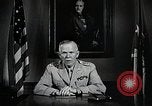
Chief of Staff George Marshall encourages war effort and outlines plan to defeat Japan late in World War 2
U.S. Army Chief of Staff George Marshall narrates film and is shown several times speaking seated at a desk. Marshall praises the Pacific Forces. Close up view of several U.S. military officers including General MacArthur (with a bandage over his right ear). Scene of U.S. Marines in combat on a Pacific Island during World War 2. U.S. marines advancing under fire. An enemy soldier is fallen in the distance, followed by a group of Japanese soldiers running for cover. Gun camera footage of a strafing attack by a U.S. aircraft on a Japanese ship, followed by strafing of parked Japanese airplanes at an airfield. Mid air dogfight scene is shown as a U.S. warplane hits and downs a Japanese aircraft. View on deck of a U.S. Navy aircraft carrier ship as a Japanese kamikaze aircraft bears down toward the ship, is hit by ship's guns, loses a wing, and, in flames, crashes into the ocean just off the ship. Scenes at Pearl Harbor after the Japanese attack in 1941, as medics care for wounded U.S. sailors in stretchers. Japanese soldiers seizing control in Bataan, with U.S. soldiers holding their hands up in surrender. Also U.S. soldiers in Corregidor standing by as they are addressed by Japanese captors. Scenes of Japanese soldiers in drills and training. Japanese Emperor Hirohito on horse back during a military parade. Scenes of dead Japanese soldiers laying on battle fields after battle. View of industrial smoke stacks of a factory in Japan. Japanese workers producing steel and munitions for war effort. Japanese soldiers cheering at a military rally. George Marshall speaks urging commitment by every American citizen in the war effort. Caricature image of Axis leaders Hitler and Mussolini with "X" marks over them, beside a non-marked image of Japanese General Hideki Tojo. Clip closes with several scenes of American flags being raised on flagpoles of military bases all over the world, as soldiers, sailors, marines, women WACS soldiers, and airmen salute the American flag.
Role of metals in Japanese war against China during 2nd Sino-Japanese Conflict
Scenes of Second Sino-Japanese War, circa 1938. Japanese soldiers observing battlefield from a ridge. Japanese artillerymen firing field pieces. Flight of two Mitsubishi Ki-15-1 light bombers in formation, later called "Babs" by the Allies and known as a C5M in Japanese Navy usage. Aerial view of Japanese bombs falling on Chinese cities. Chinese citizens, including an injured woman, seeking shelter from bombing. Aerial view of Chinese ship being strafed by Japanese aircraft. The ship explodes. Downed Japanese warplanes burning. Scenes of destruction from bombing of oil facilities. Iron ore being moved in Japanese rail cars. Steel plants around Yawata, Japan. Numerous containers of molten steel inside a steel plant. Hot Steel ingots being moved. Animated map shows locations of iron ore deposits in Japan. Scrap steel being imported that, narrator states, helped boost Japanese wartime production to 12 million ingot tons in the Sino-Japanese war. More views of open rail cars moving alloying elements to a steel mill. Open mining using explosives. Mining operations for copper and bauxite (aluminum ore). Japanese miners shoveling ore by hand into open rail cars. Open rail cars moving in both directions on parallel tracks. (Note: Although some narration refers to 1941 Japanese production, the images are from earlier period.)

A U.S. Government background study film about the culture and behavior of Japanese society
Opening slate recounts that the First American Consul to Japan was received on December 7th 1857, and Japanese forces attacked Pearl Harbor on December 7th, 1941 during World War 2. After the slate, Japanese are seen depicted in prints by famous 18th and 19th century artists: Katsushika Hokusai; Utagawa Kunimasu; and Ando Hiroshige. Next are various views of Japanese Type 97 Chi-Ha tanks. An industrial site with numerous smoke stacks spewing clouds of effluents. Momentary glimpse of a Japanese Torii Gate. Crucible of molten steel being emptied. Machine shop powered by driving belts. Closeups of various machine tools in operation. Closeups of Japanese industrial workers. A line of Type 95, 75 mm Japanese field guns produced in Japanese factories. Japanese women engaged in home industries making parts for factories. A Japanese artisans working in pottery, porcelain and metal. Various views of densely populated Japanese city with trolley cars; automobiles; and pedestrians (most in Western style clothing, but some women in kimonos). City buildings of modern design. Men leaving their shoes at the doorway as they enter a house. A woman helps a man don a lounging gown upon arriving home from work. Japanese children in the courtyard of their urban school, performing exercises and calisthenics. Three children walking home from school. A family in traditional Japanese attire, having dinner at home. A steam locomotive pulls a train through rural area of Japan. View from above, of farmers working in terraced area. Closeup of farmer guiding a plow being pulled by oxen. Women sowing seed in a rice paddy. Farmers planting seedlings, and hoeing, threshing, and harvesting crops by hand. Harvested crop being placed on outdoor rack to dry. Exterior of farmhouse with thatched roof. View of family inside, preparing dinner and later sitting around a covered charcoal brazier, to keep warm. The woman of the house turns on a single electric light and the man turns on a radio having an external speaker horn. Two Japanese sumo wrestlers in a ring at an arena. Views of Sumo wrestler going through preliminary movements, followed by two wrestlers battling in the ring. Japanese Jujitsu master demonstrates skill by throwing assistants in a demonstration. Two Japanese men demonstrate kendo dueling before an audience of students in a training facility. (They do not wear protective attire.) A horse race taking place at a large track with many spectators in the viewing stands. A Japanese golfer hitting a ball out of a sand trap. Glimpse of tennis players. Japanese baseball teams march into a stadium and play the game before a crowd of spectators. Japanese office displaying poster for the Marx Brothers movie "Duck Soup." Several Japanese at a home party party with saxophonist playing 1928 American song, "Sweet Sue, Just You." The group joins in singing the song. Patrons in Western style attire dancing in a night club to music of a modern orchestra. Customer smoking cigarette and sampling an American cocktail and a small cup of saki as jazz is being played in the background. A woman dressed as a Geisha plays a shamisen.