


 Francais
 Deutsch
 Italiano

Refine Your Search
+"Japan" +1942 stock footage and images
- Showing 13 to 18 of 102 results more
 Hide
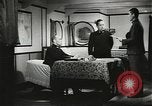
Japanese families receive news about loss of loved ones during World War II.
Excerpts from "The War at Sea From Hawaii to Malaya," a 1942 Japanese film that purports to present naval aspect of World War 2 from Japanese perspective. A Japanese radioman reports message about casualties to high ranking Japanese naval officer aboard a warship. The officer stands as the list of casualties is read. A photograph wrapped in black, of a young Japanese Naval Officer. Scene shifts to Japan, where members of a Japanese family listen to a radio news broadcast, about their son's honorable death. Another family listening to radio, his school teacher also listening. Girl in Kimono goes into an art room, kneels near the picture of a flaming ship and prays for the dead. View of a high torii (gate).

Atoms for Peace. Founding of United Nations International Atomic Energy Agency.
A technician sits in front of an oscilloscope and takes readings. Rotating figure appears on scope. Tracks of subatomic particles seen in a cloud chamber. Scientists at an atomic pile. Animated representation of an atom. Image of the earth in rotation. An advanced version of the atomic pile in which Enrico Fermi achieved the first sustained nuclear reaction at the University of Chicago, in 1942. Images of famous scientists, including: Albert Einstein speaking into a microphone; Otto Hahn, of Germany at a microphone; Niels Bohr, of Denmark; Madame Curie; and Hideki Yukawa of Japan. Technicians removing vials of radioisotopes from nuclear reactors. International students studying in classroom and laboratory at a nuclear institute. Elevated famous landmark views and vehicle and bicycle traffic in city of Copenhagen, Denmark. U.S. President,Dwight D. Eisenhower, delivering what became known as his "Atoms for Peace" speech at the United Nations, December 8, 1953, where he proposes formation of the International Atomic Energy Agency (IAEA). View of the hall and attendees listening. UN Secretary-General, Dag Hammarskjold, taking notes. Attendees applauding President Eisenhower. Scientists from 16 nations arriving and greeting one another at the first International Congress of Nuclear Engineering, held at the University of Michigan (Ann Arbor) on June 20, 1954, hosted by the American Institute of Chemical Engineers. Views of the first atomic library established in November, 1954, and translations of its technical papers being readied to be sent to various nations,beginnning with Japan.
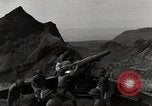
Japanese people worship in temples and salute the United States flag in Hawaii.
American soldiers practice with anti-aircraft artillery in Hawaii circa 1941-1942. People of Japanese descent visit a Shinto shrine and show respect to the United States flag. Flags of United States and Japan on display at entrance of a shrine or temple. Japanese civilians visit a Shinto shrine. They walk through a torii gate. Girls in kimono worship at the Shinto shrine. Priest bows in temple. A family of Japanese descent worships in shrine together. Japanese children carry the United States flag and hold hands over their hearts as the flag passes by during a civic ceremony. Woman serves punch at a social gathering. Men stand and talk. (World War II period, just before time of opening of internment camps and relocation centers for civilians iof Japanese descent).
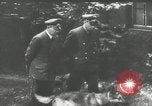
Japanese General Oshima Hiroshi visits the Wolf's lair during World War II. High ranking German officers congregate at the Wolf's Lair
Adolf Hitler and German Foreign Minister Joachim von Ribbentrop walk side by side, at the Wolf's Lair, Hitler's headquarters in the woods of Gierloz, Rastenburg, East Prussia (Poland) during World War 2. Hitler pets a dog as they walk. General Franz Halder walks with General William Keitel. Next, Von Ribbentrop and Keitel are both seen escorting General Oshima Hiroshi, envoy from Japan, and an aide. Behind them is Walter Hewel of the Foreign Ministry, and Admiral Hans-Georg von Friedeburg, in a white jacket. The group enters a Wolf's Lair building. (Ōshima met with Hitler on October 3, 1942 at the Wolf's Lair.) Scene shifts to outdoors, where high ranking German officers enjoy themselves, with introductions and salutes, and converse, and joke with one another. Next, Hermann Goering is seen walking with Walter Hewel. Scene changes showing Goering, with several other German officials, in wooded area with flowering trees in background. Camera zooms in showing Admiral Theodor Burchardi, who renders a traditional military salute to Goering. German officers huddle, with Goering looking on, over a map. Goering and Admiral Karl Dönitz are the seen conversing as they walk. The next scene is a view from inside a Wolf's Lair building , as Hermann Goering leads a large group of German officers. He steps up the entrance to the building. Change of scene shows Adolf Hitler saying goodbyes and shaking hands with the visiting officers.

Planning and training for invasion of North Africa (Operation Torch) in World War II
'Tunisian Victory' shows preparations during World War 2. Film opens showing a sailor in the crow's nest of a ship in a convoy of American warships. Aerial glimpse of the convoy. Sailors working on teletype machines in s communications center aboard an American warship. Ships exchanging light signals at night. Scene shifts to a British naval convoy moving across the sea. View from bridge of forward guns on British King George V-class battleship. A single stack Navy destroyer ship. HMS Rodney with 3 over 3 forward gun turrets leads another warship protecting the convoy. The aircraft carrier, HMS Illustrious in camouflage paint. An American Navy Douglas Dauntless dive bomber seen from a ship. A U.S. Navy Consolidated PBY Catalina aircraft over the convoy. Brief view of a four-engine bomber flying over the convoy. Scene shifts to sailors on ship's deck in the American convoy. The British flag on one of its convoy ships. Scene shifts to the White House on June 18, 1942. President Franklin D. Roosevelt arriving with British Prime Minister Winston Churchill in a car. Lights burning at night in the White House. Closeup of hats of the British and American staff officers on a rack. World Globe showing German army thrusts to the North by Field Marshal Fedor von Bock into Ukraine and the Caucasus, and another by Field Marshal Erwin Rommel South toward Egypt. In Asia, the conquests of Japan are shown. President Roosevelt and Prime Minister Churchill are seated at a desk. Behind them are Roosevelt's assistant, Harry Hopkins and two uniformed officers. View of relief map showing planned joint offensive. British and American staff officers seated at a planning table. Pertinent maps being printed for the offensive. Closeup views of woman's hands typing on typewriter. Tight closeup view of a teletype tape coming across a machine that reads "ANFO GAZE ACROBAT RE NO K" A typist at a teletype machine with tape being made. A busy military communications center. A plan marked "secret" moving across a sliding document mechanism or slide. American and British war production workers arriving at military equipment production factories for work; large groups of war production workers. Workers at military equipment plants and factories in the the U.S. and the U.K., including many women workers involved in war production. A document labeled "SECRET OCSigO" Staff officers in planning session. U.S. Army Chief of Staff, George C. Marshall, seated with British Field Marshal Sir John Dill. More views of the Combined Chiefs of Staff at work viewing wall maps and table maps and plans. Steel mills in operation. American army troops training and preparing in battle drills, firing machine guns, battlefield advance training, swimming under water below flamethrower flames and below oil slicks on fire, leaping into water, practicing paratrooper jumps into water. New ships including Liberty Ships and warships being launched at American shipyards. War production workers inside a plant building B-17 bomber aircraft. An early version of Sherman tank (external bolts showing) and Sherman tanks being built in factory. Shipboard twin anti aircraft guns being test fired. Giant yards filled with newly manufactured weapons, armor, trucks, tanks jeeps, searchlights. U.S. Army generals walk in a group inspecting equipment. War materiel and troops and tanks being transported on railroad trains in America and Britain. Covered Lockheed P-38 Lightning aircraft being towed by trucks past a watching British police (Bobby) at night. Ships being loaded at docks. Troops and war materiel being loaded aboard ships in the U.S. and Britain. Crowd on dock (mostly women) waving goodbye to soldiers on a ship. Soldiers look out portholes and from deck as troop transport ships get underway. Hand sets ship engine control to slow. Soldiers entertain themselves. Soldier playing piano on deck of ship as fellow soldiers listen and tap feet on top of console piano. Closeup view of hands on piano and a soldiers boot nearby on the piano case. Soldiers smile and enjoy the music.
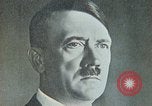
FBI catches Operation Pastorius criminals and hands evidence of their sabotage plots to the United States Military.
A picture of German leader Adolf Hitler. Footage of Pearl Harbor attack by Japan during World War 2. A reenactment shows landing of Operation Pastorius would-be saboteurs in Long Island, New York and presence of the FBI at the site collecting evidence the Germans had buried. Evidence of their plots to bomb various sites in the United States is collected by the FBI and presented to the United States Military. Views of some of their captured equipment and uniforms. Faces of the Operation Pastorius captured criminals (who included George John Dasch, Ernst Peter Burger, Herbert Haupt, Heinrich Heinck, Eddie Kerling, Herman Otto Neubauer, Richard Quirin, Werner Thiel) during their military tribunal hearing in July - August 1942.