


 Francais
 Deutsch
 Italiano
Refine Your Search
+"Japan" +1945 stock footage and images
- Showing 31 to 36 of 1093 results more
more Hide
Hide
Depicts Korean suffering under Japanese occupation from 1910 through end of World War II
Korean propaganda film depicting suffering of the Korean people under Japanese occupation prior to and through World War 2. Korean citizens answering questions of Japanese civilian officials during period of Japanese occupation before World War 2. Japanese warship carrying Nakajima E4N bi-wing scout plane. Steel truss bridge being bombed. Koreans being forcibly recruited to fight for Japan. Koreans being tortured and imprisoned at hands of Japanese. Aircraft dropping bombs on ground targets. Slate announces August 9, 1945, marking the Soviet invasion of Japanese occupied areas, including North Korea, in World War II. Destroyers dropping depth charges. Battleships firing heavy guns. Soviet infantry rushing from a ship to engage Japanese forces. Soviet soldier offloading an M1910 Maxim Sokolov Machine gun onto a pier. Amphibious assault by Soviet forces. Artillery barrages. Explosions and smoke. Soviet infantry attacking industrial facilities and planting the Red flag on a hilltop in a rural area. Japanese troops surrendering to Soviet soldiers. Fallen Japanese gunner in gun position with shell in his hands. Numerous other fallen Japanese soldiers. Captured Japanese weapons and war materiel, including many swords. Japanese prisoners of war seated in an open area. Various destroyed Korean buildings and temples. Denuded trees in war zone. August 15th, 1945, shows Japanese citizens listening to a loudspeaker broadcast by Emperor Hirohito, announcing the surrender of Japan, and end of World War II. Shackles are removed from Korean prisoners. Koreans celebrate in the streets. The Korean flag flies from houses in a village. Korean people march, sing, and cheer everywhere in the country. A seated band of musicians plays. Scene shifts to the deck of the battleship USS Missouri, where Japanese Foreign Minister Mamoru Shigemitsu in formal attire sits to sign documents of surrender. General Douglas MacArthur, and other senior allied officers, stand nearby as Soviet Lieutenant General Kuzma Nikolaevish Derevyanko sits to sign for the USSR. Japanese civilians living in Korea, during the Japanese occupation, are seen moving with their belongings, to be relocated back in Japan.
Harry S Truman, Joseph Stalin and Winston Churchill discuss the problems related to Germany in Potsdam Conference, Berlin (WW2)
Question marks on screen. Reconstruction of the buildings and denazification in Berlin, Germany after World War II. A factory in Germany. A farmer leads a horse to plow a field. Men at a farm cultivate crops. The wreckage of the IG Farben plant. Men speaking to Hermann Göring. The trial of Norwegian leader and Nazi collaborator Vidkun Quisling. The rail goes on for the criminal. People burn Nazi books and pamphlets in a bonfire. A man burns a pamphlet with a photo of Adolf Hitler. The people stand around the burning books. German civilians read a poster on a wall. General Dwight D. Eisenhower of the United States, Marshal Georgy Zhukov of the Soviet Union, and Field Marshal Bernard Montgomery of the United Kingdom sign a joint agreement. The three of them stand together. The United States Capitol building. Chongqing National Government building in No. 232 Renmin Road, Chongqing (Chungking), China. The Big Ben in London, United Kingdom. Aerial view of the Arc de Triomphe in Paris, France. General Francisco Franco saluting to marching soldiers in Spain. The delegates including United States President Harry S. Truman, General Secretary of the Communist Party of the Soviet Union Joseph Stalin, and UK Prime Minister Winston Churchill seated around a table during the Potsdam Conference in 1945. They discuss the problems. A close up view of Truman looking into some documents. Stalin smokes a cigarette. The delegates discuss problems. The funeral ceremony of President Franklin D. Roosevelt. The soldiers fire guns. President Harry S. Truman attends the ceremony. Churchill salutes from a moving vehicle. Women voting in the United States. Truman gets off an aircraft. Delegates in the Potsdam conference. Newspaper headlines read Russian declares war on the Empire of Japan in 1945. The first atomic bomb explosion over Hiroshima, Japan. The newspaper headlines about the war. Truman, Stalin and delegates at the Potsdam Conference. Soldiers advancing in the battlefield. A flag of the United States and people celebrate the victory. Newspaper headlines feature the surrender of Japan.
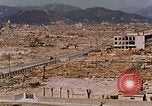
Buildings destroyed on an island between Motoyasu and Tenma rivers in Hiroshima, Japan as a result of the atomic bomb explosion.
Physical damage caused due to atomic bomb explosion in Hiroshima, Japan on August 6, 1945. Bridge across a river as vehicle moves over the bridge. Island between Motoyasu and Tenma rivers. Rubble spread all over the area with wooden huts. Buildings partially damaged by the atom bomb explosion. (World War II period).
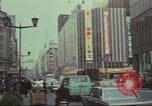
Tokyo street scene; editorial staff members work on Pacific edition of Stars and Stripes newspaper in Tokyo, Japan
Publication of the Pacific edition of Star and Stripes newspaper in Tokyo, Japan. Traffic on streets in Tokyo. Pedestians on busy city streets of Tokyo with large office buildings and retail in background. View of the plant where publication of the Pacific edition of Stars and Stripes newspaper began on 3rd October, 1945. Editorial staff members work in the plant. A man works on a typewriter. Closeup view of hands on typewriter. An officer checks the newspaper. A navy man pastes picture cuttings from a newspaper on a chart. A man places a paper in a photo offset machine. Printing of newspapers. Men check and stack newspapers. Newspaper bundles are covered with plastic sheets and loaded in a truck. Men load the newspaper bundles in a jet liner aircraft.
Americans in New York City celebrate the surrender of Japan in World War II, at Times Square.
Film opens showing aerial view of a United States B-29 Superfortress bomber aircraft in flight, then scenes of numerous U.S. Army Air Forces warplanes and bombing (partially obscured by on screen newsreel text). Next, crowds are seen jamming Times Square in Manhattan, New York City, celebrating victory over Japan in World War 2. (Known as V-J Day or Victory over Japan day, marking the end of World War 2, on 14 August, 1945.) A facsimile of the Statue of Liberty has been set up in the square. Moving lights on Times Building motograph news zipper or ticker announce Japanese surrender. Jubilant celebrations and smiling Americans wave American flags. Closeup of the Statue of Liberty facsimile. A woman dances the Lindy Hop with a U.S. Navy sailor, as others (including many servicemen in uniform) watch.
Preparations for bombing, and bombing of Tokyo, Japan, by the U.S. Army Air Forces in World War II.
From "The Last Bomb", shows U.S. Army Air Forces conventional bombing of Japan in 1945, during World War 2. Map shows take off points in Saipan, Guam and Tinian. Guam Island shores. Houses and mountains in Guam. Civilians in village. U.S. military equipment, ammunition, vehicles and aircraft parked at airfield. Men around tents. Men at airfield engaged in morning activities. B-29 aircraft parked and others taxi at airfield. Technicians work on aircraft engines. Men manning B29s. Men board B29s. Sign reads 'Headquarters XXI Bomber Command'. General Curtis LeMay around chart planning raid on Japan's industrial areas. Other officers in room. Officer stand up as General Curtis leaves. Officers discuss the plan of attack. Bombs including GP bombs transferred at airfield. Submarines speed up in water to take up positions. Officers at headquarters in discussion. Officers talk on phone. Officer around flight status panel carry out visual progress of the flights. Officer marks positions. Time table for statistics of each wing on wall. B29s taxis for take off at airfield.