


 Francais
 Deutsch
 Italiano

Refine Your Search
+"United States" +1945 stock footage and images
- Showing 289 to 294 of 4253 results more
 Hide
Color Sound

U.S. President Harry S. Truman announces the surrender of Japan and civilians celebrate victory in the United States.
Victory celebrations and VJ Day in the United States during World War II. The President of the United States Harry S. Truman addresses a gathering and announces the surrender of Japan. In Washington DC: a large crowd of civilians gathered for street parties. A newspaper headline reads 'Japan Surrenders'. In Chicago: a demonstration takes place. In San Francisco: celebrations for the end of the war include a ticker tape parade . People march through streets holding banners. In Seattle: servicemen conduct an outdoor proceeding. In New York City: a large crowd of civilians gathered at Times Square to celebrate victory over Japan.

The U.S. engineers and weather bureau working together for the purpose of weather forecasting in the United States.
The working of the weather bureau in the United States. The U.S. engineers and members of the weather bureau work in close cooperation for weather forecasting. They coordinate their activities for gathering the data relating to weather. A map locates various places. Animated map depicts the route and the method of their working. A woman talking on phone. The interior of the office of the weather bureau. The employees working in the office. They work for the collection, recording and dissemination of the information. The engineers working near a dam. Men, aboard a special boat working to adjust dam gate settings. They work for the collection of information and weather forecasting as the Ohio River level rises. Smoke from the stacks of the ship anchored nearby. View of the Chris Greene paddle wheel steamboat (sternwheeler) underway near a a dock area on the Ohio River, on route to Cincinnati.
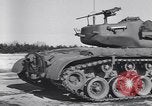
The mechanism the engine of U.S. T26E3 tank being explained in the United States.
A film about the U.S. T26E3 tank. A tank parked on the ground. Man points at the wheel of the tank. The working of the engine as the tank is being explained. The power train is examined. The engine of the tank. The location of the oil coolers and the engine radiators in the engine. The gas tanks, having their own fillers. View of radiator fill, where cap must be securely tighten against the seal. The security measures prevent the engine failure.
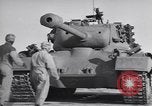
The drivers at the controls in the driving compartment of the U.S. T26E3 tank in the United States.
A film about the U.S. T26E3 tank. A tank parked on the ground. The driving compartment of the tank is examined. The doors of the tank are easy to operate because of the torsion rings. Men working on the tank. Interior of the tank and the driver compartment. The driver and the assistant driver at the controls of the tank. The steering lever and other controls of the tank. Both the driver and the assistant can operate the tank. The instrument panel. The fuel indication at the panel. As the engine is started, the engine transmission and differential warning lights start. Points out the driver's responsibility while operating the tank. Tank moves on the field.
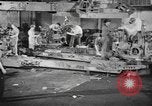
Post World War II reclamation of U.S. Army artillery at factory in the U.S.
U.S. factory workers repair and recondition used artillery left over from World War 2. Several heavy and small guns being repaired. A 90 mm anti aircraft gun, a 155 mm gun (Long Tom) and other guns being repaired.

A United States glider being towed and paratroopers land during a maneuver in the United States.
Air assault tactics being displayed during a maneuver in the United States. A glider in flight. It crashes as it lands. The wrecked glider after the crash. The glider being towed by an airplane. Military equipment. A jeep and soldiers get into a glider. The glider in flight. It lands on a rough terrain. Paratroopers drop and descend. The paratroopers land on a field. (World War II period).
CRITICALPAST.COM: About Us | Contact Us | FAQs - How to Order | License Agreement | My Account | My Lightboxes | Shopping Cart | Advanced Search | Featured Collections | Website Terms & Conditions | Privacy Policy ©2026 CriticalPast LLC.
License Agreement |
Terms & Conditions |
Privacy Policy
©2026 CriticalPast LLC.