


 Francais
 Deutsch
 Italiano
Refine Your Search
+"United States USA" +1944 stock footage and images
- Showing 13 to 18 of 489 results more
more Hide
Hide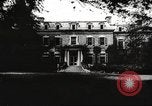
Allied leaders meet in Quebec, Canada and the Germans launch an attack in Bulge, Belgium during World War II.
Allied campaign against the Axis in 1944 during World War II. Exteriors of Dumbarton Oaks in Washington DC. Representatives of the United Nations at a meeting inside the mansion. A railroad train arrives and British Prime Minister Winston Churchill gets off the train in Quebec, Canada for the Quebec Conference. Churchill confers with U.S. President Franklin D. Roosevelt about Allied plans during the war. French FFI or Maquis groups in France. President Roosevelt, seated in front of a large celebrating crowd of people in the U.S., acknowledges them after being reelected President for a third term. People celebrate his victory and hold election victory signs as they cheer. American Civilians (mostly women war production workers) work in war production factories to produce aircraft, tanks and other equipment in the United States. Rows of aircraft engines, cockpits, and gun turrets being produced. On December 16, 1944, German forces launch a major-counter attack through the Ardennes forests, resulting in the "Battle of the Bulge" in Belgium. View of German soldiers and a German Jagdpanzer IV tank destroyer rolling by. German soldiers advance past destroyed Allied tanks and trucks.
Army Signal Corps receive and send messages via various methods in World War II; Pentagon signal center operations.
The role and contribution of the U.S. Army Signal Corps in combat during World War 2. Submarine cables laid down by the Signal Corps. Soldiers operate field army communication equipment for communication within and between units. Soldiers talk over the radio in a military jeep. American soldiers employ communication equipment seated at a table in a camp. A U.S. Army Signal Officer goes through documents. An officer receives a message in Washington DC. The message is relayed from the State Department to the Signal Center in the Pentagon building. Exterior views of the Pentagon building circa 1943 or 1944. Inside the Army Communications Signal Center in the Pentagon, technicians work using various communication equipment. They receive messages punched on tape as the tapes emerge from machines. Workers encoding and decoding secret and confidential messages that run the war. Workers at the 'Traffic Control, Army Command and Administrative System'. Paper messages seen gliding across a track near the ceiling above a signboard. A man inserts and removes cables from switchboard slots. The plans are then passed on in code through a maze of antennas all over the world. An animated map depicts the sending of these messages by radio multi-channels, radio teletypes, and manual radios to the front lines. A vast network of Army communication system from Washington DC to the rest of the world to carry a message around the world in three and a half minutes.
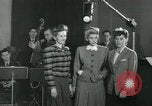
Andrews Sisters Patricia Marie, Maxine Angelyn and Laverne Sophie record Boogie Woogie Bugle Boy for 'V-Disc
A Colonel thanks Andrews Sisters on behalf of the Music Section of the Special Services Division for recording the three discs. Patricia Marie, Maxene Angelyn and Laverne Sophie record a song named 'Boogie Woogie Bugle Boy'. Musicians check instruments during the recording. Studio staff work on the pressing of the phonograph record. (Note: Although "Boogie Woogie Bugle Boy" was recorded commercially for Decca Records on January 2, 1941, this filmed V-Disc recording session took place over three years later on September 25, 1944.)
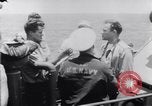
U.S. Navy Task Group led by USS Guadalcanal (CVE-60) tows captured German submarine (U-505) to Bermuda
A Task Group of the U.S. Atlantic Fleet captures and tows a German Submarine (U-505) to Bermuda. Views of captured German crew members being rescued. Destroyer USS Pillsbury passing a line to the U.S. boarding party aboard the U-505, which then collides with the Pillsbury, damaging her hull, and must be cut loose. Because a destroyer appears unable to tow the sea laden submarine, the USS Guadalcanal (CVE-60) does so herself. Views of captured German crew members exercising and bathing on deck of the Guadalcanal. View of the U-505 flying the American flag and entering harbor in Bermuda, on June 19, 1944..
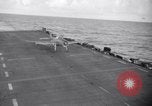
Navy Grumman F4F airplanes in landing incidents on the USS Makassar Strait (CVE-91) during training cruise.
A Navy Grumman F4F makes an inadvertent "touch and go" landing, at sea. It lands long, bounces, and successfully takes off again without further incident, on the USS Makassar Strait (CVE-91) during training cruise off Hawaii, in November, 1944. Two other aircraft make hard landings.
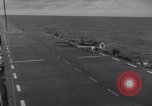
Navy Grumman F4F aircraft in landing incidents on USS Makassar Strait (CVE-91) during training cruise off Hawaii.
Aboard the USS Makassar Strait (CVE-91) during training cruise off Hawaii, in 1944. Views of several landing accidents. A Grumman F4F touches down and veers left , partially falling off the flight deck. Another noses over upon landing. Three make rough landings. Finally, one floats in above the deck, too high, then bounces, and successfully "goes around" (takes off again).