


 Francais
 Deutsch
 Italiano

Refine Your Search
B-24-Burma stock footage and images
- Showing 3139 to 3144 of 3692 results more
 Hide
Color Sound
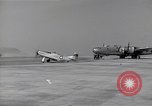
P-51 Mustangs of United States Army Air Force during a routine exercise at their base in Iwo Jima, Japan during World War II.
Planes of United States Army Air Force at their base in the Japanese island of Iwo Jima, during World War II. P-51 Mustangs of the U.S. AAF on the runway and parked. Mustangs take off and land during a routine exercise. Damaged B-29 bomber parked near the runway. Airmen and mechanics work on the damaged bomber.

Airmen of U.S. Army Air Force get ready for an operation at Isley Field base in Saipan, Mariana Islands during World War II.
Airmen of United States Army Air Force at their base in the Isley Field in Saipan, Mariana Islands during World War II. Airmen and crew of the 500th Group of the 73rd bombardment wing leave the briefing room near the sea shore and board trucks. Trucks carrying crew move on roads. Anti aircraft gunners clean their weapons. Gun post and mud sacks. Crew members with flight gear stand near a B-29 bomber.
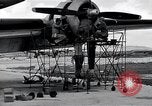
Enemy bombers raid the Isley Field base of U.S. Army Air Force in Saipan in Mariana Islands, during World War II.
United States Army Air Force at the Isley Field base in Saipan in Mariana Island, South Pacific during World War II. Mechanics stand on scaffold to reach the engines of a B-29 bomber. Air raid siren sounds. Mechanics jump on ground and run towards shelter beneath a bunker covered with mud sacks. Soldiers at the anti-aircraft gun post, fire with a 50 caliber anti aircraft gun, following course of enemy plane. Gunners turn the gun following the aerial path of the enemy bomber. GIs lined in a chow line outside a mess hall.
Americans in New York City celebrate the surrender of Japan in World War II, at Times Square.
Film opens showing aerial view of a United States B-29 Superfortress bomber aircraft in flight, then scenes of numerous U.S. Army Air Forces warplanes and bombing (partially obscured by on screen newsreel text). Next, crowds are seen jamming Times Square in Manhattan, New York City, celebrating victory over Japan in World War 2. (Known as V-J Day or Victory over Japan day, marking the end of World War 2, on 14 August, 1945.) A facsimile of the Statue of Liberty has been set up in the square. Moving lights on Times Building motograph news zipper or ticker announce Japanese surrender. Jubilant celebrations and smiling Americans wave American flags. Closeup of the Statue of Liberty facsimile. A woman dances the Lindy Hop with a U.S. Navy sailor, as others (including many servicemen in uniform) watch.

American warplanes strike against German Luftwaffe during World War II
Film opens showing air combat scenes from tun camera of several American fighter planes shooting down German warplanes. Some are high altitude encounters with aircraft leaving contrails as they fly. Gun camera views from American planes strafing German airfields and destroying aircraft on the ground. Strafing over lines of communication like roads, highways, canals and railroads. Locomotives struck and huge clouds of smoke issuing from them. Military fortifications being strafed and smoke rising. A huge explosion from a train being strafed. View from American fighter aircraft passing through ball of fire from explosion during strafing. Formation of American B-26 Marauder bombers flying through Flak clouds. One is seen flying level in flames. Another is seen from below. It is in D-Day striped paint and its left engine has been hit and partly torn off. Next, it is seen rolling over and headed down with flames and smoke coming from its left side.
Interview of Capt. William S. Parsons, U.S. Navy, crew member on Enola Gay, after the Hiroshima atomic bombing mission
Setting: North Field, Tinian Island in Mariana Islands, South Pacific, almost a week after the atomic bomb was dropped on Hiroshima Japan, August 8, 1945, during World War II. Public Relations Officer, Major John F. Moynahan (not seen) is interviewing members of the Crew of the B-29, Enola Gay, from which the bomb was dropped. Here he interviews Captain William Sterling "Deke" Parsons of the U.S. Navy who was weaponeer aboard the Enola Gay, during the mission. and who now serves as Scientific Head of the Atomic Bomb Project in the Pacific Theater. Captain Parsons describes the events of the mission from their early morning departure through the actual bombing. He notes that the actual bombing went smoother than earlier practice missions.
CRITICALPAST.COM: About Us | Contact Us | FAQs - How to Order | License Agreement | My Account | My Lightboxes | Shopping Cart | Advanced Search | Featured Collections | Website Terms & Conditions | Privacy Policy ©2026 CriticalPast LLC.
License Agreement |
Terms & Conditions |
Privacy Policy
©2026 CriticalPast LLC.