


 Francais
 Deutsch
 Italiano
Refine Your Search
China 1963 stock footage and images
- Showing 109 to 114 of 1923 results more
more Hide
Hide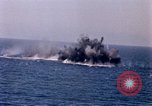
Ambassador Wright and Mrs Wright view air show from 010 levels during President's visit aboard USS Constellation in China.
Splashes in water during an air demonstration for the President. A-1J plane in flight during demonstration. Flames on water from a Napalm drop. President's flag flying from yard. Ambassador Wright and Mrs Wright view air show from 010 levels during President's visit aboard ship. Ambassador Wright and Mrs Wright. The Republic of China flag on ship. F-8C plane and A-4B aircraft make an arrested landing. F-8C planes catted. Three in air in matter of seconds, followed by a fourth F-8C. F-4B aircraft catted.

Newsmen at Quemoy, China as extensive firing from the Communist China continues during the Second Taiwan Strait Crisis.
Conditions in Quemoy, China during the Second Taiwan Strait Crisis. Western press and media representatives climb up a mountain in Quemoy. The newsmen at a beach. They examine damaged buildings destroyed due to the Communist Chinese firing. Damaged roof of a building. Explosions occur on a nearby island. Chinese children take shelter in the underground of a building. A damaged building.
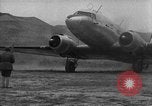
New Zealand Nurse Kathleen Hall arrives in China with help and supplies for Bethune International Peace Hospital in China (WW2)
U.S. Air Force C-47 aircraft arrives in Hebei Province of China carrying Nurse Kathleen Hall of the New Zealand Anglican Church Mission in China during World War II. She and companions bring help and supplies for the Bethune International Peace Hospital.
China's problems of industry, famine, agriculture, and excess population under the Communist rule of Mao Zedong
'Red China' depicts the living conditions in China under the Communist regime of Mao Zedong. A Chinese man dances with another performing a Dragon dance on stage in China. Traditional Chinese pavilions and structures, including the Forbidden City in Beijing. Chinese citizens of various ethnicities in the People’s Republic of China. Modern Chinese buildings and structures. A map of Asia shows China. Monuments including the Great Wall in China. Farmland of the North of China. Crowded streets in China, men pull rickshaws on the streets. People dance and march during the celebration. Narrator speaks of shortage of good farmland and notes that the Chinese people are "on a diet" (during the great famine) of 1600 calories daily per person, compared to the United Nations recommendation of 2100-2300 calories. View of crowded encampments and poor, under fed people in narrow streets. Chinese miner works in a coal mine. Strip mining for iron ore. Chinese oil production including refineries. Dances and celebration during various events. Chinese Young Pioneer girls practice ballet. Chinese youth perform acrobatics and stunts on stage. Chinese women and children laugh and cry. Young girls learn ballet, elderly men greet each other. North China: Herdsmen with sheep. Wheat farmers harvest wheat. South China: Rice farmers in fields. Women sew, farmers pose for the camera. Women work in a factory, people on the road. Chinese Christians attend church. Hui Chinese men pray inside a mosque in China. A large statue of Buddha inside a Buddhist temple. Chinese riding camels. Chairman of the Communist Party of China Mao Zedong reviews a parade during the "Great Leap Forward" timeframe, preceding the Cultural Revolution.
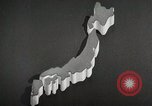
Views of China and Japan in the period leading up to the 2nd Sino-Japanese war
Film opens with outline map of Japan shown in contrast to 20 times larger China and figures representing China's 6 times greater population. Map of China is shown in pieces representing its numerous internal fiefdoms. In contrast, Japanese soldiers are shown marching in review before their singular leader, Emperor Hirohito and other national military leaders. Film shows contrasting 20th century characteristics of China and Japan. Sun Yat-sen, who figured prominently in post-Imperial China, and is considered the founding father of the Republic of China, is shown speaking to crowds. Narrator states that in 1911, this man fathered a peoples' revolution which brought to an end, China's ancient Imperial government. View of Chinese people marching and carrying flags and banners. Books are shown comparing China's Sun Yat-sen to America's George Washingon. Sun Yat-sen's political statement, shown in Chinese, contains words similar those in Abraham Lincoln's Gettysburg address. View of schools and colleges built in the new Republic of China. Chinese students shown in libraries. A couple dining in a Chinese hotel restaurant, overlooking other buildings. A tall clock tower looms at the same height outside their window. Steel being erected for a tall building. Architects at work. Scientist looking through a microscope. Technicians at work in a chemistry laboratory. Medical staff and patients in a modern hospital. Children in school under compulsory education program. Chinese people exercising their freedoms of expression and religion. The funeral of Sun Yat-sen, in 1925, attended by his successor, Chiang Kai-shek, and other Chinese leaders in military uniforms. Chinese people attending an outdoor ceremony. Examples of areas needing modernisation. Chinese workers using manually operated machinery to process fabrics. Commercial vessel plying a river using wind and sail only. Views of steam locomotives and trains being introduced to link parts of China. Trucks moving goods over roads (still unpaved). Miners working in open air mines, digging coal and iron. Molten tin being poured from a crucible. Machines performing complex tasks in a fabric mill and women tending spinning and knitting machines. School children engaged in collective outdoor games and exercise drills. Scene shifts to Japan, where Emperor Hirohito, on a white horse, leads military leaders in reviewing Japanese forces. A formation of Japanese Model 97 medium tanks passing in review, with tank commanders saluting from their turrets. Glimpse of Japanese steel mill. Headline in World-Telegram newspaper of 14 february, 1934, reads: "Tokyo House Passes Huge Arms Budget." A Los Angeles newspaper of 23 November, 1934, expands on the same story. New Orleans Times-Picayune, Sunday, 5, May, 1936, reports that Japan is strained by its huge arms costs.
Implementation of the Mao Zedong led economic and social plan titled the 'Great Leap Forward' in Red China.
Postwar living conditions in the People’s Republic of China under the Communist regime of Mao Zedong (Mao Tse-Tung) photographed by Indians visiting the country. The film highlights China's problems of industry, agriculture, and excess population. Advertisements and posters for the Mao Zedong led economic and social plan titled the 'Great Leap Forward' in 1958. Objectives of the plan. Agriculture, industry, and education in China, including brief shot of men, women, and children in classroom, possibly for re-education. Men and women work in factories and plants. A Russian sign reads 'Made in the Soviet Union'. Workers inside a huge automatic automotive plant set up and supplies by the Soviet Union (SU). A steel and iron company rebuilt and enlarged with the aid of Soviet Union. A seamless steel tube mill supplied and erected by the SU. A plant designed, equipped, and built by SU technicians. A bridge over a river. Women work in a high voltage testing laboratory equipped by the East German government. A fully automatic petroleum refinery built by the Japanese. A heavy gilding machine plant started by the Japanese in 1937. Various factories, plants, and industries in China. Rural farmland and irrigation. People work in backyard furnaces, factories, presses, rolling mills and automotive factories. Deserted city streets with few cars. Workers inside an automotive plant. Communist Party of China Chairman Mao Zedong signs a pact with the Premier of the Soviet Union Nikita Khrushchev. Newspaper headlines regarding the disagreements leading to rifts in the China-Soviet relations in 1960. The Soviet Union withdraws technicians and support from China resulting in closure of industries. Statistics highlight China's dropping industrial production in steel, coal, electricity, and petroleum compared to that of USA, Soviet Union, and United Kingdom.