


 Francais
 Deutsch
 Italiano

Refine Your Search
Nevada United States 1936 stock footage and images
- Showing 20407 to 20412 of 35683 results more
 Hide
Color Sound

Richard Nixon-Spiro Agnew election campaign stresses that Nixon is a qualified candidate.
Richard Nixon-Spiro Agnew election campaign for the Presidency in United States. Lincoln Memorial and reflecting pool, at night, as seen from the Washington Monument (2 15th St NW, Washington, DC 20024, United States). Potomac River in background. View of the U.S. Capitol Building and the White House. Presidential Seal. Officials deliberating. Ballistic missiles. Soviet leader, Leonid Ilyich Brezhnev. Chinese Chairman Mao Zedong, Cuban dictator Fidel Castro. Russian troops. U.S. Aircraft carrier. U.S. helicopters in flight. U.S. tank crew in a Patton tank. Citizens of United States. U.S. soldiers in Vietnam War. Presidential Seal. The White House. Aerial view of Manhattan Island, New York City. Statue of Liberty in New York. The campaign stresses that Nixon has the required qualifications and experience of a leader.
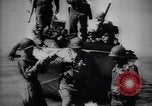
Early life of General George S Patton, and Patton in Africa during World War II.
'The Big Picture' episode narrated by Ronald Reagan depicts the life of U.S. General George S Patton, Jr. Opening scene shows General George S. Patton, Jr. stepping from a landing craft in France, during World War 2. He stands by the side of a road and waves, as elements of his 3rd Army pass in tanks. Patton in a jeep moving with his troops. General Patton pointing with a baton, in North Africa. View of a world globe being circled by a satellite. A baby picture of Patton (called "Georgie"). Patton seen as a boy, fencing, as a cadet at the Virginia Military Institute, and as a cadet at the U.S. Military Academy, West Point. A smiling Patton at West Point. Members of the first football team for soldiers established by Patton. Renault tanks of the 1st Tank Battalion moving with AEF soldiers in World War I. Tank commander George Patton standing in front of a Renault tank. Group picture of American soldiers and tanks, at the Tank School, in Fort Meade, Maryland, after World War I. Closeup of Dwight D. Eisenhower and George S. Patton, in the group. Patton and his wife, Beatrice Banning Ayer, in Old West costumes, for a party, where he displays a pistol in his belt, and in costumes for another party, where they dress as a knight and his lady on horseback. American recruits and draftees being issued uniforms in World War 2. Lieutenant General George S. Patton, Jr. commanding forces for the invasion of North Africa, in November, 1942. U.S. Navy warships fire their guns in advance of an amphibious landing. Landing craft heading toward shore. U.S. troops coming ashore at Casablanca, French Morocco. General Patton accompanied by French officers. Glimpse of U.S. President Franklin D. Roosevelt and British Prime Minister Winston Churchill at their conference in Casablanca in 1943. Patton riding in an armored car with three-star flag displayed. Artillery firing in battle of Tunisia. Lt. Gen. Patton and others observing operations. British General, Sir Harold Alexander, steps from a light airplane to meet with General Patton in North Africa. They converse. General Patton in March 1943 with binoculars observing battle, with Major General Terry Allen on his right, and Brigadier General Theodore Roosevelt Jr. to the right of Allen. They are viewing from a ridge by the village of El Guettar, as allies engage German troops and armor from the 10th Panzer Division. M3 Lee tanks moving in the desert. Knocked out tanks of the German 10th Panzer Division, including German Panzer IV tanks, in the aftermath of the Battle of El Guettar. General Patton coming aboard an American warship, and then standing with an Italian officer and a U.S. Major General. Allied naval bombardment at night. Patton observing though binoculars. Allied warships bombarding Sicily. Allied amphibious forces heading ashore in landing craft. Troops moving ashore. Closeup of troops in a landing craft. Glimpse of Patton in a landing craft. Troops walking across floating dock from a landing ship. U.S. flag flying in sand at beachhead. Landing ships in background. General Patton stepping ashore from small boat, and conversing onshore with a Brigadier General and some troops.

Director Streibert speaks on the purposes of the USIA and Soviet influence; scenes from a Soviet anti-American propaganda film
Theodore Cuyler Streibert , Director of the U.S. Information Agency, speaks on the purposes of the Agency (USIS). The Director seated at a table. He states that there is much misunderstanding about the United States, throughout the world, and Communist entities wish to take advantage of this to spread misinformation about the U.S. As the leading world power for peace, he says the U.S. must tell the world the truth about America. This is the mission of the USIA. A map portrays Soviet dominated areas within the so-called "iron curtain,"encompassing 800 million people. Another map illustrates targets of Communist propaganda employed to facilitate North Korea's aggression against South Korea. A graph illustrates propaganda spending by the Soviet Union and Communist China, primarily to spread misinformation about America. Segments of a Soviet propaganda film about the U.S. are shown. It begins with a map of the U.S. and then shows the Statue of Liberty. Camera pans over Manhattan, showing skyscrapers. A narrator disparages American commercialism, materialism and sensationalism. A lion is seen sitting in a convertible car, looking over a young woman's head. Next are scenes of an American beauty contest, and of women performing precision water skiing. Then an airplane is seen crashing on landing and a car is seen burning. View from trolley car moving along Broadway, from Times Square, in Manhattan, New York City, at night. A follies-style Broadway show. Show girls in bathing suits, walking past the camera. Show girls performing on stage. Another nighttime view of Times Square. Dogs being manicured by groomers. Outdoor soup kitchen scene from the Great Depression in the 1930s with unemployed men receiving food. Hobos or homeless men at a railroad siding. Milk and grain being spilled from containers during a labor and pricing dispute. Scenes of slum area tenement houses with wash drying on lines strung between the buildings. Men playing bocce ball in the yard of an apartment house. Camera pans up the Empire State Building from street level view. African American drummer with other band musicians performing in a civilian band, and scenes of African American musicians in a U.S. Army band. Poor African Americans in the South, at home and doing wash outdoors. Mounted police maintaining order in scenes of a fire and public protest or labor strife (circa 1935) interposed with views of the Statue of Liberty. A Soviet propaganda poster about the Korean War, shows an American soldier walking away from a dead Korean woman whose small child clings to her. Fires burn and a burning airplane falls from the sky in the background. A propaganda cartoon shows "warmongers of the west" being counterbalanced by a Soviet fist on a pair of scales.

American Army soldiers mobilized for the 1st World War and heading off to war in Europe
Crowd lines sides of city streets and watches U.S. Army troops parade on a street, in a major city, mobilized to fight in World War 1. The parade includes a float facsimile of a warship, with several sailors and others riding it. Older veterans of previous wars march along near the float. U.S. flag hangs from a building along with another flag on which is written '104' ( possibly for the U.S. Army 104th Infantry Regiment). American soldiers marching in the rain along a street in a small U.S. town, preparing to deploy to Europe in World War I. U.S. troops walk through American crowd. Soldier carries a dog in his hand. Two soldiers stand near a railroad train and one displays a pocket sized American flag; both soldiers smile. American women pose with U.S. military band person who holds a sousaphone. U.S. troops board a troop train while snow falls. Soldier and a woman stand together hugging, in the snow, beside the waiting troop transport train, and the soldier kisses his sweetheart goodbye.
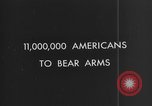
America fully mobilized in World War II
Opening slate announces 11 million Americans to bear arms (in World War 2.). U.S. Army Chief of Staff, General George S. Marshall conversing with Chief of Naval Operations, Admiral Ernest King. Next, Admiral King is seen standing with Commanding General of the U.S. Army Air Forces, Lieutenant General Henry H. (Hap) Arnold, and Admiral William D. Leahy, Chief of Staff to the President of the United States. Scene shifts to a graduating class of cadets from the United States Military Academy, at West Point. They are seen receiving their diplomas. West Point cadets are also seen cheering at an athletic event and in several views of them marching in formations on different occasions. Views of cadets from the U.S. Naval Academy, at Annapolis, Maryland, on parade and at a graduation ceremony in Dahlgren Hall, where each receives a diploma and they toss their hats into the air at the end of the ceremony. Next, ordinary citizen soldiers (mostly draftees) are seen marching in formation They participate in calisthenics en masse. Heavyweight boxing champion, Gene Tunney, is seen leading an exercise session. Soldiers run over an obstacle. Next cadets are seen on parade in the U.S. Merchant Marine Academy, at Kings Point, New York. Some cadets are seen practicing escape from a burning vessel at sea. U.S. soldiers engage in field training that includes live weapons fire above their heads as they crawl under barbed wire on a training course. View of soldier firing a Browning M1917 water-cooled machine gun near the trainees. Another is firing a Browning M1919 air-cooled machine gun.
American Air Defense activities during the Cold War
Film opens showing a U.S. Navy Gleaves-class destroyer in a bay. Closeup of radar antennas atop a U.S. Navy ship. A U.S. Navy submarine operating on the surface in icy waters. It has what appears to be a cylindrical shelter on its deck. The boat is covered in ice. Several men in foul weather gear are on its deck. Interior of a radar monitoring center, where a sailor, wearing a headset, monitors a plan position radar scope, where an unidentified aircraft is detected. Scene shifts to a U.S. Air Defense centers where such information is plotted on charts. Sign on table reads: "Supervisor GOC" (referring to the Ground Observer Corps) Civilian volunteer members of the Ground Observer Corps (organized by the U.S. Air Force in 1950) enter a room for a meeting. Narrator states that their mission is to operate 14 thousand observation posts and 49 filter centers. View shows predominately women volunteers in the group. Two uniformed Air Force men show silhouette diagrams of American military aircraft. Women connecting numerous phone callers at a large switch board installation. A barber serving a customer in his shop. A volunteer ground observer, at an outdoor post, watches as a flight of U.S. Air Force P-47 aircraft flies overhead in formation. A U.S. Army member of the Anti-aircraft Command, is seen at a desk. He receives a report of an unidentified aircraft and pushes a button to sound bells alerting soldiers who leave a dining hall in the midst of a meal to respond to their battle stations. They are joined by soldiers from elsewhere in the area. All rush to their assigned locations. View of them running across a field. A large suspension bridge in the background. Soldiers manning 120mm M1 anti-aircraft guns amidst views of rotating radar antennas. Soldiers loading shells into the guns. Soldier monitoring the unknown aircraft on radar equipment. View of hurriedly abandoned dining hall with uneaten meals on the tables. Soldiers lowering gun barrels and placing covers over them after the alert is cancelled.
CRITICALPAST.COM: About Us | Contact Us | FAQs - How to Order | License Agreement | My Account | My Lightboxes | Shopping Cart | Advanced Search | Featured Collections | Website Terms & Conditions | Privacy Policy ©2026 CriticalPast LLC.
License Agreement |
Terms & Conditions |
Privacy Policy
©2026 CriticalPast LLC.