


 Francais
 Deutsch
 Italiano
Refine Your Search
Ohio-State-football stock footage and images
- Showing 11815 to 11820 of 24492 results more
more Hide
Hide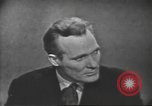
John F Kennedy and Richard Nixon comment on need for labor laws during a presidential election debate in the U.S.
The third Kennedy-Nixon Presidential Debate in the United States. Frank McGee from NBC News asks Republican candidate U.S. Vice President Richard M Nixon to comment on the need and purpose of new laws to protect the public against labor unions' power. Nixon talks about his speech on this topic. He disagrees with Kennedy's statement favoring compulsory arbitration as a President's weapon to stop national emergency strike. He states that in Steelworkers Union speech Kennedy had indicated government seizure as the best way to stop a strike. Nixon states that he does not believe in either compulsory arbitration nor seizure. He says that the management should be involved in dispute settlement. He concludes and urges the need for the greatest cooperation possible between labor and management. Democratic candidate Senator John F Kennedy states that he has never suggested compulsory arbitration as the solution of national emergency disputes. He talks about seizure. He states about president's course and setting up of a fact-finding committee.
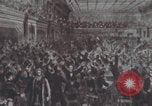
Jim Crow Laws affecting African Americans from finding justice and equality despite of the 13th and 14th Amendments during the 20th century
Artist impression of the House of Representatives as the United States Congress passes the 13th Amendment to the United States Constitution. Images of Thaddeus Stevens and Charles Sumner, the leaders of the Radical Republican faction of the Republican Party during the 1860s. African-American student, victim of the Lamar High School School Bus Attack, listens to Frank Jackson, the attorney defending him, as he lectures him about the history of African-American rights and freedom. Off camera, Jackson quotes the 14th Amendment, saying, "no state shall make or enforce any law which shall abridge the privileges or immunities of citizens." Image of Senator Benjamin Tillman of South Carolina. Off camera, Jackson quotes Tillman's comment about "virus of equality..." Artist impression of Black Americans in court during Reconstruction. Students inside the school bus on their way to Lamar High School School before bus attack. Image of Black-Americans inside a moving bus during the 1960s-1970s. Jim Crow signs seen, including a sign reading “White only Ladies Rest Room”. Image of a doctor standing in a door labeled “COLORED” while talking to patient with baby. Image of door with sign that says “White-Trade”. Image of door with sign that says “Colored-Trade”. Image of President Rutherford Hayes. Fire burning. Artist impression of Ku Klux Klan members in costume hanging (lynching) a Black American. Man menacingly holds a bat and says “They’ll gonna wish they was never born”. A view of the United States Supreme Court. Artist Impression of Homer Plessy refusing to move from the White people coach to the Jim Crow train coach in 1896. “Equal justice under law” engraved on the front of the United States Supreme Court Building in Washington DC. Artist impression of John Marshall Harlan, former Attorney General of Kentucky and great dissenter of cases that restricted civil rights such as “Plessy v. Fegurson”. “But until a majority of judges on the Supreme Court would agree, Black Americans would find little justice” says Frank Jackson.
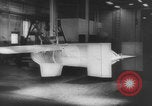
Flying bombs rocket launching with radar system (WW2)
A GB-4 glide bomb in a hanger, suspended from the ceiling. A robot bomb, possibly V-1, launching from a catapult ramp. A United States Air Force bomber drops GB-4 glide bomb during World War II. United States army air men use a television screen with radar system to direct the GB-4 glide bomb to its target. POV view target via GB-4 glide bomb camera. GB-4 glide bomb seen at ground level gliding to target and exploding. United States soldiers preparing a V-2 rocket for launch in the desert in the United States. Men working on radar system. V-2 firing room engineer gives the "go" signal for launch. V-2 rocket lift off in the desert. Scientists in radar control room at Fort Evans. Soldiers at controls of early field radar control system. Large radar console with circular CRT display. A United States soldier repairs radar console. Various types of radar antennas and dishes moving while in operation.
Cartoon shows Communism destroying wealth and enslaving citizens.
State Department Foreign Service officer Boris Hansen Klosson narrates United States propaganda film during the Cold War. A cartoon depicts stacked coins. Stack coins on a man’s bedside are depleted as a man sleeps. Man wakes up and finds his coins depleted. Communist police take men and women away from their apartments to send them to the countryside for state projects. A diagram depicts the political stakeholders and institutions of a country. Professionals working in communist countries are controlled by the state. A doctor chained to a Communist ball and chain treats a patient. The background changed from a clinic to a prison cell. A lawyer chained to a Communist ball speaks to judges during a court hearing. A writer uses a typewriter with paper filled with communist symbols. A ballet dancer with a communist symbol-shaped shadow. A composer plays with a musical piece with communist symbols. A painter paints the communist symbol. A nude model poses in a similar fashion. An intimidated worker is being watched over by a communist officer inside a factory. A couple have dinner inside an overcrowded apartment. Communist citizens lining up outside a state store. (Film is example of Anti-communist or so called Red menace propaganda)
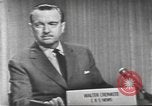
Candidates Nixon and Kennedy debate over prestige of the U.S. overseas prior to the presidential elections in the U.S.
The fourth presidential election debate held between Democratic nominee Senator John F. Kennedy and Republican nominee U.S. Vice President Richard Nixon in New York, United States on 21st October 1960. ABC News correspondent Quincy Howe allows CBS News correspondent Walter Cronkite to ask a question to Vice President Nixon. Mr. Cronkite asks Vice President Nixon if the Eisenhower Administration was suppressing a report by the United States Information Agency that shows a decline in United States prestige overseas as pointed by Senator Kennedy. Vice President Nixon replies and talks about Sputnik space program launched by the Soviet Union (compared to NASA efforts during the Space Race). He further compares the United States and the Soviet Union in terms of education and science. He speaks about UN General Assembly votes called on the Soviet Union to end its Hungarian intervention in 1956 and relates to American prestige. Senator Kennedy says that he did not make most of the statements that Vice President Nixon said he has made and he refers to the first one about Sputnik Program launched by the Soviet Union. Senator Kennedy refers to slums in the United States and talks about support housing legislation which the Eisenhower's Administration has opposed and also speaks about scientists and engineers United States has produced in comparison to the Soviet Union. He further says they were the first in other areas of science but in space, which is the new science, they are not the first
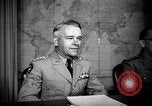
Joint Chiefs of Staff James Collins, Louis Denfeld, Omar Bradley and Arthur Vandenberg at the Pentagon in Virginia.
United States military Joint Chiefs of Staff at the Pentagon in Arlington County, Virginia. Joint Chiefs of Staff: Major General of the United States Army James Lawton Collins, Admiral of the United States Navy Louis Emil Denfeld, General of the United States Army Omar Nelson Bradley and United States Senator Arthur Hendrick Vandenberg seated at a desk at the Pentagon during a meeting. Admiral Denfeld talks to General Bradley.
CRITICALPAST.COM: About Us | Contact Us | FAQs - How to Order | License Agreement | My Account | My Lightboxes | Shopping Cart | Advanced Search | Featured Collections | Website Terms & Conditions | Privacy Policy ©2026 CriticalPast LLC.
License Agreement |
Terms & Conditions |
Privacy Policy
©2026 CriticalPast LLC.