


 Francais
 Deutsch
 Italiano
Refine Your Search
US-Gliders- stock footage and images
- Showing 895 to 900 of 21920 results more
more Hide
Hide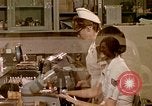
Responsibilities and duties of U.S. military personnel towards United States Kadena air base and Japan
Responsibilities and duties of U.S. military personnel towards United States Kadena Air Base and Japan. Okinawa-The Keystone of the Pacific. Two U.S. military enlisted technicians look through a microscope. A nurse talks to a technician. U.S. Airmen work in an airplane maintenance shop. A female U.S. military NCO works as a clerk. U.S. Airman works on a machine and spray paints a missile. U.S. Airman drives a truck in Air base. Pilot puts on mask in cockpit of his fighter plane. A U.S. transport airplane takes off from the air base. A U.S. fighter jet takes off from air base. View of sunset on Okinawa.
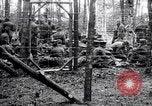
U.S. 1st Division troops process German prisoners following the Battle of Cantigny in World War I
German prisoners of war (POWs) held in an outdoor wire enclosure, by U.S. First Division troops behind the lines near Catigny, France, during World War 1. Closeups of two German prisoners, each with a U.S. Army interrogator. The second one is being spoken to by a U.S. Army lieutenant. View of several prisoners, including a German medical corpsman, attending a wounded on a litter. German prisoners being searched and processed by two French soldiers under supervision of a U.S. Army officer. U.S. troops in the background. U.S. General John J. Pershing, Commander of the American Expeditionary Forces (AEF) steps from a headquarters building, behind the lines near Catigny, France, accompanied by Major General Robert L. Bullard, Commander of the U.S. First Division, and staff. They proceed along pavement in front of several buildings. Next scene shows Pershing and Major General Bullard entering a wooded area, where U.S. troops line a path and several German prisoners are faced away from the path. The American generals look over some German officer prisoners drawn up in a small group on one side of the path. They continue past a wire enclosure containing German prisoners, on the other side of the path.
Men and women sailors join and serve in the U.S. Coast Guard, and citations for those who gave up their lives in battle.
'Battle Stations' depicts life as a United States Coast Guard. Medals lie on citations for gallantry in action during the landing on Tulagi Island. Images of U.S. Coast Guard cutters at sea and soldiers in battle as the citations are read out. U.S. CG troops during a parade. Sailors with rifles. They march with the U.S. flag. CG cutters in heavy seas. Sailor watches through binoculars. A sailor at the deck gun, another sends a semaphore signal. The Congressional Medal of Honor lies on a citation for heroism and gallantry in action during the evacuation of a battalion on Guadalcanal. Bodies of U.S. Coast Guard sailors wrapped in U.S. flags. Sailors salute as bodies are loaded. Women take the oath as they join the U.S. Coast Guard as U.S. Coast Guard SPARS (US CG Women's Reserve). Training Station: New SPARS recruits arrive as graduates leave the station. Recruits on bunk beds, during training, getting uniforms, on bicycles, and attending classes. Class of SPARS graduates receiving diplomas. Narration by Ginger Rogers and James Cagney.
Japanese attack Hawaii islands in United States during World War 2, and U.S. response to attack.
A film titled 'Jap-US at war' shows Japanese diplomats leave the venue of the diplomatic talks in Washington DC in United States, soon after Japanese attack on Pearl Harbor, Hawaii islands. Secretary of State, Cordell Hull also leaves the building. President Roosevelt is seen. Japanese troops prepare for war. Japanese troops in mainland Japan board trains as crowds of Japanese citizens wave Japanese flags and cheer for their troops leaving for war. Scenes of Diamond Head in Hawaii in peaceful times are shown, including buildings, people on beaches with sunbathers and fast small boats with outriggers in the surf. City streets in Honolulu Hawaii are shown with cars and shops and view of Aloha Tower lighthouse in background. Japanese planes drop bombs over Pearl Harbor in Hawaii. United States Presidential Secretary Stephen Early tells the press of Japanese attack and the damage suffered by America. People in American cities read newspapers and scrolling lit sign (likely Times Square New York) with news about Japanese attack as the lead story. American citizens buying newspapers describing the attack at newsstands. U.S. troops march in front of War Department - Navy munitions building in Washington DC. Night time view of soldiers on guard in Washington DC. Sailors return to battle stations. U.S. Navy sailors boarding ships of U.S. Navy in the U.S. west, bound for battle. Brief scenes from American ports in Guam and Wake Island. U.S. Navy fleet ships underway in Pacific heading west toward battle with Japanese forces. Biplanes launched via catapult from U.S. Navy ships and then seen flying over Navy ships in formation as narrator encourages Americans to work together and put aside differences to win the war. Overhead view of a U.S. Navy ship passing under a bridge with deck busy with sailors and operations.
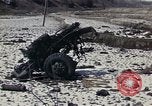
Aftermath of battle of Hoengsong, involving elements of U.S. Army 2nd Infantry Division, during Korean War
On Feb. 12 and 13, 1951, elements of the U.S. Army 2nd Infantry Division, including 38th Infantry Regiment, suffered severe losses in combat with superior Chinese forces, near Hoengsong,during the Korean War. Photos shot three weeks later show the carnage on a frozen battleground. Remnants of a destroyed U.S. field piece are surrounded by dead U.S. Army soldiers frozen on snow-covered ground. A severely damaged U.S. halftrack sits in the dirt. An unidentified jumble of burned out war machinery. Damaged 20mm dual mount anti-aircraft guns. U.S. Marines, of the 7th Regiment, in full field gear, entering the area for the first time since the February battle. They march over a snow-covered road, past remnants of the U.S. Army convoy that was fighting its way out of the area besieged by Chinese forces on all sides. A destroyed U.S. Army truck. Sign next to wreckage reads:"38th I.FL Co CP." A dead American soldier frozen in a rice paddy. Smoke rising from Korean village buildings burning in background, above terraced landscape. More views of wrecked equipment and fallen soldiers. A mountain pass in the background. A destroyed truck. Suddenly black smoke starts rising in the background. A U.S. Marine standing near an M46 Patton tank. More debris and destroyed trucks.
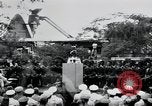
Highlights in career of Chester W Nimitz. U.S. naval campaigns against Japanese forces during World War II.
Fleet Admiral Chester W Nimitz speaks to naval officers and civilians, on third anniversary of the Japanese attack on Pearl Harbor. Sailors salute as he boards a ship. Admiral Nimitz with Admiral Halsey. Fleet of The United States ships underway to attack Japanese enemy. Battleships fire guns at enemy. Rockets being fired from U.S. ships. U.S. amphibious landing at Leyte. Japanese military show their commitment to fight. U.S. Navy crews at work aboard ships preparing to engage Japanese fleet at Leyte Gulf. Heavy U.S. naval gunfire. U.S. navy aircraft take off from carrier and engage Japanese in aerial combat. U.S. aircraft bomb Japanese ships and U.S. ships defend against Japanese air attacks. Japanese survivors floating on debris and life rafts in the ocean. U.S. wounded in stretcher. Dead Americans honored at sea by their comrades in an official ceremony.
CRITICALPAST.COM: About Us | Contact Us | FAQs - How to Order | License Agreement | My Account | My Lightboxes | Shopping Cart | Advanced Search | Featured Collections | Website Terms & Conditions | Privacy Policy ©2026 CriticalPast LLC.
License Agreement |
Terms & Conditions |
Privacy Policy
©2026 CriticalPast LLC.