


 Francais
 Deutsch
 Italiano
Refine Your Search
US-Gliders- stock footage and images
- Showing 913 to 918 of 21920 results more
more Hide
Hide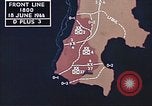
Naval battle, and U.S. 2nd and 4th Marine Divisions advance on enemy positions on Saipan and Tinian in the Mariana Islands.
U.S. forces battle against the Japanese on Saipan, Mariana Islands during World War II. Animated map shows United States forces landing on Saipan. The map displays the position of a Japanese fleet and U.S. Task Force 58. View of Japanese ships being bombed and attacked by aircraft from U.S. Navy 5th fleet ships. A damaged U.S. fighter aircraft lands on an aircraft carrer ship deck at dusk with only its right landing wheel functional. It grinds to a halt without proper landing gear. Dramatic night views of battle as Japanese aircraft attack U.S. Navy warships. Sky filled with barrage of anti aircraft fire. Two Japanese aircraft are hit and are seen in flames as they crash in the sea. U.S. Marine 2nd and 4th division along with U.S. Army 27th Infantry Divisions advance on the island. Marines load and fire guns at the enemy on Saipan island. Firing on Tinian Island also begins. Transports of northern task force arrive for resupply. Animated map shows the territory acquired by U.S. forces.

B-25 bomb at Brest, Canadian troops advance, civilians buy goods and U.S. soldiers secure voting cards in France (WW2)
Normal life of civilians resume after German surrender in some parts of France during World War II. Aerial view of flak in sky. Close-up view of two U.S. Army Air Force B-25 Mitchell bomber aircraft in flight. (Narrator incorrectly states they are British Lancaster bomber aircraft.) View from bomb bay doors of bombs away shot as the B-25 bomber aircraft drop bombs on U-boat pens at Brest. Explosions and smoke rise. The aircraft drop bombs over ground installation over enemy area. Canadian soldier scenes: Troops advance through a burning coastal town in France. Buildings collapsing and gunfire in streets. Smoke rising. Ruins of destroyed French town are seen. Allied Army tanks advance and fire artillery. German prisoners of war from Wehrmacht 7th and 15th armies being marched under watch by Canadian forces. Among the German prisoners is a 13 year old Russian boy who was forced to work by the Nazis. German prisoners in a soup line and seen drinking from mugs. Some appear to be very young boy soldiers. U.S. Army soldiers in Le Mans: American soldiers are welcomed by civilians of France. Happy French civilians waving to U.S. forces including a happy young woman who runs forward and pats a U.S. Army tank with her hand. Men and women collaborationists who assisted the Germans are rounded up by French and marched away. U.S. Army soldiers seated at stools in a French bar drink as the bar maid pours more into their glasses. French civilians line up at shops and groceries to buy food and goods in Le Mans. Pictures of General De Gaulle for sale. American women in U.S. Army uniforms (possibly nurses or Womens Army Corps WAC members) look in shop windows at French fashions. Voting cards: U.S. Army troops read pamphlets that read "requirement of soldiers to vote" and "Soldiers Voting". The U.S. Army GI's receive and mail postcards to their homes requesting absentee voting ballots for the upcoming November 1944 election. The soldiers line up to secure their application cards for absentee ballots.
Workers manufacture ammunition in a factory and U.S. Army soldiers advance towards a battlefield in the European Theater.
Use and manufacture of artillery during World War II. German Chancellor Adolf Hitler giving Nazi salute and German troops marching. A newspaper headline reads 'Poland Invaded'. Japanese zero aircraft in flight and bomb strikes on U.S. Navy ships at Pearl Harbor. Scenes from water of the devastation in Pearl Harbor after attack by Japanese aircraft on U.S. Navy ships. A flight of U.S. Navy Douglas TBD torpedo bombers dropping torpedoes. U.S. President Franklin Delano Roosevelt seated at a desk signing declaration of war, in 1941. U.S. war production workers manufacturing tanks, guns, ammunition, artillery, shells, and jeeps in arms and munitions factories. War materiel including Army jeeps and tanks loaded with soldiers on parade. U.S. troops firing artillery in North Africa. U.S. forces advancing through wet jungles in the Pacific Theater of World War 2.
U.S. troops battle Japanese troops on an island in the Pacific Theater during World War II.
U.S. Army troops, task force ships and aircraft combat against the enemy in the Pacific Theater depicts use of war bond money during World War II. U.S. Army Air Force P-38 Lightening fighter aircraft in flight. U.S. Task Force ships being attacked by Japanese bombers in the Pacific Theater. U.S. troops advance on a Japanese held island. U.S. troops fire artillery guns and operate flame throwers. U.S. bomber drops bomb over Japanese ship. Japanese soldiers fire artillery guns. U.S. soldiers march. War bonds on a table.
The U.S. Army Signal Corps Signal Intelligence work during World War II.
The role and contribution of the U.S. Army Signal Corps in combat during World War 2. Soldiers on guard duty in a field. A soldiers talks over a radio receiver at the door of a cabin. An antenna on the cabin roof. Signal Officers intercept enemy transmission by the mean of radio and other electric equipment. Electrical equipment, radios, deciphering equipment, laboratory equipment and parts seen at work in Signal Corps facilities where intercepted enemy communications are analyzed and codes and ciphers are deciphered. Officers skilled in encryption and decryption work to decode enemy codes and messages. They use a microscope to read and write messages in microscopic writing on grains of rice. Signal Intelligence work in North Africa during World War 2. U.S. soldiers on tanks advance over rough terrain. A formation of U.S. B-17 bomber aircraft in flight. Tanks advance with the ground forces. The radio intercept picked up messages from a certain German Division headquarters. A soldier sets radio direction finders on the particular location. Officers receive the information and locate the headquarters on a map. The Allied troops attack the enemy. They hit them with tracers. Artillery and guns are fired. Smoke from fire due to explosions. Soldiers advance in prone positions. They lie low during the night assaults. German soldiers load and fire a mortar. Explosions in a field due to mortar attack. Dead U.S. soldiers and injured U.S. soldiers in foxholes and on the battlefield following mortar attacks. U.S. soldiers help a fellow wounded soldier in a jungle setting.
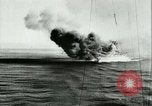
Pacific campaigns in World War 2; U.S. ships under kamikaze attack by Japanese aircraft during the Battle of Midway.
Pictures taken by military and news cameramen during World War II. The Battle of Midway, June 1942: A fleet of U.S. warships underway off the Midway Island. U.S. aircraft bomb the Island. A Japanese ship is hit. The ship on fire. Black smoke rises from the wreckage. U.S. soldiers fire deck guns at Japanese aircraft. Pacific Theater: U.S. Army Air Force C-47 Skytrains or Dakotas in flight over the battlefield. Allied parachute troops and supplies dropped from the aircraft in New Guinea. Parachute troops descend towards the ground. Allied aircraft carriers underway. U.S. aircraft on a carrier deck. Airmen prepare the aircraft for take off. The aircraft taxi and take off. U.S. B-24 Liberators drop bombs. Explosions as deck guns are fired. Explosions near a ship in the water. A U.S. carrier under kamikaze attack by a Japanese aircraft. The hit aircraft descends towards the ship and into the water.
CRITICALPAST.COM: About Us | Contact Us | FAQs - How to Order | License Agreement | My Account | My Lightboxes | Shopping Cart | Advanced Search | Featured Collections | Website Terms & Conditions | Privacy Policy ©2026 CriticalPast LLC.
License Agreement |
Terms & Conditions |
Privacy Policy
©2026 CriticalPast LLC.