


 Francais
 Deutsch
 Italiano
Refine Your Search
Italy airfields stock footage and images
- Showing 2533 to 2538 of 3777 results more
more Hide
Hide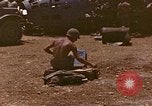
Buildings devastated during invasion of Saipan, Mariana Islands.
Buildings devastated during invasion of Saipan, Mariana Islands. A crane operates. Views of devastated buildings on Island. Wrecked Japanese planes at airfield. Entrance of Japanese air raid shelter. Wrecked air strip.
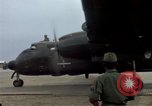
U.S. 1st Infantry division soldiers board CV-2 Caribou airplane in Binh Duong Province, South Vietnam
A CV-2 Caribou airplane taxis to a stop during Operation Cedar Falls at Tan Son Nhut Airfield, South Vietnam. U.S. Soldiers board the CV-2. Soldiers get off the CV-2 at Lai Ke. (Vietnam War period).

U.S. Forest Service takes measures to restore area burned by forest fire in Los Padres National forest, California
Film begins showing view from an airplane flying over a forest fire burning in the Los Padres National forest, near Santa Barbara, in California. Next, the aerial view is repeated 10 days later when men and equipment of the U.S. Forest Service have gained access to the burned out area. Scene shifts to an airfield, where a Twin Beechcraft model 18 aircraft is being loaded with a special grass seed mixture to be broadcast over the denuded area to provide protection against floods. The Twin Beech aircraft is seen taking off. Aerial view of the aircraft flying over California hills. Glimpse of the pilot at the controls in the cockpit. His nose and mouth are covered with a mask (to protect from the seed dust inside the plane). More aerial views of the plane in flight and then spraying grass seed over the damaged area.
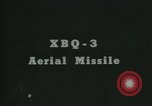
Fairchild XBQ-3 flying bomb taxiing at Fairchild facility in North Carolina
Opening slate reads: "XBQ-3 Aerial Missile." Next, an XBQ-3 flying bomb is seen taxiing on an airfield. It resembles an AT-21 training airplane. But it is actually a flying bomb (aka an aerial torpedo or an Assault Drone). The one shown in this film is the first of two built by the Fairchild Company. It displays serial number 43-25252. (The second was 43-25253). With a safety pilot aboard, it taxis about on a concrete ramp, at Fairchild Field in Burlington, North Carolina. The XQB-3 accommodated one pilot for testing or ferrying purposes, but otherwise was designed to be remotely guided to it's target and detonate on impact. Guided missile technology was progressing at such a pace as to render the 'flying bomb' concept obsolete and so the U.S. Army Air Corps cancelled the program in late 1944. (World War II period).
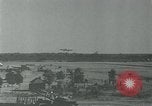
B-29 bombers of the 7th Bombardment Group, U.S. Army Air Force land at base after bombing in Burma during World War 2
China-Burma-India Theater during the World War II. B-29 bombers of the 7th Bombardment Group of the U.S. Army Air Force land one after the other at their base airfield in India. Landing after completing their mission of bombardment at the railroads in Burma. Taxi jeeps and people near the runway are visible. Puff of dust emerges as a B-29 lands on the runway.
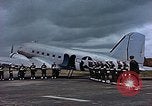
U.S. General Hoyt S. Vandenberg, Commander of the 9th Air Force greets officers of the Free French Air Force at end of World War II
A U.S. Army Air Corps honor guard stands around a C-47 transport plane, at an airport in Torgau, Germany at end of World War 2. Glimpse from behind of officers assembling on the ramp near the airplane. Closeup of the Ninth Air Force logo and the name, "Suzanne,"below the pilot's window on the aircraft. A staff car arrives and several U.S. Army Air Corps officers step from the car, including Lieutenant General Hoyt S. Vandenberg, Commander of the 9th Air Force and Major General Otto P Weyland, who would succeed him as 9th Air Force Commander. They join officers of the Free French Air Force at an area of the airfield ramp beside a destroyed hangar. They shake hands and talk with Free French Air Force officers, wearing black caps. The one in Leather jacket is General Martial Henri Valin Commander of Free French Air Force. Closeup of General Valin and General Vandenberg conversing. All stand at attention and salute colors or band plays National Anthems (unseen) General Vandenberg leaves walking toward the camera and boards his aircraft, as those behind shake hands and say good byes. A brass band plays and then the honor guard marches away from the aircraft. The right engine starts and then the left. An unidentified Air Corps Brigadier General waves goodby as the C-47 taxis out for takeoff.
CRITICALPAST.COM: About Us | Contact Us | FAQs - How to Order | License Agreement | My Account | My Lightboxes | Shopping Cart | Advanced Search | Featured Collections | Website Terms & Conditions | Privacy Policy ©2026 CriticalPast LLC.
License Agreement |
Terms & Conditions |
Privacy Policy
©2026 CriticalPast LLC.