


 Francais
 Deutsch
 Italiano
Refine Your Search
Japanese-martial-arts stock footage and images
- Showing 2707 to 2712 of 4328 results more
more Hide
Hide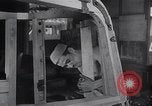
United States Army helps reconstruction and industrial development during Military Occupation of Japan
Industrial development in Japan with the help of United States Army: Workers in automobile plant. Skilled Japanese workers repair damaged equipment for Allies, during Korean war. Ship under construction in Japanese shipyard. Japanese children run behind jeeps of American soldiers. Japanese children pose for camera. American soldier gives candy to Japanese children who swarm over him. American soldier gives doll to little Japanese girl. Americans and Japanese participate in swimming meet. Americans and Japanese together participate in activities after World War II.
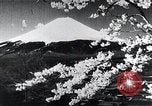
Active volcanoes, earthquakes and mountain range in Japan.
Natural topography of Japan. View of Mount Fuji (富士山, Fujisan) in Japan. View of Mount Fuji seen with its iconic snow cap. A man rows a boat on one of the Fuji Five Lakes (富士五湖, Fujigoko) near Mount Fuji. Farmers trekking towards Mount Fuji. Shinto pilgrims travel on foot as a group to the Fujisan Hongū Sengen Taisha (富士山本宮浅間大社 1-1 Miyacho, Fujinomiya, Shizuoka 418-0067, Japan) within downtown Fujinomiya, Shizuoka prefecture, before ascending to Mt. Fuji. Pilgrims trek Mount Fuji. Pilgrims arrive at the Shinto shrine on top of Mount Fuji. A Shinto priest blesses the pilgrims. Volcanic craters without snow. An active volcano in Japan. Smoke emanates from active Japanese volcanoes. Japanese people sing traditional songs while at work. Japanese people at a shrine. Violent tidal waves splash at a coast. Household items fall from shelves during an earthquake inside a house in Japan. People search in the rubble of a house destroyed after the 1923 Kanto earthquake in Tokyo and Yokohama. Medics carry casualties on stretchers. Refugees crowd a park after losing their homes from an earthquake. Widespread fire in Tokyo after an earthquake. Japanese family visit thermal springs. Mud bubbling. Islands and rocky cliffs in Japan. Farmer tilling his land near a river.Natural topography of Japan. View of Mount Fuji (富士山, Fujisan) in Japan. View of Mount Fuji seen with its iconic snow cap. A man rows a boat on one of the Fuji Five Lakes (富士五湖, Fujigoko) near Mount Fuji. Farmers trekking towards Mount Fuji. Shinto pilgrims travel on foot as a group to the Fujisan Hongū Sengen Taisha (富士山本宮浅間大社 1-1 Miyacho, Fujinomiya, Shizuoka 418-0067, Japan) within downtown Fujinomiya, Shizuoka prefecture, before ascending to Mt. Fuji. Pilgrims trek Mount Fuji. Pilgrims arrive at the Shinto shrine on top of Mount Fuji. A Shinto priest blesses the pilgrims. Volcanic craters without snow. An active volcano in Japan. Smoke emanates from active Japanese volcanoes. Japanese people sing traditional songs while at work. Japanese people at a shrine. Violent tidal waves splash at a coast. Household items fall from shelves during an earthquake inside a house in Japan. People search in the rubble of a house destroyed after the 1923 Kanto earthquake in Tokyo and Yokohama. Medics carry casualties on stretchers. Refugees crowd a park after losing their homes from an earthquake. Widespread fire in Tokyo after an earthquake. Japanese family visit thermal springs. Mud bubbling. Islands and rocky cliffs in Japan. Farmer tilling his land near a river.
United States Marines in mopping up operations on Iwo Jima, during World War II
4th Division U.S. Marines in final phases of the battle for Iwo Jima, in World War 2. U.S. marine walks across rocks with destroyed vegetation behind him. A demolition charge explodes in the rocks and several Japanese soldiers emerge to surrender. Scene shifts to a Japanese stronghold in a cave. A Japanese officer stands with a U.S. marine outside the cave. A Japanese defender emerges and talks with the Japanese officer, who then tells the marine there are two more Japanese soldiers in the cave. The marine helps the Japanese soldier out of the cave. Scene changes to another Japanese stronghold, where a marine throws a line up to another marine standing atop the rocky outcropping. Next scene shows a demolition charge exploding at the site. In a new sequence, four U.S. marines carry a wounded comrade and place his litter on the ground where another team picks it up and carries it. View from high ground of Mount Suribachi, seen above mist, on distant end of the island. A truck moving rapidly over a dirt road on the island.

American civilians realize their war obligations and contribute to the war effort (WW2)
A World War II-era film shows Americans realize their war time obligations after the attack on Pearl Harbor and Fall of Corregidor in the Philippines. Crowds watch a marching band and newly enlisted soldiers in parade. A smiling woman waves at the marching soldiers. Women in car watch the parade. Tents in camp. Soldiers perform mass calisthenics and train with outdated tanks. Enlisted men learn how to fire machine guns and mortars. United State Army soldiers board a ship for their deployment. A ship departs for the Philippines. Soldiers arrive in the Philippines, a United States commonwealth in Asia. Japanese bombers drop bombs over Pearl Harbor. Civilians running on the streets during a Japanese aerial bombardment. United States Navy sailors firing machine guns and howitzers from ships. A ship explodes from Japanese bombing. A little girl runs to her father washing the car to tell the news about Pearl Harbor. The little girl runs across the street to tell her neighbor about Pearl Harbor. A woman writes a letter. A woman bakes a cake. People leave a church after service. An American soldier is shot by Japanese soldiers in the Philippines. A man reads a telegram. The man drives to a farm house, accompanied by a church minister. The man and minister tell the elderly couple living in the farm that their son was killed in action. Women selling war bonds on the street. A man silences his alarm clock and goes back to sleep. Cars racing on the street. Soldiers and civilians evacuating Manila. Japanese bombardment of Manila. A girl turns on the radio before Christmas dinner. Men and women congratulates a woman outside a law office. More civilians receive telegrams. Dead soldiers in the battlefield. A woman opens the Bible and writes the names of the dead. United States soldiers retreat in the Fall of Bataan. A woman shakes her head in disbelief after being told of a rumor her son was killed in action. A man hangs the United States flag on his porch. A bomb explodes near a makeshift tent hospital. Woman fixes bed. A woman eating on the dinner table alone. A soldier swats a mosquito from his neck in the Philippines. Forlorn men and women. Soldiers fighting in Corregidor. Soldiers surrender to the Japanese forces at Corregidor. A captured American soldier harasses a Japanese soldier while frisking him. He was apprehended by Japanese soldiers on guard. Despondent American civilians struggling after the Fall of Corregidor. A man despondently smokes from his bed. A depressed woman struggles to cut vegetables. A doctor treats civilians for shock and depression. A baseball game. A horse race. Boys playing on the beach. United States and Filipino soldiers march with United States and Philippine flags. People line up for blood donations. Civilians donate old rubber and hats. Men line up to punch their time in at work. Boys helping on the farms. Male teachers volunteer to fix civilians’ appliances and cars after school. A welder working at the shipyard. Civilians walking instead of using cars. An Allied plane landing. A woman sewing. A man opens a package of binoculars. People line up to buy war bonds. A majorette leading a marching band. Newly enlisted men with suitcases marching in parade.
Battle of Papua New Guinea in World War II
Animated map shows New Guinea and Papau. Areas occupied by American and Australian Forces , seeking to dislodge Japanese Forces, at Buna and Gona, are shown. General Douglas MacArthur, arrives at Papua. He strolls through an American/Australian milltary camp in the jungle. He is dressed in a perfectly pressed uniform, smoking a cigar. (Narrator states he arrived to take personal charge of the offensive.) Closeup of MacArthur. American troops flown in from Australia, advance toward the Japanese positions at Buna. Another scene shows Australian troops making their way through jungles as they advance over the Owen-Stanley mountain range toward Gona. Australian troops fire mortars and one seen firing a Bren light machine gun. An American soldier firing an M1919 Browning machine gun. More views of Allied soldiers firing rifles and machine guns, including a water-cooled Browning M1917 gun. A bomb or shell explodes at a Japanese position. Scene shifts to Allied Military Headquarters in New Guinea, where staff plot information on large status maps about Japanese reinforcements arriving in the Bismark Sea, to bolster the enemy’s defenses. An Australian pilot runs to his Spitfire airplane, and American pilots rush to their B-25 Mitchell bomber, named “Dirty Dora.” An Australian Douglas A-26 invader airplane taking off. The B-25, Mitchell bomber (Dirty Dora) taking off. A USAAF B-17 Flying Fortress bomber taking off. More Allied aircraft taking off and in flight, including a formation of Australian A-26 invader airplanes. An Australian Airspeed Oxford training aircraft is seen diving . View from cockpit of an A-26 Invader airplane firing machine guns at Japanese ship. View of Allied warplane dropping bombto skip a Japanese ship. Bombs explode. Aircraft strafing Japanese ship. Various views of smoke rising from struck many Japanese ships. (World War II; WW II; World War 2; World War Two)
Japan expands its military presence and influence in the Pacific before World War II. U.S. employs air power early in the war.
Opening scene shows Emperor Hirohito of Japan dressed in military uniform, astride a white horse, riding along a path, followed by military officers. (Narrator cites Japanese declaration of war against the U.S. and Britain on December 7, 1941.) Japanese soldiers in two groups engage in local war games against each other. Animated map shows Japan and the expansion of her influence and military presence throughout the Pacific. Aerial view through scattered clouds, of Japanese fleet of warships. Aerial view of American warplanes in formation through scattered clouds. Closeup from cockpit of a U.S. A-20 Havoc aircraft, showing its left engine and prop and a second A-20 flying to its left in close formation. Swerving wake of a Japanese warship engaged in evasive maneuvers on surface of the sea, below. Several scenes of U.S. aircraft strafing Japanese warships. Aerial view from a U.S. B-25, flying above Japanese ships, of another B-25, with its bomb bay doors open as it launches a torpedo. Japanese ship is struck, explodes, and sinks stern first. Glimpse of more Japanese ships in a convoy.