


 Francais
 Deutsch
 Italiano
Refine Your Search
Japanese-martial-arts stock footage and images
- Showing 2713 to 2718 of 4327 results more
more Hide
Hide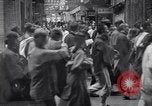
Fighting in China as Japan tries to conquer China during World War II.
Japanese aggression in China during the Second Sino-Japanese War and World War II. People in the streets of China. Animated pictures show one Chinese out of every 5 people in the world. A page showing Chinese writing. A mariners' compass. A Chinese man at an observatory. A porcelain cutlery set on a table. A Chinese man places porcelain into a furnace. A man puts gun powder in a bowl from a mortar. Explosion in the bowl. Firecrackers burst. Chinese people celebrating a festival. A book titled 'Analects of Confucius'. A saying of Confucius reads “What you do not want done to yourself, do not do to others”. Statues and pagodas in China. Scenes of fighting. Japanese artillery fires and cavalry advances. U.S. flag flutters beside the Chines flag. Chinese troops on horses. Animated map of China. A book titled 'The Tanaka Memorial Japan's dream of World Empire'. Japanese Foreign Minister Baron Nishi Tanaka. Excerpted line of the book. Japanese military officers. An animated map of Asia showing regions which Japan wanted to conquer. Animated map shows Germany and Russia. Animated map showing Japan and China contrasts Japanese unity with Chinese disunity. Animated map shows China breaking into pieces. A scene of the Japanese Army.

Allied Forces land In Japan depicting the surrender of Japan to the Allied forces in World War 2
Titled 'Allied Forces land In Japan'. USS Missouri leading a convoy of 400 warships into the Bay of Tokyo. Admiral Halsey of the U.S. Navy smiles. Huge guns on the ship. A U.S. Army Air Force base at the island of Okinawa, Japan. U.S. Army Air Force plane lands at a Japanese Air Force base near Tokyo. Officers of the Japanese Air Force surrender to the officials of the Allied forces. U.S. National Flag hoisted at Tokyo Airdrome. Base operations sign there for the 3rd Airdrome Squadron. Japanese Military Police marching at Hazuki Airfield. Scenes of destroyed planes and facilities on the ground at Hazuki airfield. Admiral Chester Nimitz, Commander of the fleet of Allied Forces congratulates forces on the USS Missouri. Japanese ship alongside USS San Diego. Japanese men climb into the ship and give navigation instructions to the San Diego and Task Force 31. Many sunken Japanese ships in harbor at Yokosuko. Japanese ship Nagato and crew taken into custody by the Navy and its new captain Thomas Flynn.
Prime Minister Hideki Tojo addresses the people of Japan regarding World War II.
The Prime Minister of Japan, Hideki Tojo, addresses the nation. Firing from Japanese battleships. The stern of another Japanese battleship in the foreground. Smoke due to bombardment from the battleship. A group of Japanese Navy and Army officers. One officer reads from a piece of paper. Interior of a building. Japanese men, presumably press and media reporters, seated at a long desk and writing on papers. Hideki Tojo delivers a speech. A loudspeaker on a telephone pole. Views of men and women citizens in the streets who have stopped walking and bicycling and are listening quietly to the speech on loudspeakers. A Japanese woman bows. Three people kneel and bow in front of the Emperor's Palace. Japanese naval students walk down a street carrying banners. A map of Japan showing Japanese military movements in multiple directions across the region.
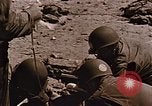
Day two of the amphibious assault on Betio, Tarawa atoll, by U.S. 2nd Marine Division, during World War II in the Pacific.
U.S. Marines of 2nd Marine Division setting up communications on beachhead of Betio, Tarawa Atoll, on day two of their amphibious assault against Japanese forces there, in World War 2. Individual marines moving low and fast across the sand, as gunfire sounds all around. Casualties being moved on litters. Entire area under fire with destruction everywhere. Marines taking cover wherever possible. Some firing machine gun from sandbagged position. Area covered by smoke from gunfire and explosions. Marines shielded by remains of Japanese structures as they move about, engaged in fierce fire fights. More wounded being tended. Marines using hand grenades and flame throwers against Japanese soldiers in fortified positions. Marines moving carefully across series of Japanese positions, checking for remaining Japanese defenders. Several move against a Japanese position in a hill, using small arms hand grenades and flame thrower. Many dead Japanese soldiers are seen on the other side of the hill, after it is taken. Marine carrying a machine gun and setting it up. An ambulatory wounded marine.
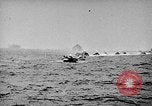
Japan Kamikazes attack U.S. Navy Task Force 58, in battle of Okinawa in World War II
Role of U.S. Navy Task Force 58 in Okinawa, Japan during the Battle of Okinawa in World War 2. Film begins showing amphibious assault by U.S. forces of Navy Task Force 58, against Okinawa, on Easter Sunday, April 1, 1945. Higgins Boats from U.S. transport ships race through the water and discharge troops on the land, with no signs of Japanese resistance. Some of the boats' markings show they came from the U.S transport ship USS Barnett (APA-5). Sailor aboard a transport ship uses ax to cut a line and release a power boat from its davits. The boat drops into the water with a huge splash. View of lines of U.S soldiers and marines wading through shallow water toward mud flats on the land. Closeups of Troops with landing craft behind them. advance overland with no signs of Japanese resistance. Troops sitting on a landing vehicle tracked (LVT) parked in sand. U.S. infantry begin moving inland accompanied by armor and military trucks and other vehicles. The area is very quiet, with no sign of enemy activity. Views of Army and Marine Corps infantry walking beside an M4 Sherman tank. Views of soldiers using binoculars in effort to detect any signs of the enemy. Crews in combat gear, at battle stations aboard Navy ships waiting patiently for enemy action. It came suddenly in the form of Kamikaze attacks on April 6, 1945, when the Navy's radar picket ships were attacked followed by general attacks against U.S. Capital ships. A kamikaze is seen striking an Essex-class aircraft carrier amidst ship, setting off explosions on the ship. Anti-aircraft gunners on various ships are seen firing at the Japanese planes. Another ship is struck by a Kamikaze. Douglas Dauntless and F4F aircraft being launched from carriers. The Battleship, USS Maryland (BB-46), is struck by a kamikaze that knocks out some of her gun emplacements, but she continues her mission in spite of the damage. A kamikaze aircraft is seen attacking the USS Yorktown (CV-10). It is hit by anti-aircraft fire and just misses the ship, splashing into the water nearby. Air is filled by black smoke puffs, from anti-aircraft fire as Japanese aircraft maneuver overhead. One is struck and falls burning to crash in the water, just off the flight deck of a carrier. Gun camera clip showing a multi-engine Japanese aircraft being shot down from behind, by a U.S. aircraft. Closeup of a Japanese Kawasaki Ki-61 aircraft in flight, peeling off to attack. More gun camera footage of a Japanese multi-engine aircraft being shot down from behind. A Kamikaze airplane diving down under anti-aircraft fire and crashing into the sea. Gunners firing Bofors anti-aircraft guns from gun emplacements beside the flight deck of an aircraft carrier. Skies filled with black flak clouds. On 11 April, a low-flying kamikaze Zero, although fired upon, is seen crashing on the battleship, USS Missouri USS (BB-63). It strikes her starboard side, just below her main deck level. The starboard wing of the plane was thrown far forward, starting a gasoline fire at 5 in (127 mm) Gun Mount No. 3. At the same time, another kamikaze crashes into the sea in the foreground. An aircraft carrier's gunners fire anti-aircraft Bofors guns at a Kamikaze plane that swoops over her flight deck and crashes, exploding, into the sea just off the flight deck. A low flying Kamikaze aircraft crashes into the sea off the bow of an escort carrier, underway. Heavy black smoke rises from the airplane blowing up. A huge explosion with a white cloud of smoke is seen above the battleship USS Missouri.
Indonesia is promised independence from Japan, at ceremony in Istana Gambir (Gambir Palace). Indonesian crowds celebrate news.
The promise of independence for Indonesia is broadcast throughout the city of Jakarta, following a ceremony at Istana Gambir, or the Gambir Palace (Merdeka Palace, Jawa Timur Jawa, Jawa Timur 65455, Indonesia). Exterior of Gambir Palace in Jakarta Indonesia. Indonesian leader Sukarno, head of the Japanese-created Poesat Tenaga Rakjat (POETERA - Concentration of People's Power) emerges from a car, climbs steps, and enters the Gambir Palace, presently known as Merdeka Palace. He stands together with other Indonesian officials. Imperial Japanese Army Lieutenant General Kumakichi Harada addresses the gathering and delivers news of Japanese Prime Minister Koiso's September 7, 1944 promise of future independence for Indonesia (the so-called Koiso Declaration). Large Japanese flag seen on the wall behind speakers. Sukarno approaches General Harada, bows and then speaks into a microphone. Scenes of jubilation in the streets of Jakarta as citizens hear the news that Japan has promised future independence for Indonesia (date undeclared). A man standing atop a truck announces the news over a megaphone. People stand near the truck, listen and cheer. A caravan of loaded trucks rolls slowly through a Jakarta neighborhood spreading the news about the promised independence. Citizens cheering and smiling. People standing at a railway station and at stopped trains hear the news and cheer. Citizens including men, women, and many children wave to the passing caravan. Sign on side of truck includes words "Bangsa Indonesia diperkenankan merdeka" meaning "Indonesia allowed Independence". Clip is from a Japanese newsreel during World War 2, with Japanese narration.